Mastering Nail Prep and Application for Long Retention
Nail lifting is prevented through meticulous mechanical and chemical preparation of the natural nail plate before product application. By removing the true cuticle and dehydrating the surface, nail technicians create a high-friction bond that ensures gel, acrylic, or dip systems adhere securely for three to four weeks without premature detachment.
Essential Steps for Mechanical Preparation
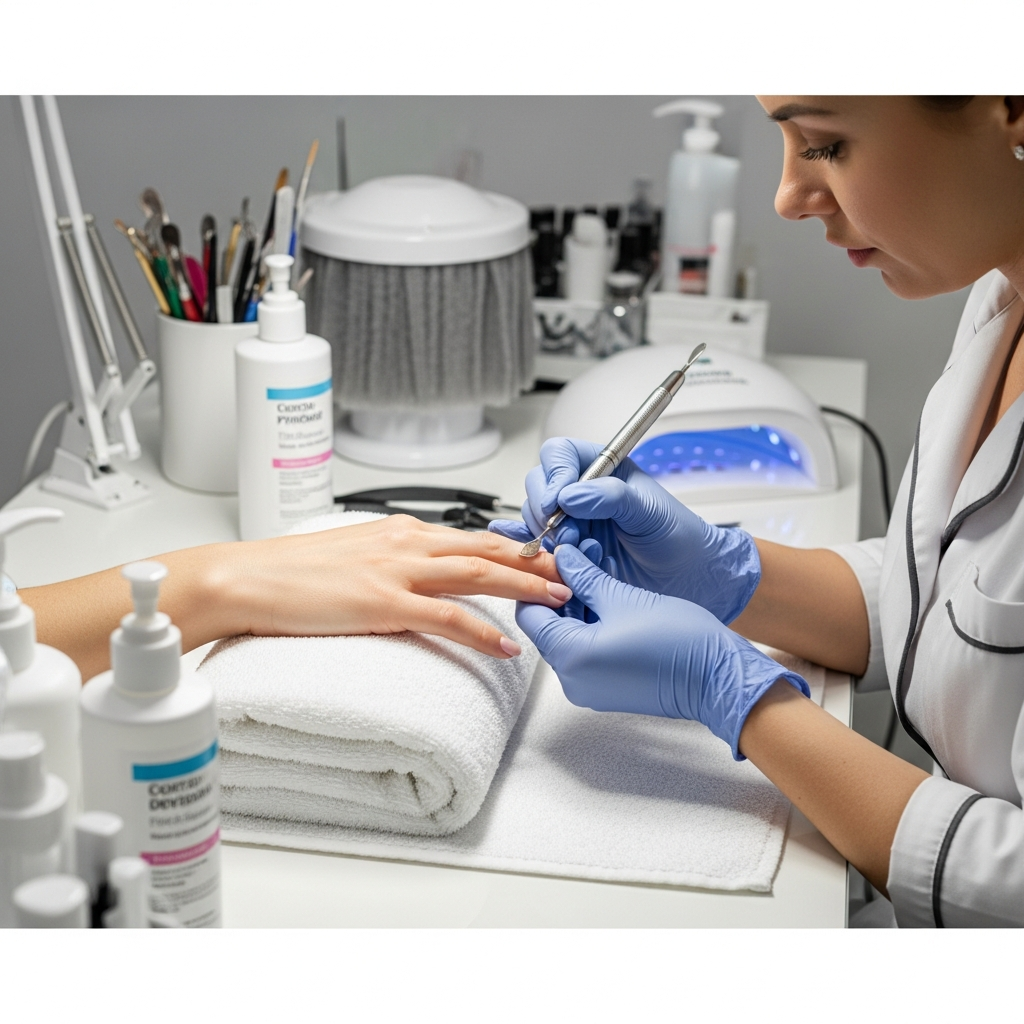
The foundation of any durable nail service begins with the thorough removal of non-living tissue. Using a professional pusher, gently lift the eponychium to expose the true cuticle attached to the plate.
A diamond bit or a 180-grit file should be used to remove this debris without thinning the natural layers. Eliminating every trace of protein ensures the enhancement bonds directly to the keratin rather than dead skin.
Surface Texturizing Techniques
Creating a specific level of surface roughness is critical for mechanical adhesion. Use a high-quality buffer or file to remove the natural oils and shine from the nail plate surface.
Technicians must ensure they reach the lateral folds and the proximal fold area. Even a small patch of smooth, oily surface can cause the product to delaminate within days of the service.
Chemical Cleansing and Priming Standards
After mechanical filing, the nail must be completely free of dust and surface contaminants. Use a lint-free wipe saturated with a high-percentage isopropyl alcohol or acetone solution to scrub the plate.
This step serves as a temporary dehydrator, removing moisture from the upper layers of the keratin. A dry, chalky appearance indicates the surface is ready for the next chemical bonding step.
Applying Professional Primers
Choose between acid-based or acid-free primers based on the client’s plate type and the specific product system. Acid-free primers act like double-sided tape, creating a sticky layer for the nail product to grab.
Acid primers etch the surface on a microscopic level to create a physical bond. Avoid touching the surrounding soft tissue with these chemicals to prevent irritation or potential chemical burns for the client.
Application Techniques to Ensure Durability
Successful nail enhancement longevity relies heavily on proper structure and weight distribution. The apex must be positioned correctly over the stress area to support the length and prevent snapping.
Maintain a thin application at the cuticle and sidewalls to prevent “clinking” or catching on hair. A tapered edge at the perimeter allows the product to grow out smoothly without creating a ledge.
- Seal the free edge: Run the brush along the tip to encapsulate the natural edge.
- Control the ratio: Ensure the liquid-to-powder or gel consistency is correct for the climate.
- Avoid flooding: Keep a 1mm gap between the product and the surrounding skin.
Common Technical Mistakes to Avoid
Over-filing the natural nail is a frequent error that leads to thin, flexible plates. Products cannot bond effectively to a compromised surface, which leads to chronic lifting and client discomfort.
Incomplete curing in LED or UV lamps also causes premature failure and potential sensitivities. Ensure the hand is placed correctly inside the unit so all fingers receive the required light intensity.
