Mastering Nail Prep and Application for Maximum Retention
Nail lifting occurs when the enhancement material separates from the natural nail plate due to improper preparation or application. Achieving maximum retention requires thorough mechanical and chemical preparation, including cuticle removal and dehydration, alongside precise product placement that avoids contact with the skin and proximal nail fold.
The Essentials of Mechanical Nail Preparation
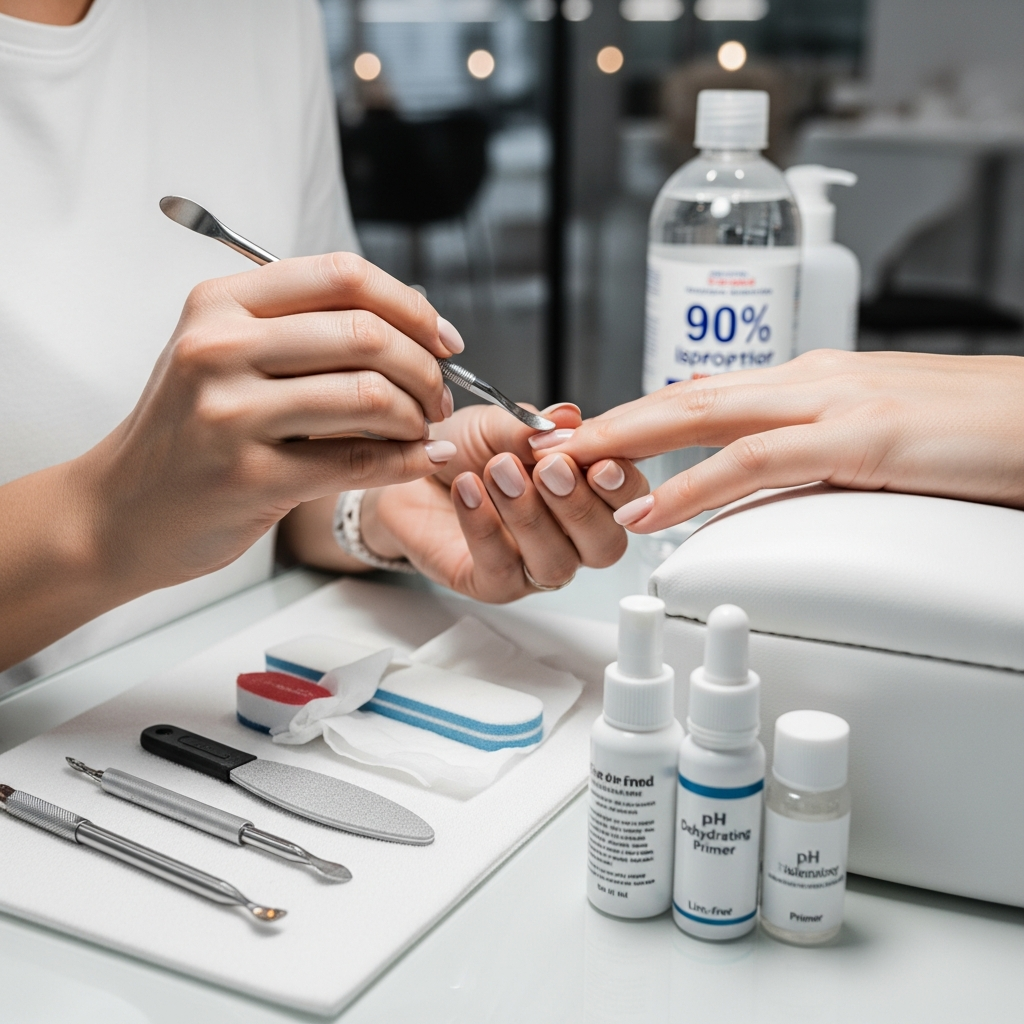
Effective retention begins with the complete removal of the true cuticle from the nail plate. Use a professional-grade pusher to gently lift the eponychium and expose any stubborn tissue adhered to the surface.
A high-quality e-file with a fine diamond bit can safely refine the lateral folds. Removing this non-living tissue is critical because gel and acrylic products will not bond to skin, leading to premature lifting.
After cuticle work, use a 180-grit file or buffer to remove the natural shine from the nail. This creates the necessary surface area for the product to anchor without thinning the natural plate excessively.
Chemical Dehydration and Priming Standards
Once mechanical prep is complete, the nail plate must be thoroughly cleansed of oils and debris. Use a lint-free wipe saturated with 90% or higher isopropyl alcohol to scrub the surface and side walls.
Application of a pH-balancing dehydrator ensures all moisture is temporarily removed from the upper layers of the nail. This step is vital for clients with oily nail plates or hyperhidrosis.
The final prep step involves a professional primer suited for the specific enhancement system. Acid-free primers act as a double-sided adhesive, while acid primers etch the surface for maximum acrylic adhesion.
Advanced Product Application Techniques
Avoiding Cuticle Flooding
Maintaining a small margin between the product and the surrounding skin is essential for a professional finish. If gel or acrylic touches the skin, it creates a ledge that pulls the product away as it grows.
Use a “bead-and-push” technique to control the material near the proximal nail fold. Always taper the product toward the edges to ensure a seamless transition that resists snagging or peeling.
Maintaining Proper Apex Placement
The structural integrity of a nail enhancement depends on the correct placement of the apex. This high point provides the strength needed to withstand daily impact and prevents stress-related lifting.
An apex that is too far forward or too thin will cause the enhancement to crack or lift at the free edge. Ensure the structure is balanced according to the length and shape of the extension.
Troubleshooting Common Technical Mistakes
- Incomplete Debris Removal: Dust trapped in the sidewalls prevents the product from sealing properly.
- Over-filing: Thinning the nail plate reduces the available surface for bonding and causes heat spikes.
- Improper Curing: Using an incompatible lamp can leave the bottom layers of gel soft, leading to separation.
- Product Thickness: Applying material too thickly at the edges increases the leverage for lifting.
Consistency in these professional techniques ensures a durable service for the client. Mastery of prep and structure reduces the need for repairs and maintains the health of the natural nail.
