
Starting a Nail Salon: First Year Financial Survival
Opening a nail salon requires an initial investment ranging from $75,000 to $150,000 to cover professional equipment, leasing, and state licensing. To survive the first year, owners must strictly control overhead costs, maintain a six-month capital reserve, and optimize service pricing to reach the break-even point quickly in the competitive U.S. market.
Initial Capital Requirements for New Nail Salons
Securing a physical location involves significant upfront costs including security deposits and build-outs.
Proper ventilation systems are mandatory in many U.S. states to ensure technician and client safety.
These structural requirements often represent the largest portion of your startup budget.
Professional Equipment and Station Setup
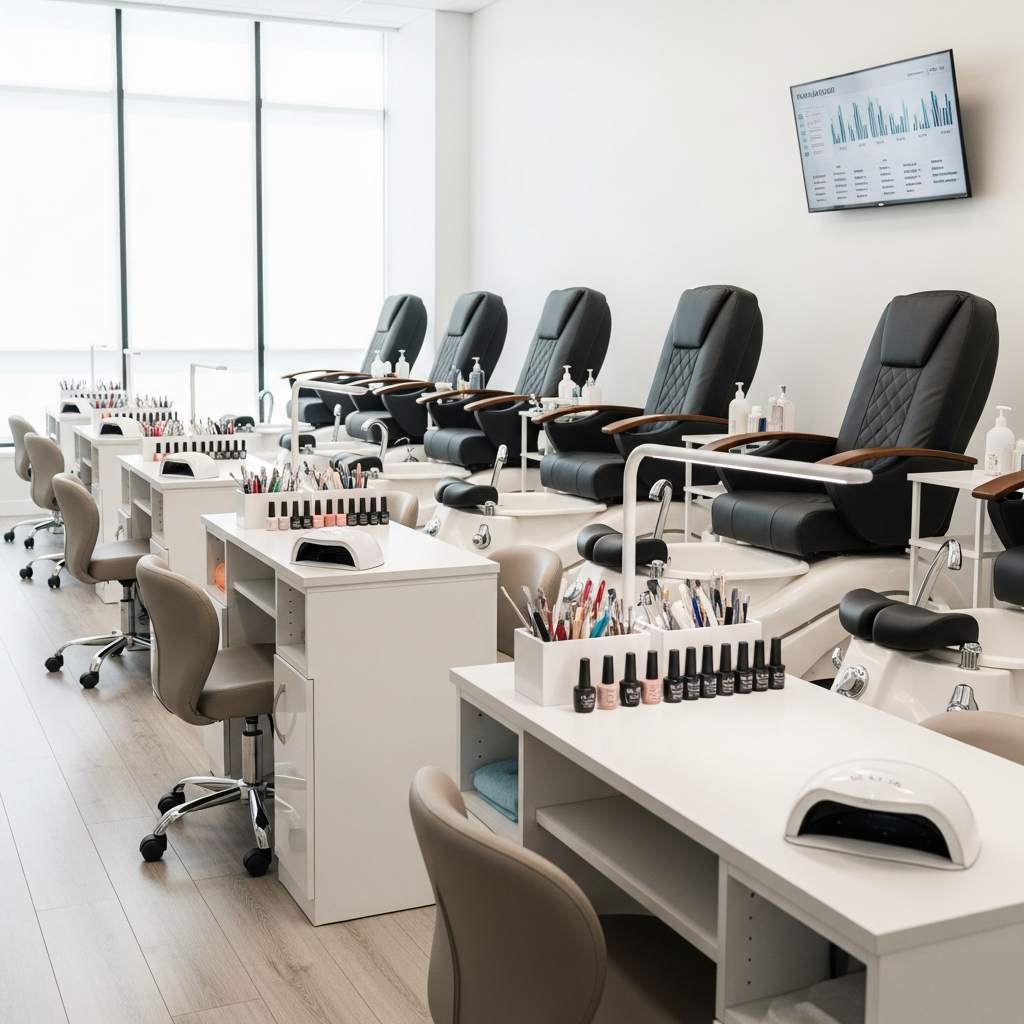
Quality manicure tables and pedicure thrones are essential for long-term operational efficiency.
Investing in professional-grade LED lamps and electric files reduces the need for frequent replacements.
Ergonomic seating for technicians helps prevent workplace injuries and maintains productivity levels.
Legal Permits and State Board Compliance
Every nail salon must obtain a specific business license and a salon facility permit.
Technicians must hold valid state licenses, and the salon must meet strict sanitation standards.
Failure to comply with state board regulations can result in heavy fines during the first year.
Controlling Operating Expenses for Survival
The first year is critical for establishing a sustainable cash flow and managing debt.
Monitoring every dollar spent on back-bar supplies prevents unnecessary waste and budget leaks.
Maintaining a lean inventory ensures that capital is not tied up in slow-moving products.
Managing Nail Supplies and Inventory
Consumables like monomer, polymer, gel polishes, and files should be tracked weekly.
Buying in bulk from reputable professional distributors can lower the cost per service significantly.
Avoid overstocking trendy colors that may not have high demand during your first months.
Labor Costs and Staffing Models
Deciding between commission-based employees or booth renters affects your tax obligations and control.
Payroll is typically the highest recurring expense for any professional nail business.
Balance your staff schedule to match peak hours and minimize unproductive downtime.
Reaching the Break-Even Point
Calculate your daily overhead to understand exactly how many services are needed to cover costs.
Consistent client retention is the fastest way to reach profitability in a new location.
Focus on high-margin services like structured manicures or advanced nail enhancements.
Setting Competitive but Profitable Prices
Research local market rates but do not engage in price wars that devalue your work.
Prices must reflect your overhead, product quality, and the professional expertise of your staff.
Regularly review your profit margins to adjust for rising supply or utility costs.
Common Mistakes to Avoid in Year One
Many new owners overspend on aesthetic decor while neglecting their marketing budget or reserve fund.
Underestimating the time it takes to build a consistent client base often leads to early closure.
Stay focused on technical excellence and sanitation to build a reliable reputation from day one.
