Advanced Nail Preparation Techniques for Long-Term Retention
Professional nail preparation involves mechanically removing the non-living tissue from the nail plate and chemically dehydrating the surface to ensure maximum product adhesion. This critical process prevents lifting, eliminates moisture-trapping bacteria, and creates a clean foundation for gel, acrylic, or dip systems, ensuring service durability for three to four weeks.
The Critical Role of Cuticle Management
The most common cause of enhancement lifting is improper removal of the true cuticle. This non-living tissue adheres to the nail plate and must be thoroughly cleared before application.
Technicians should use a professional-grade cuticle pusher to gently lift the eponychium. This exposes the dead skin cells that prevent the nail product from bonding to the natural plate.
Using E-Files for Precision Prep
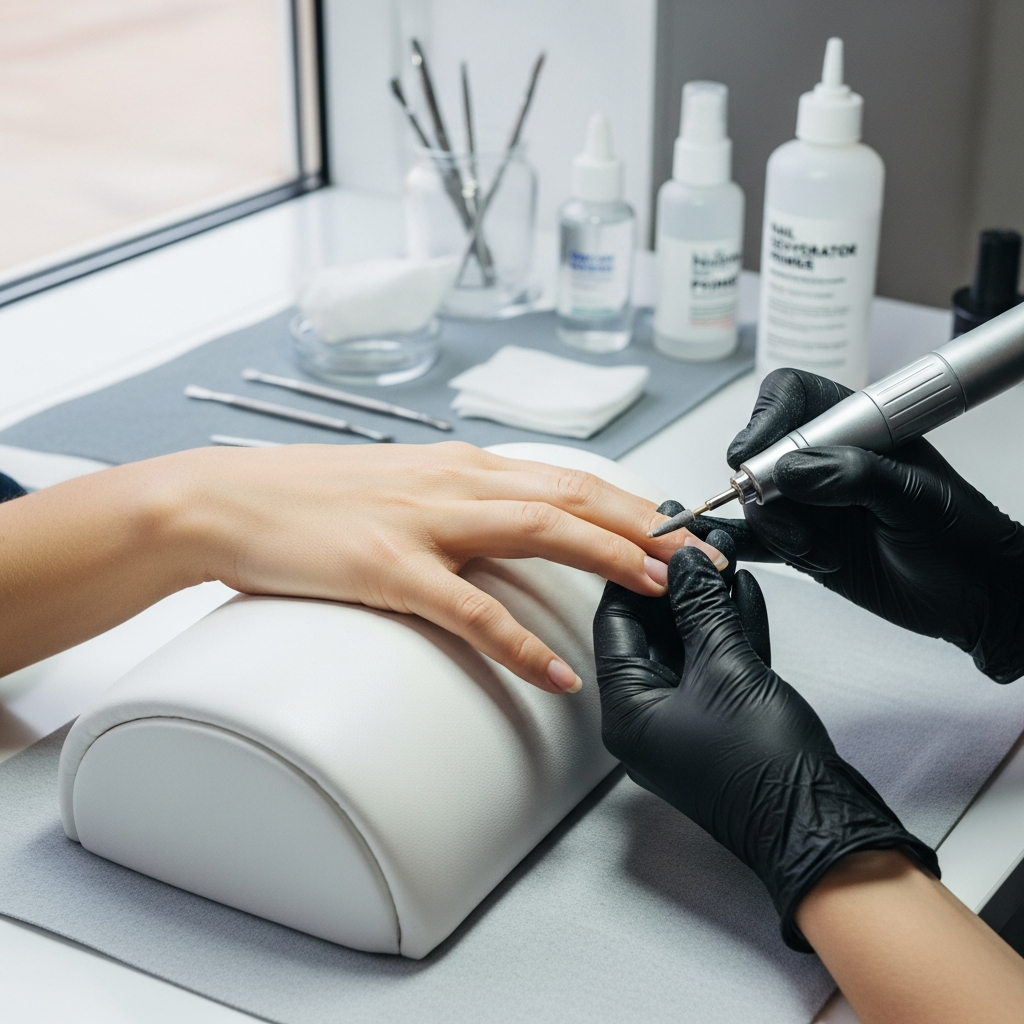
A diamond flame bit is highly effective for cleaning the lateral folds and proximal nail fold. Operating the e-file at a low RPM ensures the natural plate remains undamaged during cleaning.
Consistent movement is essential to avoid heat spikes or thinning the nail. A clean surface allows the base coat or primer to fuse directly with the keratin layers.
Mechanical Buffing and Surface Texture
Creating a mechanical bond requires removing the natural shine from the nail surface. This process should be performed with a 180-grit or 240-grit buffer to ensure the plate remains thick.
Over-filing the nail plate leads to sensitivity and poor retention. The goal is to lightly disrupt the surface oils and open the keratin scales for better product grip.
Removing Dust and Debris
After mechanical prep, all dust must be scrubbed away using a lint-free wipe and high-percentage isopropyl alcohol. Residual dust particles create microscopic gaps that lead to early delamination.
Ensure the sidewalls and the area under the free edge are completely clear. Any debris left behind will compromise the seal of the nail enhancement or gel polish.
Chemical Preparation and pH Balancing
Dehydrators are used to temporarily remove oils and moisture from the top layers of the nail. This chemical step is vital for clients with naturally oily plates or high moisture levels.
Following dehydration, a professional primer or bonder acts as double-sided tape. Acid-free primers are standard for most gel services, while acid primers are often reserved for difficult acrylic clients.
Proper Application of Priming Agents
Apply primer sparingly to avoid flooding the soft tissue surrounding the nail. Excessive primer can lead to skin irritation or actually interfere with the bonding process if it pools.
Wait for the dehydrator to turn the nail plate chalky white before applying the next layer. This visual cue confirms the surface is ready for the base gel or acrylic bead.
Maintaining Structural Integrity
Prep also includes shaping the free edge to support the weight of the intended enhancement. Squoval or round shapes often provide better durability for clients with active lifestyles.
Check the nail from all angles to ensure the surface is smooth and free of oils. A perfect prep routine is the only way to guarantee the longevity of professional nail services.
