Advanced Techniques to Prevent Nail Enhancement Lifting
Every professional nail technician faces the challenge of enhancement lifting.
Achieving maximum retention requires a precise balance of chemical prep and structural integrity.
These techniques ensure a durable finish that withstands daily client activity.
The Essentials of Mechanical and Chemical Prep
Thorough Cuticle Cleaning
Removing non-living tissue from the nail plate is the most critical step.
Residual skin prevents the product from bonding directly to the keratin.
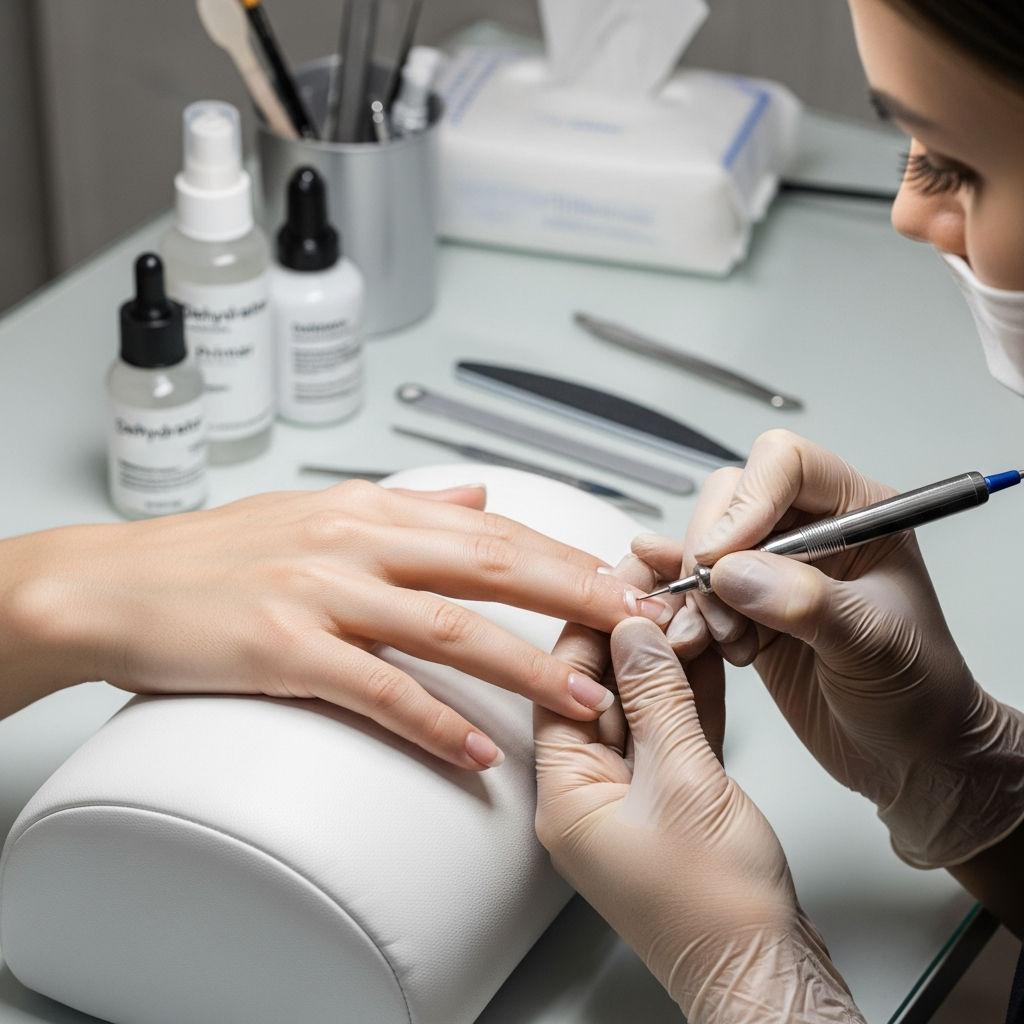
Use a professional bit or pusher to clear the eponychium area completely.
Proper Dehydration and Priming
Oil and moisture are the primary enemies of nail product adhesion.
Apply a high-quality dehydrator followed by the appropriate acid or non-acid primer.
Ensure the nail plate appears chalky or tacky according to the manufacturer guidelines.
Structural Balances for Long-Term Retention
Correct Apex Placement
A well-positioned apex reinforces the stress area of the nail enhancement.
The thickness should be concentrated where the natural nail requires the most support.
Proper structure prevents the product from snapping or lifting at the free edge.
Maintaining Clean Sidewalls
Product flooding into the sidewalls is a common cause of service failure.
Keep a tiny margin between the enhancement and the surrounding soft tissue.
If gel or acrylic touches the skin, it creates a ledge that triggers lifting.
Common Technical Mistakes in Application
Over-filing the natural nail plate thins the vital keratin layers.
A thin nail plate lacks the strength to support heavy gel or acrylic sets.
Always use a high-grit buffer to gently remove shine without removing thickness.
Inconsistent liquid-to-powder ratios in acrylics lead to brittle or soft enhancements.
Ensure your brush is properly saturated to create a bead with the right polymer density.
For gel systems, ensure full polymerization by using a calibrated curing lamp.
Refining the Finish
Tapering the product at the cuticle and free edge creates a seamless transition.
Thin edges prevent the enhancement from catching on hair or clothing.
This attention to detail ensures the nail remains secure until the next fill.
