Essential Professional Nail Prep Techniques for Retention
Professional nail preparation is the systematic process of cleaning, dehydrating, and priming the natural nail plate to ensure maximum product adhesion. This critical phase involves removing the non-living tissue from the nail plate and balancing pH levels to prevent lifting, ensuring the long-term durability of enhancements like gel or acrylic.
Understanding the Science of Nail Adhesion
Successful nail enhancements depend on a strong bond between the product and the keratin layers. Without proper preparation, natural oils and moisture will cause the enhancement to separate prematurely.
Technicians must focus on creating a surface that allows for both mechanical and chemical bonding. This ensures that the service remains intact and maintains structural integrity for the duration between appointments.
The Role of the Cuticle and Eponychium
Distinguishing between the cuticle and the eponychium is vital for safety and retention. The cuticle is the non-living tissue attached to the nail plate that must be thoroughly removed.
Leaving even microscopic amounts of cuticle tissue will cause lifting at the proximal nail fold. Thorough prep allows the product to sit flush against the nail surface without creating air pockets.
Mechanical Nail Preparation Steps
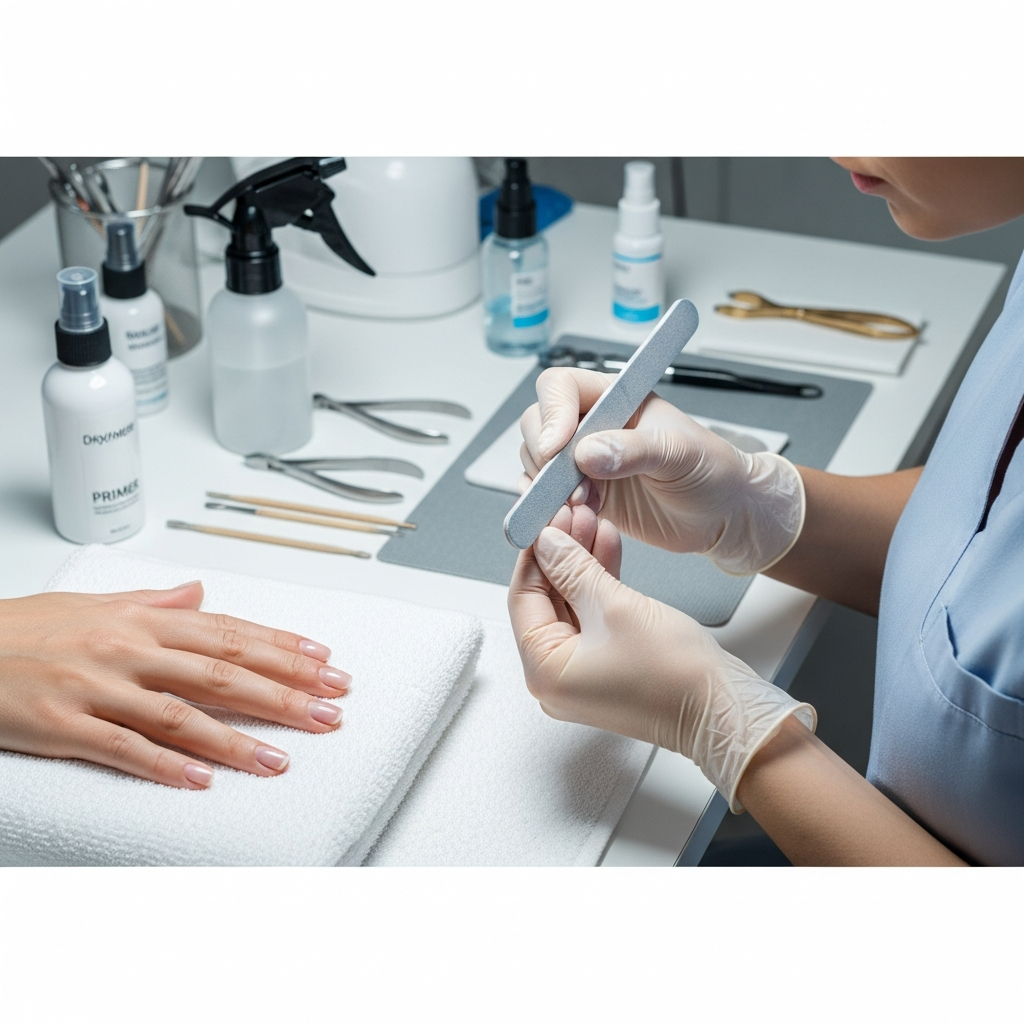
Using professional tools to prep the nail ensures a clean canvas for gel, acrylic, or dip systems. Start by gently pushing back the proximal fold to reveal the underlying cuticle tissue.
Surface Refinement and Buffing
A 180-grit file or buffer is the industry standard for removing the natural shine from the nail. This process slightly opens the keratin scales to facilitate a secure mechanical grip.
- Directional Filing: File in the direction of nail growth to avoid tearing the keratin fibers.
- Focus on Sidewalls: Ensure the corners and sidewalls are completely free of shine and debris.
- Dust Removal: Use a stiff nylon brush and a lint-free wipe with alcohol to clear all surface dust.
Chemical Cleansing and Priming
Once mechanical prep is complete, chemical agents are used to treat the nail surface. These professional products stabilize the nail plate environment for the application of bonding agents.
Dehydrators and Adhesion Promoters
A professional dehydrator temporarily removes moisture and surface oils from the top layers of the nail. This is a critical step for clients with naturally oily or moist nail plates.
Acid-free primers provide a covalent bond that anchors the enhancement to the natural nail. This prevents moisture from seeping under the product, which is the primary cause of green stains or lifting.
Common Prep Mistakes to Avoid
Inconsistent preparation is the leading cause of service breakdown in the professional nail industry. Small errors during the initial phase can lead to significant structural issues later.
- Over-Filing: Thinning the nail plate reduces the surface area available for bonding and weakens the foundation.
- Contamination: Touching the prepped nail with your own fingers transfers oils back to the clean surface.
- Incomplete Dusting: Dust trapped under the product creates microscopic air pockets that lead to lifting.
