Mastering Professional E-File Nail Prep Techniques
Efficient nail preparation is the foundation of every long-lasting enhancement.
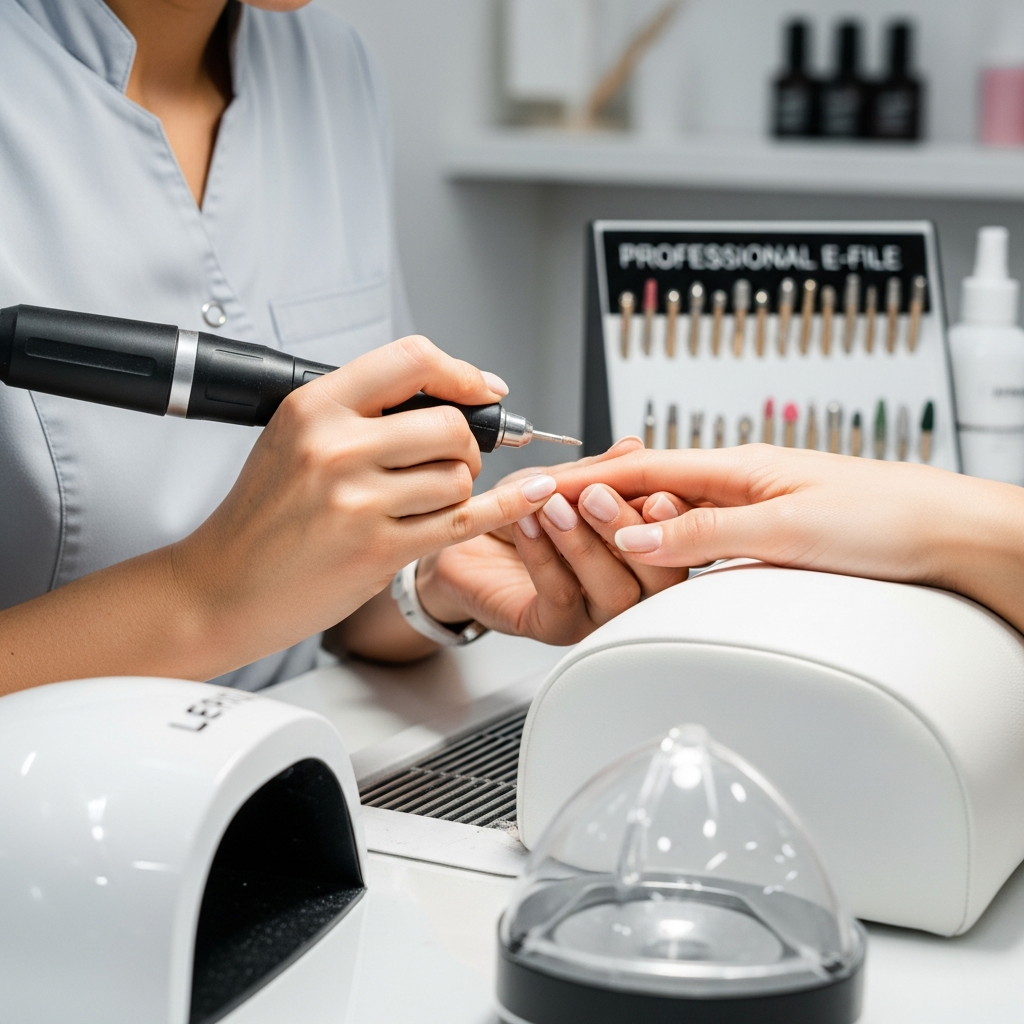
Using an electronic file requires specific technical knowledge to ensure the natural nail plate remains healthy.
Professional technicians in the United States prioritize safety and speed during this critical phase.
Mastering these skills allows for a cleaner finish and better product adhesion.
This article explores the standardized methods for performing high-quality prep using professional equipment.
Refining your technique will decrease service time while increasing the quality of the nail service.
Selecting the Correct Bits for Nail Plate Safety
Not all diamond bits are created equal for professional nail work.
Fine-grit flame bits are essential for lifting the proximal nail fold without causing trauma to the skin.
Using the wrong grit can lead to thinning of the nail plate or client discomfort.
A sphere or ball bit can help in removing stubborn cuticle tissue from the nail surface.
This step ensures that the gel or acrylic does not lift prematurely at the base.
Selecting the right bit for each nail type is a hallmark of an advanced technician.
Speed Settings and Torque for Nail Technicians
Most professional nail services require a speed between 5,000 and 10,000 RPM for prep.
Lower speeds prevent heat buildup on the client’s nail plate during the procedure.
High torque is necessary to maintain consistent rotation without applying excessive pressure.
Standardized Workflow for Nail Technicians
Start by pushing back the eponychium to expose the nail growth clearly.
This allows the bit to reach the dead tissue on the nail plate effectively and safely.
Working in one direction across the nail helps maintain consistency and avoids friction heat.
This technique is standard in high-volume professional salons in states like New York and California.
Consistency in your nail prep workflow leads to predictable results for every client.
Always ensure the handpiece is held parallel to the nail plate to avoid creating indentations.
Sanitation and Maintenance of Nail Tools
- Cleaning: Every nail bit must undergo thorough cleaning to remove biological debris.
- Disinfection: Use EPA-registered hospital-grade disinfectants as required by nail industry standards.
- Sterilization: Follow local state board regulations regarding the use of autoclaves for metal nail tools.
Properly maintaining your nail equipment ensures the longevity of the handpiece and motor.
Careful storage prevents vibrations that could damage the client’s natural nail during a service.
A well-maintained tool is essential for a safe and professional nail environment.
Maintaining Nail Health and Integrity
The goal of professional prep is to remove non-living tissue while preserving the nail plate.
Over-filing is a common mistake that leads to weak nails and poor product performance.
Technicians must monitor the nail surface constantly for any signs of thinning or sensitivity.
In the United States, clients expect a high standard of care regarding their nail health.
Using professional e-file techniques correctly builds trust and ensures repeat business.
Continuous education on nail anatomy and tool technology is vital for every professional.
