
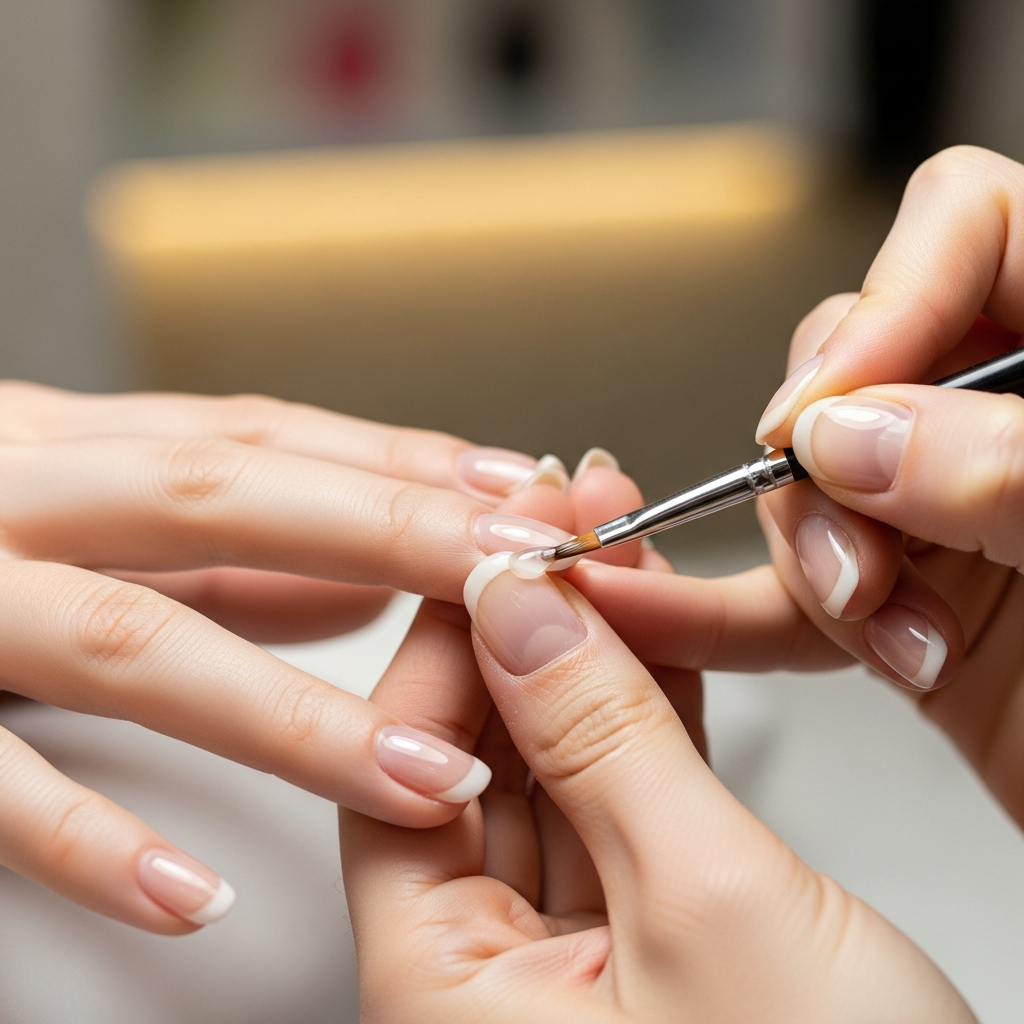
Mastering Professional Nail Apex Placement and Structure
A nail apex is the highest point of a nail enhancement, strategically positioned over the stress area to provide structural support and prevent breakage. Proper nail apex placement distributes pressure evenly across the natural nail plate, ensuring the durability of gel or acrylic applications while maintaining a slim, professional profile.
Identifying the Stress Area and Apex Point
The stress area is the most vulnerable part of the nail where the free edge meets the nail bed. Applying a nail apex directly over this zone prevents the enhancement from snapping under pressure.
For short to medium salon lengths, the apex should be located in the back third of the nail plate. As length increases, the apex must shift slightly forward to counterbalance the weight of the extension.
The Rule of Thirds for Structural Balance
- Zone 1: The free edge, which should be thin and tapered for a natural look.
- Zone 2: The apex and stress area, requiring the most product density.
- Zone 3: The cuticle area, which must be flush to prevent lifting and snagging.
Professional Techniques for Building the Apex
Achieving a perfect nail structure depends on product control and gravity. When using builder gel, technicians often use the “bead and bridge” method to float the product into place.
By turning the client’s hand over briefly, gravity pulls the gel toward the center of the nail. This creates a natural curve that a technician can quickly flash-cure to lock the shape in place.
Precision Acrylic Bead Placement
When working with acrylic, the second bead is typically the “structure bead.” Place this bead in the center of the nail and blend it backward toward the cuticle and forward toward the tip.
Maintain a consistent liquid-to-powder ratio to ensure the material does not slump. A well-placed acrylic apex requires minimal filing, which preserves the structural integrity of the polymer chain.
Common Structural Mistakes and Corrections
Flat nail enhancements lack a fulcrum point, making them prone to horizontal cracks. Conversely, an apex placed too far back near the eponychium causes the nail to look bulky and grow out unevenly.
If the apex is too thin, the enhancement will flex excessively, leading to service breakdown. Always check the profile view of the nail from the side to confirm the highest point is consistent across all ten fingers.
Filing for Refinement without Weakening
Refining the nail shape with an e-file or hand file should never remove the apex. Focus filing on the side walls and the “lower arches” to ensure the structure remains crisp and slim.
A professional finish shows a smooth transition from the cuticle to the apex and down to the free edge. This creates a durable, high-performance set that lasts until the client’s next maintenance appointment.
