Mastering Professional Nail Prep to Prevent Lifting
Nail preparation is the foundational process of cleaning and dehydrating the natural nail plate to ensure maximum adhesion for professional enhancements. By removing non-living tissue and balancing surface pH, technicians prevent lifting and premature product failure. This technical sequence is critical for maintaining the structural integrity and durability of gel, acrylic, and dip systems.
The Importance of Mechanical Nail Preparation
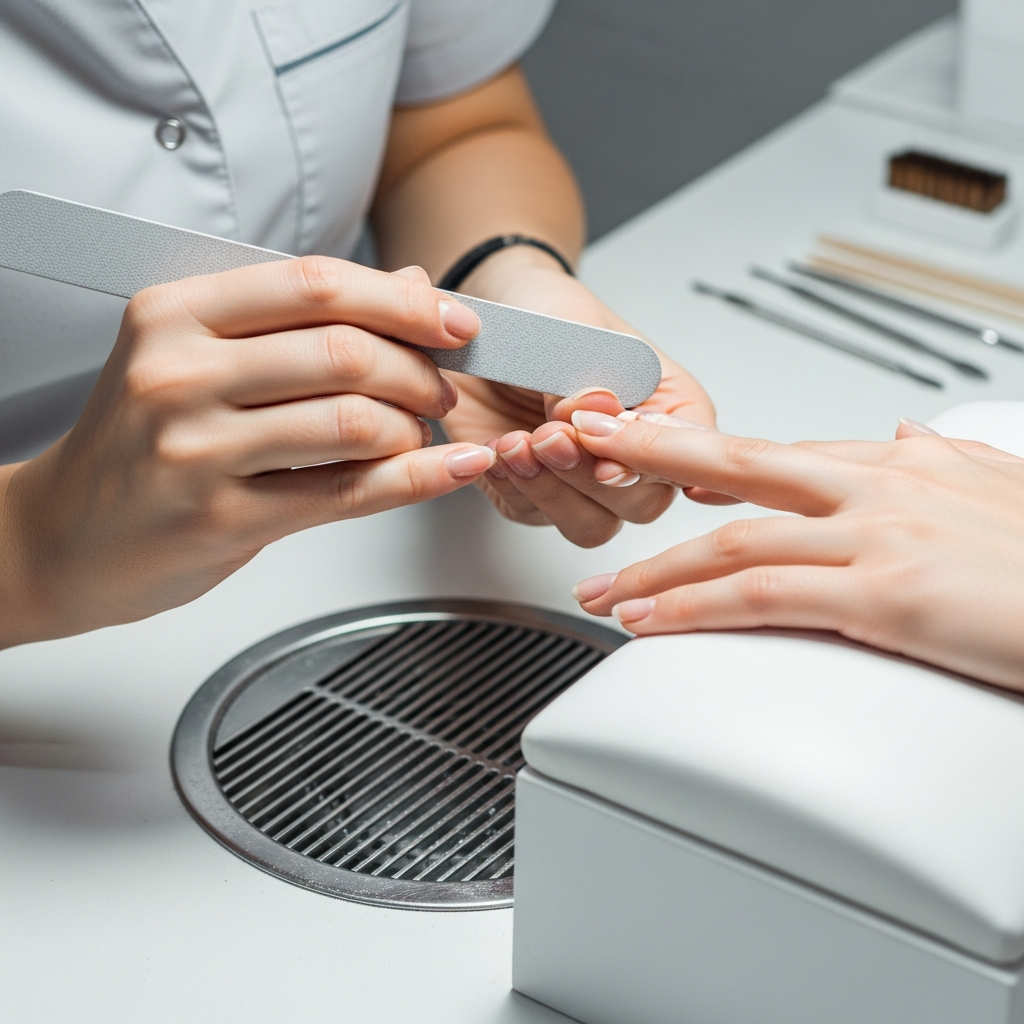
Mechanical preparation involves the physical removal of the cuticle from the nail plate.
Technicians must use a fine-grit buffer or a specialized e-file bit to gently remove the true cuticle.
Leaving even microscopic traces of skin will cause the enhancement to lift within days.
The nail surface must also be lightly etched to remove natural oils.
Using a 180-grit or 240-grit file creates a textured surface for the product to grip.
Over-filing should be avoided as it thins the plate and weakens the foundation.
Advanced Cuticle Work and Pterygium Removal
- Pushing Back the Eponychium: Use a sanitized pusher to expose the base of the plate.
- Clearing the Lateral Folds: Ensure the side walls are free of debris and dry skin.
- Dust Removal: Use a stiff nylon brush to clear all particles before applying chemicals.
Chemical Dehydration and Priming Steps
Chemical preparation removes residual moisture and oils that interfere with nail bonding.
A professional dehydrator temporarily evaporates surface oils from the natural nail layers.
This step is essential for clients with oily nail beds or high moisture levels.
Following dehydration, an acid-based or acid-free primer should be applied sparingly.
Primers act as double-sided adhesive, creating a chemical link between the nail and the product.
Allow the primer to dry or remain tacky according to the specific manufacturer instructions.
Precision Product Application and Perimeter Control
The way the product is laid near the nail walls determines the longevity of the service.
Always leave a tiny margin between the product and the surrounding soft tissue.
If gel or acrylic touches the skin, it creates a ledge that leads to immediate lifting.
Maintaining Structural Integrity
- Thin Margins: Taper the product at the cuticle area and sidebars for a flush finish.
- Apex Placement: Build the stress point correctly to support the length of the enhancement.
- Capping the Free Edge: Seal the natural nail tip to prevent water from entering the bond.
Common Technical Mistakes to Correct
One frequent error is failing to change files or bits regularly during the nail service.
Dull tools do not properly etch the surface, leading to poor mechanical adhesion.
Ensure all tools are sharp and sanitized to maintain professional execution standards.
Contamination is another major cause of lifting after the nail prep is complete.
Instruct clients not to touch their hair or face once the dehydrator has been applied.
Any contact with skin oils will require the technician to repeat the cleaning process.
