Perfecting Acrylic Nail Structure and Apex Placement
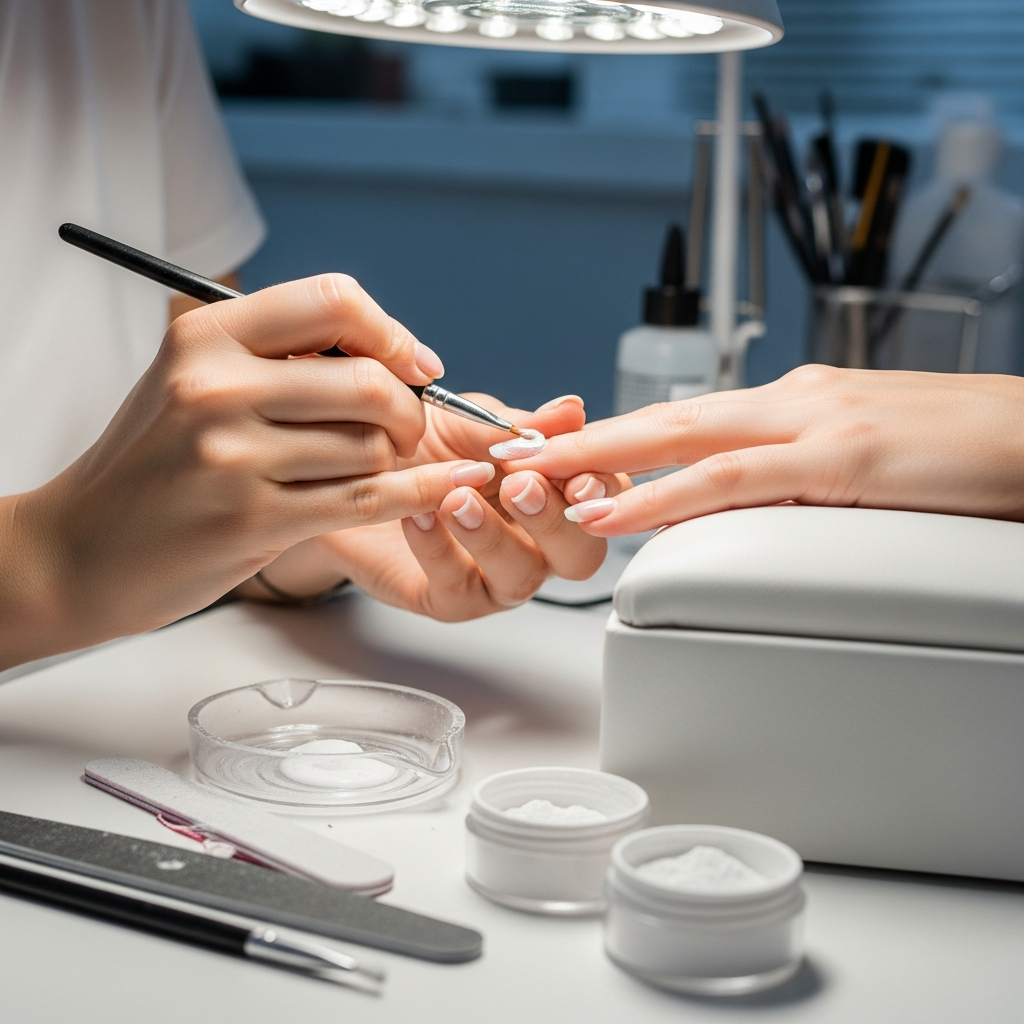
Acrylic nail application is a professional technique involving the precise combination of liquid monomer and polymer powder to create a durable enhancement. Achieving structural integrity requires proper nail plate preparation, correct apex placement for stress point support, and consistent liquid-to-powder ratios to prevent lifting or cracking during daily wear.
Establishing Professional Foundation and Prep
A durable acrylic nail begins with meticulous mechanical and chemical preparation of the natural plate.
Technicians must remove all non-living tissue from the eponychium and lateral folds to ensure maximum adhesion.
Dehydrating the nail plate and applying a professional-grade primer prevents the development of lifting and moisture pockets.
Mastering Liquid-to-Powder Ratios
Consistency in bead size and moisture content is critical for the chemical stability of the enhancement.
A bead that is too wet will shrink excessively, leading to perimeter lifting and potential skin irritation.
Beads that are too dry result in a brittle nail structure that lacks the flexibility to withstand impact.
The Three-Bead Application Method
- Zone One: The free edge bead defines the length and initial thickness of the extension.
- Zone Two: The stress area bead creates the apex and provides structural support to the nail.
- Zone Three: The cuticle bead must be thin and tapered to prevent catching or snagging.
Critical Engineering: Apex and Stress Points
The apex is the highest point of the nail enhancement, positioned over the natural stress area.
Proper placement ensures the nail can absorb pressure without snapping at the natural free edge.
The thickness should taper toward the cuticle and the side walls to maintain a slim, professional profile.
Balancing Length and Structural Integrity
Longer enhancements require a more pronounced apex to compensate for the increased leverage on the nail bed.
Incorrect apex placement often leads to premature breakage or painful damage to the underlying natural plate.
Refinement and Finishing Techniques
Professional filing defines the final shape and ensures the side walls are parallel and flush.
Technicians should use a systematic filing routine to achieve symmetry and a smooth surface transition.
Final buffing prepares the acrylic for a high-shine top coat or professional gel polish finish.
