Professional Acrylic Nail Prep: Preventing Lifting
Professional acrylic nail lifting is prevented through meticulous mechanical and chemical preparation of the natural nail plate before product application. Effective nail technicians focus on removing non-living tissue from the nail surface, dehydrating the plate, and using industry-standard primers to ensure maximum adhesion and long-term enhancement durability for the client.
Mechanical Preparation Techniques
Proper mechanical preparation is the most critical step in ensuring nail enhancement longevity. Technicians must focus on the cuticle area and the sidewalls to prevent premature separation.
Removing the True Cuticle
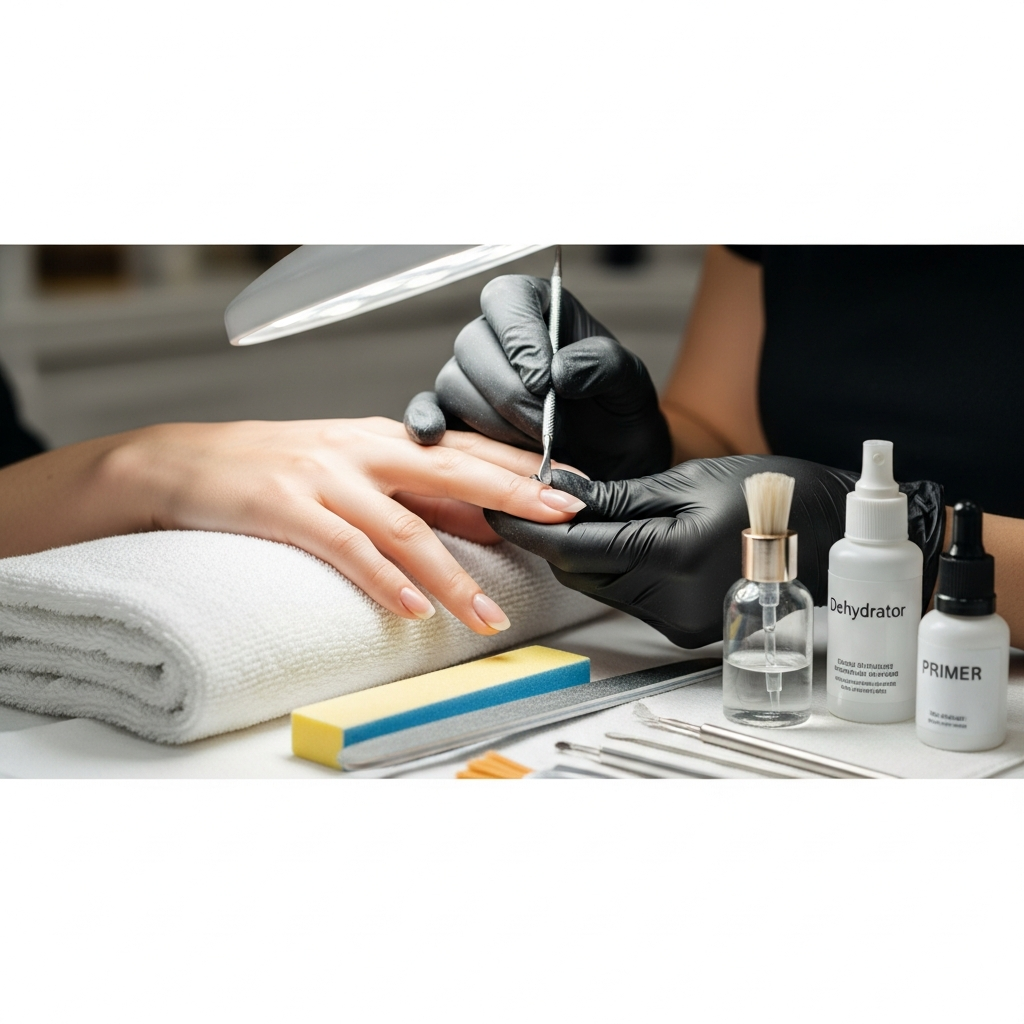
The true cuticle is the thin layer of non-living tissue attached to the nail plate. Using a professional-grade pusher and a nipper for hangnails is essential for a clean surface.
Any remaining tissue on the nail plate will cause the acrylic to lift within days of the service. Precision in this step ensures the product bonds directly to the keratin.
Removing Shine and Surface Oils
A 180-grit file or buffer should be used to gently remove the natural shine from the nail. This process creates a microscopic texture that allows the acrylic to anchor firmly.
Technicians must ensure they reach the corners and the proximal nail fold during this step. Skipping small areas of the plate often leads to localized lifting issues.
Chemical Preparation and Adhesion
After mechanical cleaning, chemical agents are used to prepare the nail plate’s pH and moisture levels. This ensures the environment is optimal for chemical bonding.
Dehydrating the Nail Plate
A professional nail dehydrator removes surface moisture and oils that interfere with adhesion. This step is temporary, as the plate will naturally rehydrate over time.
Apply the dehydrator across the entire nail surface, paying close attention to the edges. Ensure the product has fully evaporated before proceeding to the next chemical step.
The Role of Primers
Primers act as a double-sided adhesive between the natural nail and the acrylic monomer. Professional technicians choose between acid-based and non-acid primers based on client needs.
- Acid-Based Primers: These etch the nail plate for extreme adhesion but must be used sparingly.
- Non-Acid Primers: These function like double-sided tape and are generally safer for sensitive clients.
- Proper Application: Ensure the primer does not touch the surrounding skin to avoid irritation.
Application Best Practices for Retention
The way the product is applied near the skin impacts how well the nail stays attached. Managing the ratio of liquid to powder is vital for a strong bond.
Managing the Cuticle Gap
Never apply acrylic directly onto the skin or the eponychium. Leave a tiny, hair-line gap between the product and the skin to prevent the nail from catching.
Tapering the product toward the edges creates a flush transition. This prevents the “ledge” effect that often leads to snagging and lifting during daily activities.
Ensuring Proper Apex Structure
A well-placed apex provides the necessary strength to support the nail extension. Without a proper apex, the enhancement may flex too much, causing stress-related lifting.
Distribute the weight of the acrylic to the center of the nail plate. This reinforces the stress area and prevents the product from pulling away at the free edge.
