Professional Nail Prep Techniques for Maximum Retention
Professional nail prep is the systematic process of cleaning and dehydrating the natural nail plate to ensure optimal product adhesion. This technical workflow involves cuticle removal, surface buffing, and chemical dehydration to eliminate oils and contaminants, effectively preventing lifting and extending the durability of professional nail enhancements.
Advanced Mechanical Preparation
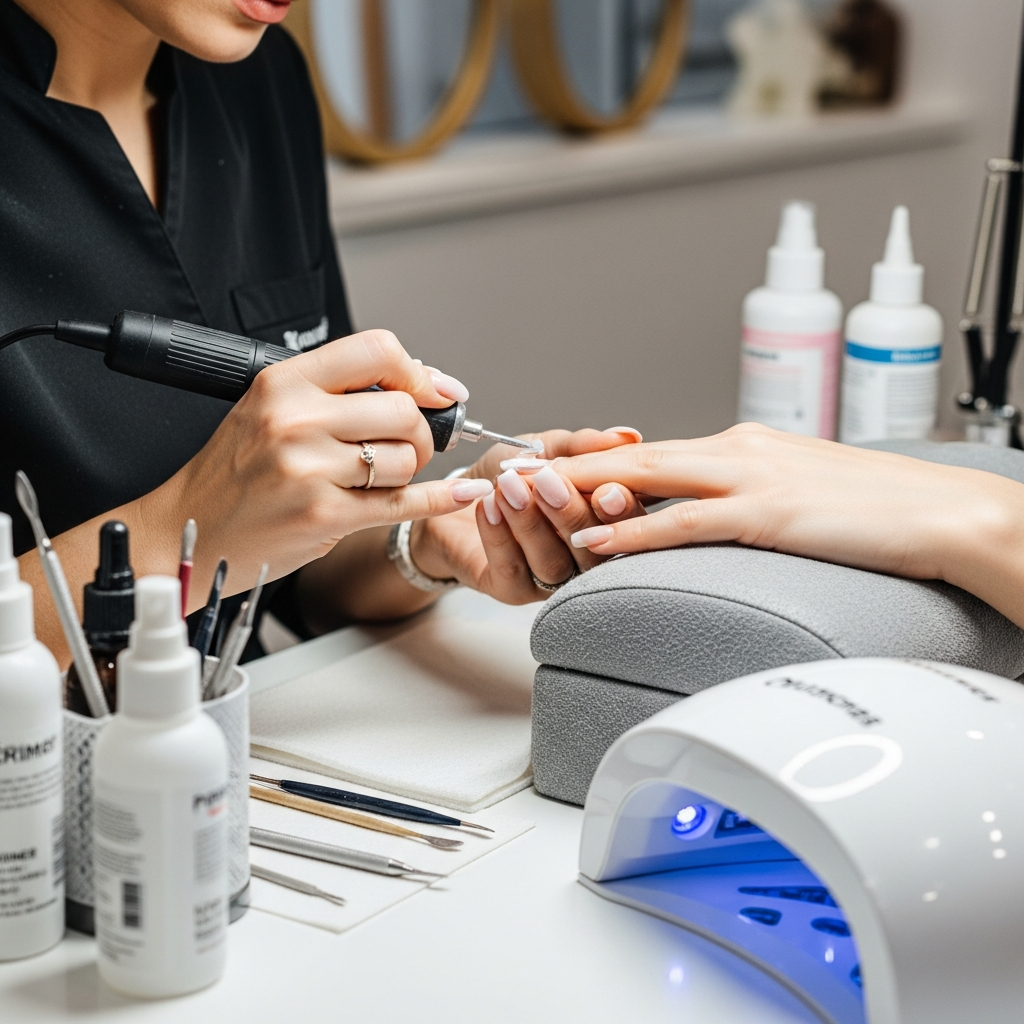
Effective mechanical prep begins with the meticulous removal of the true cuticle from the nail plate using a professional pusher or e-file bit.
Removing this non-living tissue is critical because gel and acrylic products will not adhere to skin, leading to premature lifting at the proximal fold.
Use a 180-grit file or a fine-grit diamond bit to gently remove the shine, creating a textured surface for the nail enhancement to grip.
Standard Chemical Dehydration and Priming
Once the nail surface is physically prepared, chemical cleansing is required to remove residual oils, moisture, and microscopic debris.
Apply a professional-grade dehydrator followed by an acid-free or acid-based primer depending on the client’s specific nail plate chemistry and service type.
- Dehydrator: Temporarily removes surface moisture and balances the pH level.
- Primer: Acts as double-sided tape to create a chemical bond between keratin and product.
Critical Errors in Technical Execution
Over-filing the natural nail plate thins the keratin layers, making the nail too flexible to support a rigid enhancement structure.
Inadequate dust removal is another common failure point where particles trapped under the product create air pockets that lead to lifting.
Best Practices for Professional Results
- Ensure the sidewalls and eponychium areas are completely free of dead tissue.
- Use lint-free wipes with 99% isopropyl alcohol for the final surface cleanse.
- Avoid touching the prepared nail plate with bare fingers to prevent oil transfer.
Consistency in these steps ensures the structural integrity of the nail service and maintains high professional standards for client safety.
