Professional Nail Prep Techniques to Prevent Lifting
Professional nail prep is the foundational process of cleaning, dehydrating, and etching the natural nail plate to ensure maximum product adhesion. This critical phase involves thorough cuticle removal, surface buffing, and pH balancing to prevent lifting and enhance the durability of gel, acrylic, or builder gel enhancements during professional salon services.
Essential Steps for Superior Nail Plate Adhesion
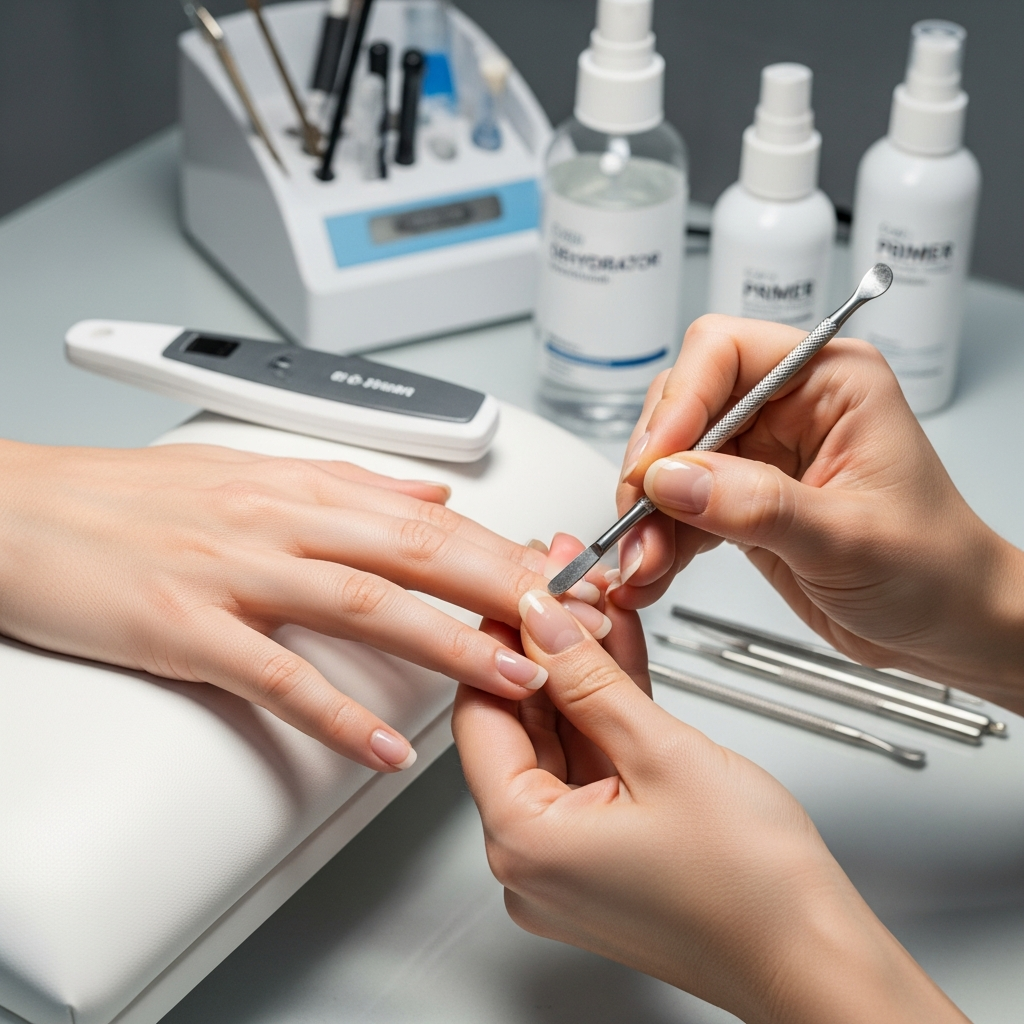
Precise cuticle work is the first step in ensuring product longevity. Technicians must remove the true cuticle from the nail plate using a professional pusher or specialized e-file bits.
Leaving any non-living tissue on the nail plate creates a barrier that leads to immediate lifting. A clean, debris-free surface allows the enhancement to bond directly to the keratin layers.
Nail Dehydration and pH Balancing Standards
Proper dehydration removes surface oils and temporary moisture that naturally accumulate. Applying a high-quality dehydrator is mandatory before any chemical application to ensure a dry surface.
Following dehydration, a professional primer creates a chemical bond between the natural nail and the enhancement. This step anchors the product for the standard three to four weeks of wear.
Common Technical Mistakes in Enhancement Prep
Over-thinning the nail plate is a frequent error that compromises structural integrity. Thin nails are too flexible, causing rigid enhancements like acrylic to crack or peel away from the tip.
Maintaining the health of the dorsal layer is vital for long-term retention. Technicians should use a high-grit buffer rather than heavy-grit files to gently remove the surface shine.
Incomplete Dust Removal and Contamination
Sanitization and dust control are mandatory for technical success in any professional setting. Any debris trapped under the enhancement can lead to bacterial growth or mechanical bonding failure.
Professional technicians should use a stiff manicure brush to clear the lateral folds. Avoid touching the prepared nail plate with bare fingers to prevent transferring skin oils back onto the surface.
Advanced Shaping and Structure for Durability
Correct structural placement of the apex ensures the nail can withstand daily impact. An improperly balanced enhancement puts excessive stress on the natural free edge, leading to painful breaks.
- Apex Placement: Position the highest point over the stress area for maximum support.
- Side Wall Alignment: Ensure parallel lines from the growth channel to the free edge.
- C-Curve Consistency: Maintain a uniform curve for structural strength across the surface.
Refining the shape with consistent filing techniques prevents snagging and lifting at the corners. High-quality professional tools and sharp files are essential for achieving these precise geometric results.
