Professional Prep Techniques for Maximum Gel Nail Retention
Nail prep for professional gel services requires thorough mechanical cleaning, surface dehydration, and chemical priming to ensure a strong bond. By removing the non-living tissue from the nail plate and balancing the pH level, technicians prevent premature lifting. This protocol is essential for maintaining service durability and client satisfaction.
Mechanical Prep and Cuticle Management
The first step in any professional service is the removal of the pterygium from the nail plate.
This non-living tissue acts as a barrier, preventing the gel from adhering directly to the keratin.
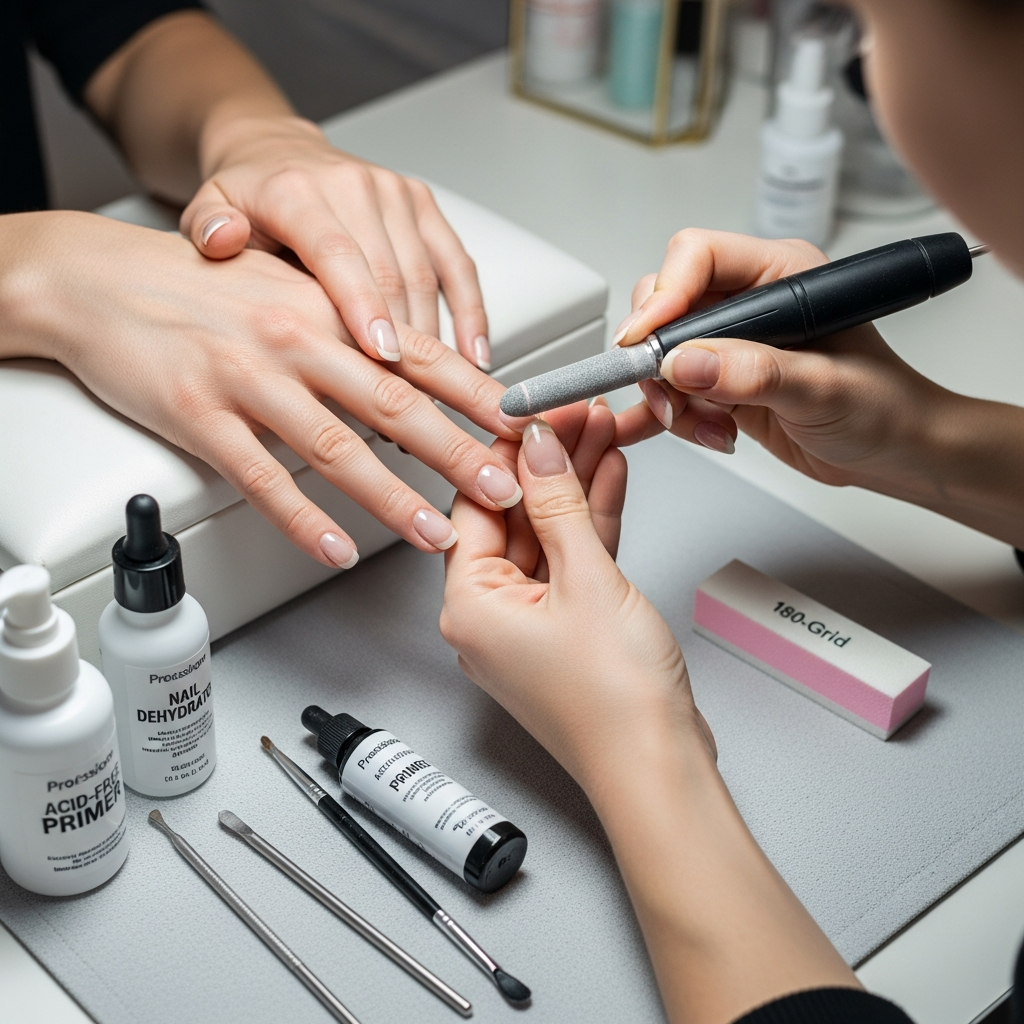
Using a curated e-file bit or a sharp pusher ensures a clean surface for product application.
Advanced E-File Manicure Standards
Professional technicians utilize fine-grit diamond bits to gently exfoliate the proximal nail fold.
This process creates a smooth transition and allows the color to be applied closer to the skin.
Safe e-file techniques prevent damage to the matrix while ensuring the sidewalls are free of debris.
Surface Buffing and Texture
A 180-grit buffer or file is typically used to remove the natural shine from the nail surface.
This creates microscopic grooves that provide the mechanical “anchor” for base coats and builders.
Oversanding must be avoided to maintain the structural integrity and thickness of the natural plate.
Chemical Adhesion and Dehydration
After mechanical cleaning, the nail must be completely free of oils, dust, and moisture.
Professional-grade cleansers containing pure isopropanol and acetone are standard for deep cleaning.
Proper dehydration is the most critical step in preventing service failure within the first week.
The Role of PH Balancers and Primers
A pH balancer temporarily raises the alkalinity of the nail to better accept chemical bonds.
Acid-free primers act like double-sided tape, creating a covalent bond between the keratin and the gel.
Applying these products sparingly ensures the nail plate is not oversaturated, which can cause sensitivity.
Common Technical Mistakes Leading to Lifting
- Incomplete Cuticle Removal: Any skin left on the plate causes the gel to lift instantly.
- Product Flooding: Touching the sidewalls or cuticle area with gel creates a ledge for moisture.
- Inadequate Curing: Using a lamp with incompatible wavelengths results in a soft, unstable bond.
- Contamination: Allowing the client to touch their face or hair after the nail has been dehydrated.
Safety and Integrity Standards
Maintaining the health of the natural nail is a priority for every professional technician.
Over-filing during the prep phase leads to thin, flexible plates that cannot support gel weight.
Consistent execution of these prep steps ensures a high-quality result that lasts three to four weeks.
