Professional Standards for Acrylic Nail Application and Durability
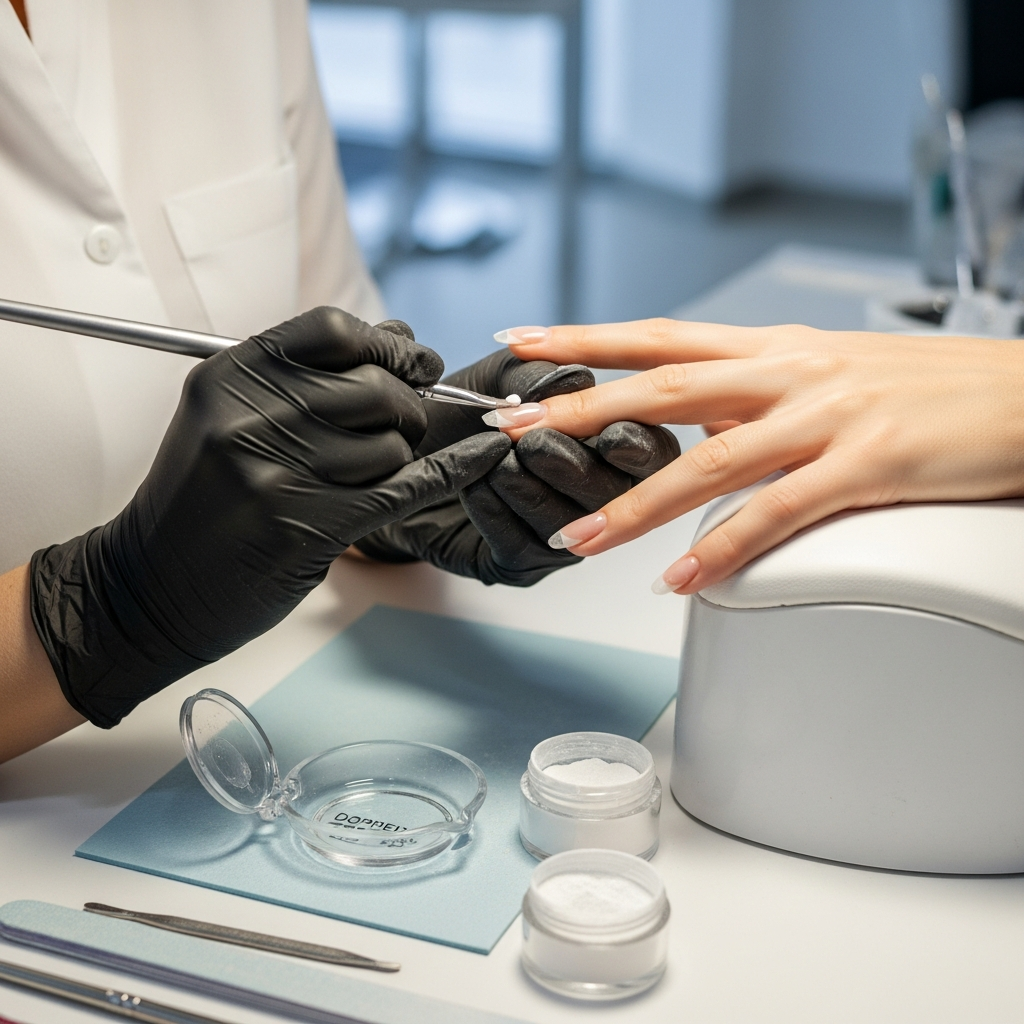
Professional acrylic nail application requires precise preparation and product control to ensure long-term retention and structural integrity. A high-quality nail service depends on meticulous cuticle work, dehydrating the natural plate, and placing the apex correctly to support the stress area, preventing lifting or breakage while maintaining the natural health of the nail.
Essential Nail Preparation for Maximum Adhesion
The foundation of every durable enhancement is the preparation of the natural nail plate. Technicians must ensure the surface is free of oils, debris, and non-living tissue to prevent lifting.
Managing the Cuticle Area and Lateral Folds
Using a fine-grit diamond bit or a manual pusher, gently remove the true cuticle from the nail plate. This step is vital because product will not adhere to skin, leading to premature service failure.
Chemical Dehydration and Priming Steps
After mechanical prep, apply a professional-grade dehydrator to remove surface moisture. Follow with a primer compatible with your polymer system to create a chemical bond between the nail and the acrylic.
Mastering Liquid to Powder Ratios and Bead Placement
Consistency is key when working with monomer and polymer. A bead that is too wet will shrink and lift, while a bead that is too dry will be brittle and lack clarity.
The Importance of Apex Placement for Structural Support
The apex is the highest point of the nail enhancement and must be positioned over the stress area. Proper apex placement absorbs impact and prevents the enhancement from snapping under pressure.
- Zone 1: The free edge, which should be thin and tapered.
- Zone 2: The stress area, where the apex provides strength.
- Zone 3: The cuticle area, where the product must be flush to the nail.
Finishing Techniques and Shape Refinement
Once the acrylic has polymerized, use a 150 or 180-grit file to refine the perimeter and surface. Consistent filing strokes ensure a symmetrical shape and a smooth transition from the enhancement to the natural growth.
Check the side walls and the C-curve to ensure the structure is balanced. A uniform thickness across the free edge provides a professional appearance and long-lasting wear for the client.
Client Safety and Sanitation Standards
Professional technicians must prioritize safety by using only MMA-free monomers and sanitized implements. Cross-contamination is prevented by using disposable files or high-level disinfectant for multi-use metal tools.
Always inspect the nail plate for signs of trauma or infection before beginning service. Maintaining a clean workspace and following U.S. state board regulations protects both the technician and the client.
