Managing Nail Salon Workflows and Staff Performance
Nail salon workflow management is the systematic organization of technician tasks and service sequences to ensure maximum productivity and service consistency. Effective operations rely on standardized protocols for station preparation, service execution, and sanitation to maintain a high-performance environment while managing labor costs and professional supply usage.
Standardizing Nail Service Protocols
Consistency in a professional nail environment depends on established Standard Operating Procedures (SOPs). Every technician must follow the same sequence for basic services, including prep, application, and finishing steps.
Standardized procedures reduce service variability and ensure that every client receives the same quality. This internal control is essential for maintaining the reputation of the nail salon and reducing supply waste.
Defining Service Time Blocks
Professional management requires setting specific time limits for each nail service. A standard gel manicure should ideally be completed within 45 minutes to maintain the daily appointment flow.
- Preparation: 10 minutes for removal and cuticle work.
- Application: 25 minutes for product placement and shaping.
- Finishing: 10 minutes for oil application and station cleanup.
Station Turnover and Sanitation
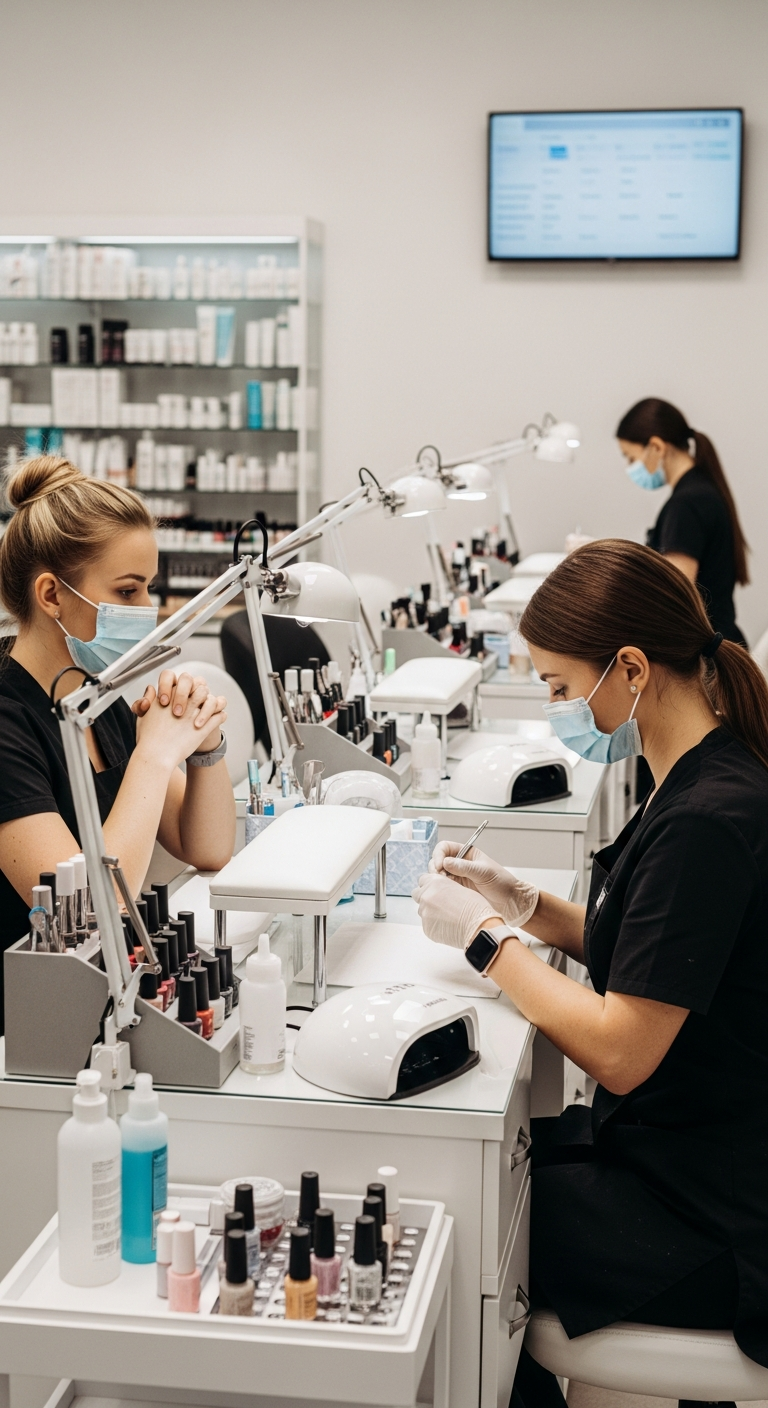
Efficient station turnover is critical for high-volume nail salons in the United States. Technicians must follow a strict 10-minute sanitation window between clients to meet state board requirements.
Proper management of disinfectants and disposable tools ensures safety without disrupting the salon schedule. Clear checklists at each station help technicians maintain these professional standards consistently.
Staff Scheduling and Productivity Control
Managing a nail salon team requires a deep understanding of peak hours and technician specialties. Scheduling should reflect historical data to prevent overstaffing during slow morning hours.
Performance tracking helps identify which technicians are meeting time targets and which require additional technical training. Monitoring the ratio of service time to revenue generated is a key metric for salon owners.
Managing Technician Performance
Labor is the highest cost in the U.S. nail industry, making technician productivity a primary management focus. Owners should implement daily performance reviews to track service speed and client retention rates.
Professional feedback should focus on technical execution and adherence to salon-wide protocols. Consistency across the team ensures that the salon can fill any chair without a drop in service quality.
Revenue Tracking and Cost Management
Daily revenue tracking must account for service totals, professional product consumption, and labor expenses. Maintaining a lean supply inventory prevents capital from being locked in unused nail products.
Cost management involves monitoring the precise usage of professional liquids, powders, and gels. Excessive product waste at the technician level can significantly impact the monthly profit margins of the salon.
Monitoring Professional Product Usage
Nail technicians should be trained on the correct dispensing of chemicals to avoid unnecessary depletion. Implementing a back-bar tracking system allows management to see exactly how much product is used per service.
Controlling these internal costs is vital for navigating the rising price of professional nail supplies in the domestic market. Regular inventory audits help identify discrepancies and improve overall operational efficiency.
