Managing Nail Salon Workflows for Service Consistency
Effective nail salon management relies on standardized workflows that define every step of the service process from client arrival to final payment. These protocols ensure consistent nail service quality across all technicians, minimize product waste, and streamline daily operations, directly impacting the overall profitability and professional reputation of a United States nail establishment.
The Importance of Standardized Nail Service Protocols
Consistency is the foundation of a successful nail business. When every technician follows the same operational steps, the salon maintains a predictable brand standard that clients trust.
Standardized protocols reduce errors during complex enhancements and ensure that safety and sanitation remain priorities. This structure allows managers to identify specific operational bottlenecks and address them through targeted staff training.
Without these systems, service times fluctuate wildly, leading to scheduling conflicts and lost revenue. Implementing clear expectations for every nail service creates a professional environment for both staff and clientele.
Daily Operational Workflows for Nail Technicians
A well-organized nail salon operates on a strict daily schedule that begins before the first client arrives. Pre-shift preparation ensures all workstations are stocked with necessary professional liquids and tools.
- Morning Station Setup: Technicians must verify their supply of clean files, buffers, and sanitized implements.
- Mid-Day Turnaround: Each nail station requires a thorough reset between clients to maintain professional hygiene standards.
- Closing Duties: End-of-day protocols include deep cleaning pedicure basins and restocking monomer, polymer, and gel supplies.
Client Intake and Preparation Standards
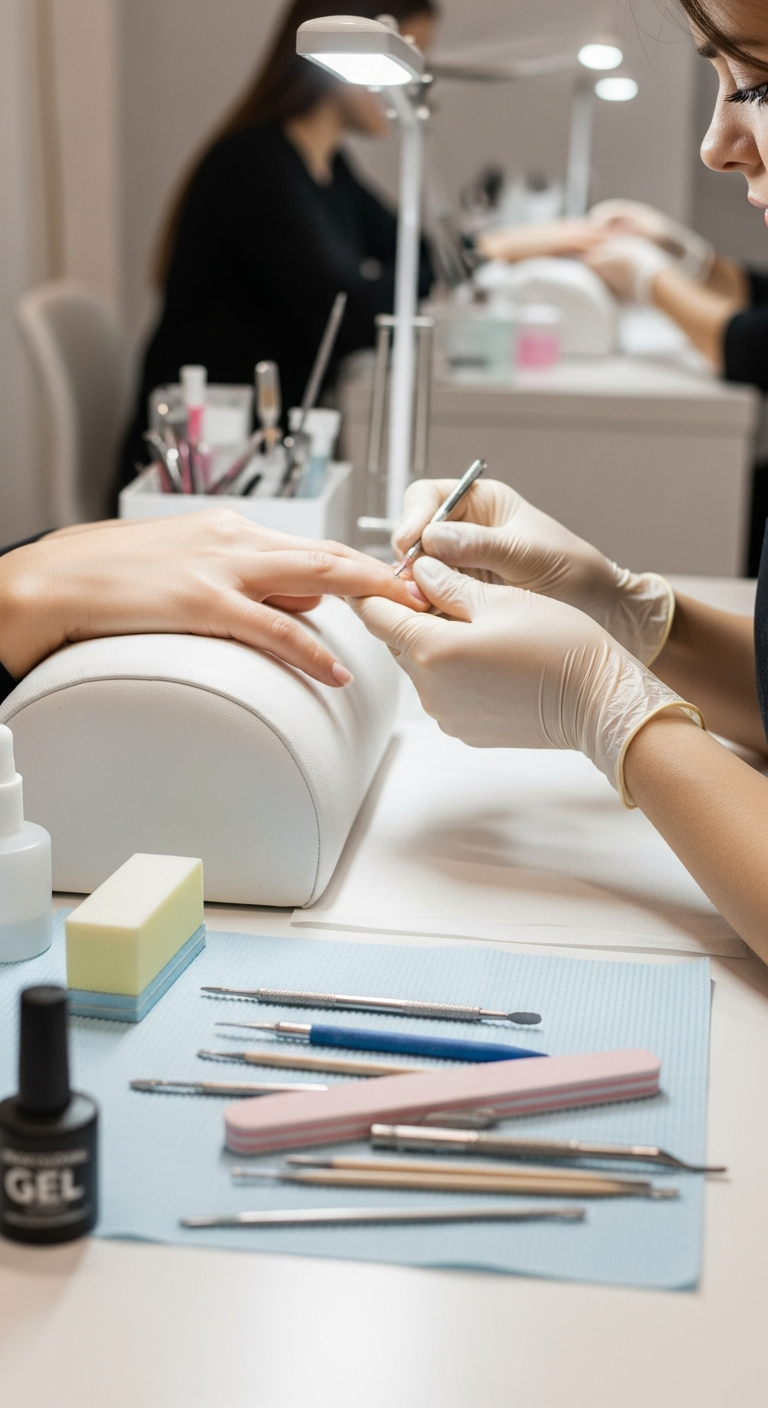
The nail service begins with a professional consultation and health assessment. Technicians must examine the natural nail plate and surrounding tissue for any signs of contraindications before starting work.
Standardizing the prep phase, including proper cuticle work and surface dehydration, is essential for product longevity. Inconsistent preparation is the most common cause of premature lifting in nail enhancements.
Service Execution and Safety Compliance
Consistency in application techniques ensures that every set of nails meets the salon’s aesthetic and structural standards. This includes specific guidelines for apex placement, sidewall filing, and product thickness.
Safety compliance must be integrated into the workflow, requiring technicians to wear personal protective equipment. Proper ventilation and chemical handling are non-negotiable aspects of professional nail salon management.
Staff Scheduling and Performance Control
Effective scheduling balances labor costs with service demand. Managers must analyze peak hours to ensure adequate coverage while minimizing technician downtime during slower periods in the nail salon.
Performance control involves regular audits of service times and client retention rates. Technicians who consistently exceed allotted time frames for a standard nail fill or full set require additional technical coaching.
Establishing clear performance benchmarks helps maintain a high level of accountability. This ensures that every team member contributes to the operational efficiency and financial health of the business.
Revenue Tracking and Supply Cost Management
Tracking daily revenue by service type allows owners to understand which nail treatments are the most profitable. This data informs decisions regarding menu pricing and future technician training priorities.
Supply costs must be monitored closely to prevent internal waste and theft. Professional nail products, especially high-end gel systems and acrylics, represent a significant portion of monthly operating expenses.
Implementing a manual inventory log helps track the usage rates of essential nail supplies. Regular audits ensure that product consumption aligns with the number of services performed by the staff.
