Nail Salon Operations: Managing Service Consistency
Nail salon service consistency is the professional practice of maintaining uniform technical standards and client experiences across all workstations. By implementing standard operating procedures for nail preparation and product application, owners ensure quality control, reduce service errors, and protect the salon reputation through repeatable, high-quality results every time.
Developing SOPs for Professional Nail Services
Consistency begins with documented protocols for every service offered.
A standard nail service must follow the same steps regardless of the technician.
This includes specific requirements for cuticle work and nail plate dehydration.
Standardized workflows reduce the risk of service lifting or premature chipping.
When technicians follow a uniform process, results become predictable.
Clients trust the nail salon more when they know what to expect.
- Nail Plate Preparation: Standardized filing and buffing techniques.
- Chemical Safety: Consistent use of primers and bonders.
- Application Timing: Set durations for each service phase.
Staff Performance and Technical Accountability
Managing a team of nail technicians requires regular performance audits.
Owners should observe application techniques to ensure compliance with salon rules.
Inconsistent work often stems from shortcuts taken during the nail prep stage.
Lead technicians should verify that all staff members use the correct ratios.
This is especially critical for liquid and powder nail systems.
Technical accountability ensures that every set of nails meets professional standards.
Operational Challenges and U.S. Labor Regulations
U.S. nail salon owners must balance labor costs with service efficiency.
High turnover in the nail industry often disrupts operational consistency.
Proper training on salon-specific workflows helps integrate new technicians quickly.
Adhering to state board regulations is a non-negotiable part of daily operations.
Sanitation protocols must be integrated directly into the nail service timeline.
Efficiency should never come at the expense of safety or legal compliance.
Revenue Tracking and Professional Product Control
Effective nail salon management includes monitoring material overhead.
Excessive use of gel polish or acrylic monomers directly impacts the bottom line.
Owners should establish clear guidelines for product portioning per nail service.
Tracking revenue per technician helps identify top performers and training needs.
Analyzing the time spent on each nail service prevents scheduling bottlenecks.
Controlled workflows lead to higher profitability and more stable salon growth.
Improving Daily Salon Workflow
Daily operations depend on a clean transition between clients.
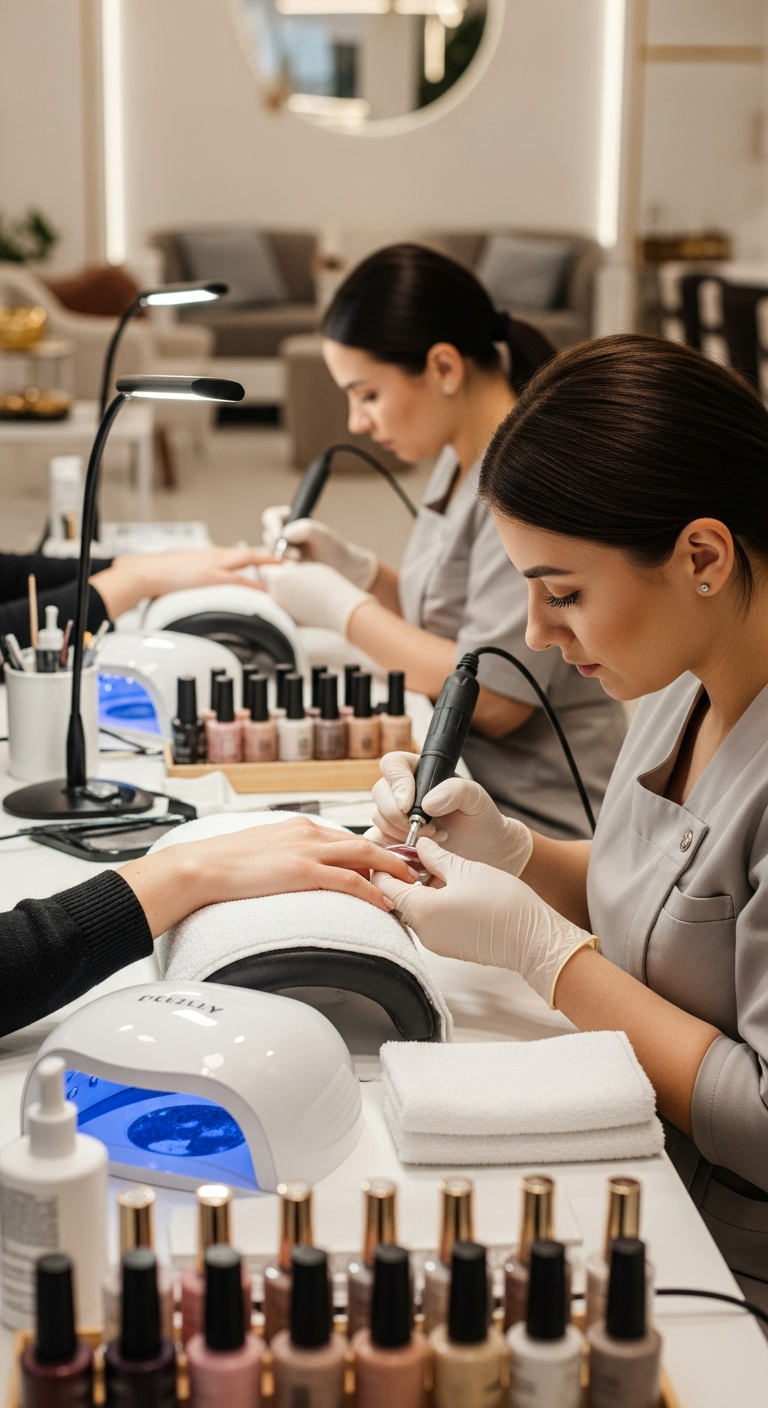
Nail technicians must have organized stations to minimize downtime.
A structured workflow allows for more appointments without compromising quality.
Implementing a checklist for opening and closing the nail salon is vital.
These tasks ensure the facility remains professional and ready for service.
Operational excellence is built on these small, repeatable daily habits.
