Optimizing Nail Salon Workflow with Standard Procedures
Nail salon management requires implementing Standard Operating Procedures (SOPs) to maintain consistent service quality and professional efficiency. These structured workflows guide nail technicians through specific operational tasks, from sanitation protocols to service execution, ensuring a uniform experience for clients while protecting the salon’s bottom line and regulatory compliance.
Standardizing Daily Nail Salon Workflows
A structured nail salon workflow eliminates confusion among staff and ensures every client receives the same high-quality treatment regardless of the technician.
Standardized service steps allow nail technicians to manage their time effectively without compromising technical execution or professional results.
Technical Service Consistency
Every nail service must follow a specific sequence of steps, from initial nail plate preparation to the final application of cuticle oil.
Consistent technical protocols ensure that product adhesion remains reliable, reducing the frequency of service repairs and client dissatisfaction.
Client Intake and Safety Protocols
Professional nail management begins with a thorough consultation to assess the health of the natural nail and identify any potential contraindications.
Technicians must document specific client preferences and service history to provide personalized care and maintain long-term professional relationships.
Optimizing Technician Performance and Scheduling
Efficient staff scheduling involves balancing peak hour demand with technician skill sets to maximize chair utilization and salon throughput.
Implementing a clear check-in and turnover process reduces downtime between nail appointments and increases the overall daily capacity of the facility.
Managing Staff Productivity
Monitoring individual nail technician performance through service time tracking helps identify specific training needs and operational bottlenecks.
Regular performance reviews based on technical accuracy and speed help maintain high professional standards across the entire nail team.
Internal Communication Standards
Clear communication channels between the front desk and the nail floor prevent scheduling overlaps and reduce stress for the technical staff.
Established protocols for handling late arrivals and walk-in requests help maintain a professional environment and keep the daily schedule on track.
Operational Cost Control and Supply Management
Managing nail supply costs requires a systematic approach to inventory tracking and monitoring the usage of professional chemicals.
Standardizing product portions for acrylic, gel, and lacquer services prevents unnecessary waste and ensures predictable service costs for the business.
Inventory Tracking Systems
Regular inventory audits of nail professional products ensure that essential supplies are always available for technicians during high-volume shifts.
Tracking the consumption rates of liquids, powders, and gels allows owners to identify patterns of waste or inefficient application techniques.
Safety and Sanitation Management
Strict adherence to state board sanitation regulations is the foundation of professional nail salon operations and client safety.
Internal SOPs must mandate the cleaning and disinfection of all non-porous nail tools and pedicure basins immediately after every use.
Workstation Maintenance
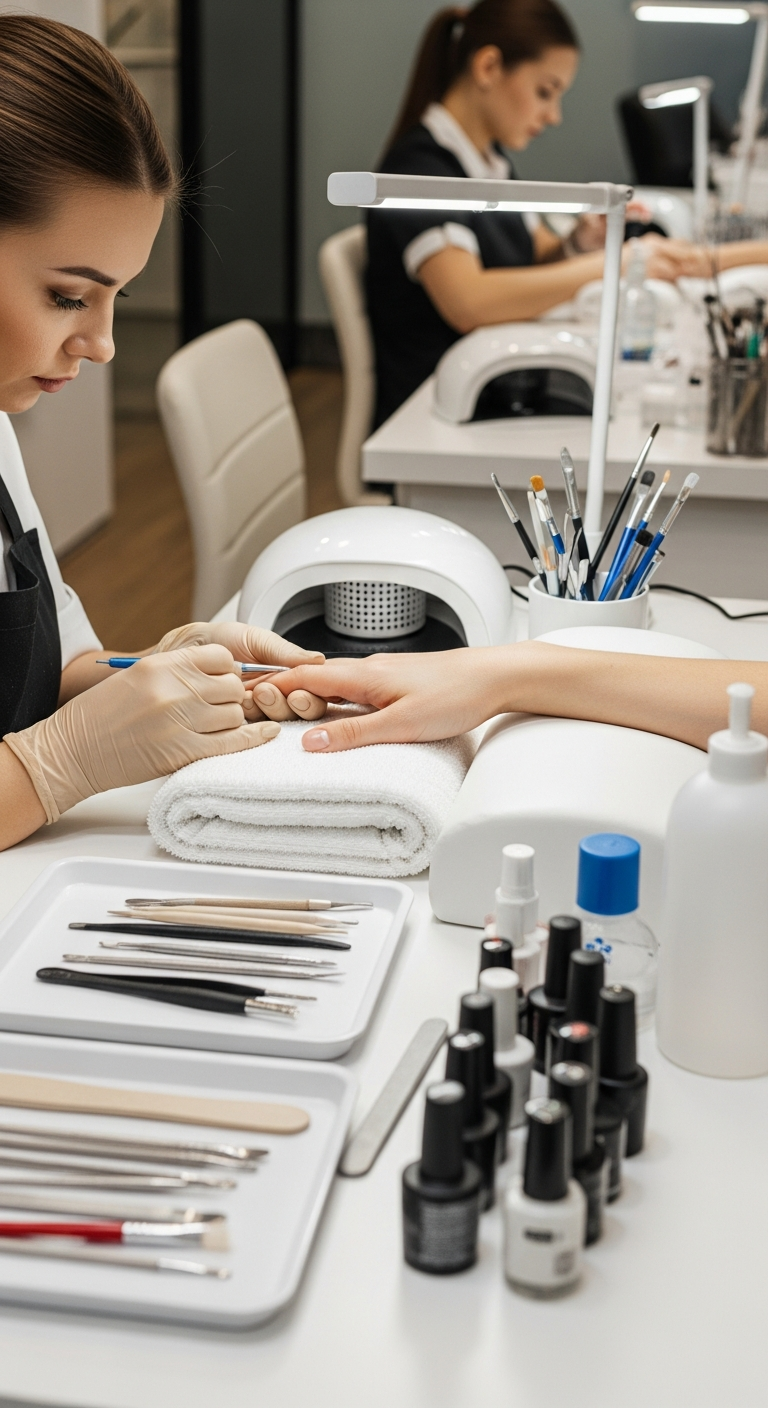
Each nail station must be kept in a professional state, with dust extraction systems maintained and chemicals stored according to safety standards.
Organized workstations allow nail technicians to work more efficiently and project an image of professionalism and cleanliness to the client.
