Advanced Nail Architecture and Structural Integrity in US Nail Salons
Professional nail technicians in the United States nail salon environment must prioritize structural integrity to ensure client safety and service longevity.
Mastering the balance between product thickness and nail anatomy prevents premature lifting, cracking, and potential trauma to the natural nail plate.
This technical guide focuses on the precise application methods required for high-performance gel and acrylic systems in a professional setting.
Precision E-File Preparation for Enhanced Adhesion
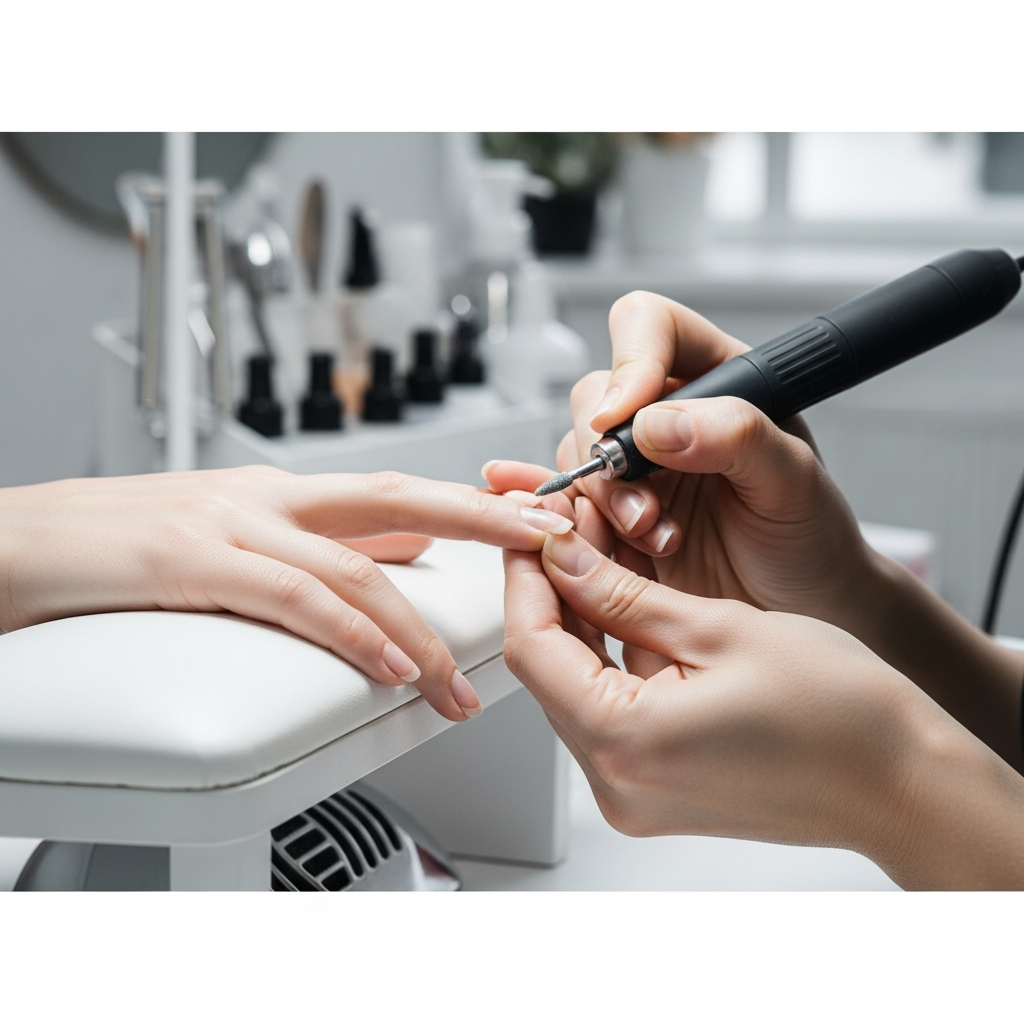
Effective adhesion begins with a thorough mechanical preparation of the nail plate using an electric file and professional-grade diamond bits.
Technicians should utilize a fine-grit diamond flame bit at low RPMs to gently lift the proximal nail fold and remove non-living tissue from the plate.
Removing the pterygium and clearing the lateral folds ensures the enhancement bonds directly to the keratin, eliminating common points of delamination.
- Bit Angle: Maintain a 0-degree angle to the nail plate to avoid creating “rings of fire” or thinning the dorsal layer.
- Speed Control: Operate between 3,000 and 5,000 RPM for cuticle work to maintain control and minimize heat friction.
- Directional Filing: Toggle between forward and reverse modes when navigating different sides of the nail to follow the natural growth.
The Mechanics of Apex Placement and Stress Point Reinforcement
The apex is the highest point of the nail enhancement and serves as the primary structural support for the entire extension.
In a standard United States nail salon service, the apex should be positioned based on the length of the free edge to balance the weight.
For short to medium extensions, the apex is typically located in the Zone 2 area, providing maximum reinforcement to the stress zone.
Proper Apex Positioning:
- Short Nails: Place the apex closer to the center of the nail bed to provide a slim but durable profile.
- Long Extensions: Shift the apex slightly toward the cuticle area to counter-balance the leverage exerted on the free edge.
- Consistency: Ensure the transition from the apex to the sidewalls is seamless to prevent structural weak points.
Refining Finish Work and Surface Smoothing
The final shape of the nail is determined by precise hand filing and the systematic use of finishing bits to ensure a professional look.
Technicians must verify that the C-curve is consistent across all ten nails, providing 50% of the total strength of the enhancement.
Use a 180-grit file to refine the sidewalls and lower arch, ensuring the extension exits the natural nail fold in a straight trajectory.
Finishing Workflow:
- Side-Wall Tapering: Align the file parallel to the natural growth to create a sleek, modern silhouette.
- Surface Buffing: Use a graduated buffing sequence to remove scratches before applying a high-shine professional top coat.
- Sealant Application: Ensure the top gloss encapsulates the entire enhancement, including the free edge, to prevent moisture infiltration.
Consistency in these technical steps allows nail professionals to deliver high-quality results that meet the rigorous standards of the industry.
