Financial Survival Guide for Starting a Nail Salon
A nail salon startup requires specific initial capital to cover professional equipment, licensing, and leasehold improvements within the professional industry. These early expenses for a nail business typically include specialized ventilation, pedicure stations, and the procurement of state-mandated safety certifications necessary for legal operation and first-year survival.
Estimating Your Initial Nail Salon Investment
Calculating the total cost of opening a nail facility is the first step toward long-term business viability.
In the United States, owners must account for high-quality furniture that meets ergonomic and durability standards.
Initial capital often ranges from $40,000 to $150,000 depending on the size and location of the storefront.
Professional Nail Equipment and Furniture
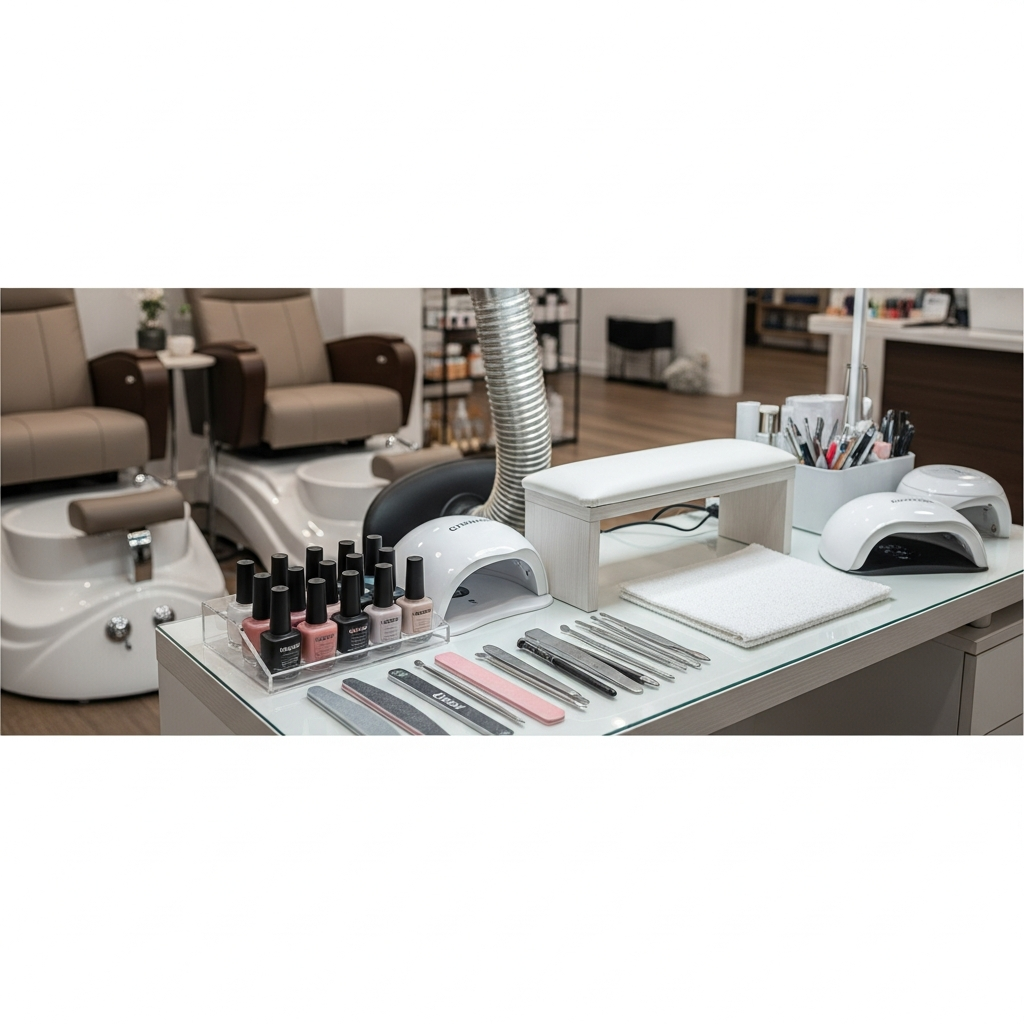
- Pedicure Chairs: High-end units with pipeless drainage systems ensure hygiene and client comfort.
- Manicure Stations: Professional tables must include built-in dust collection and localized exhaust ventilation.
- Curing Lamps: Investing in professional-grade LED or UV lamps is essential for proper chemical polymerization.
Initial Product and Chemical Inventory
Stocking a new nail salon requires a significant upfront investment in professional liquids and powders.
You must source high-quality gels, acrylics, and monomer systems from reputable distributors to ensure service consistency.
Budgeting for a full range of colors and back-bar sanitation supplies is critical for the first six months.
Navigating Regulatory and Licensing Costs
Compliance with state boards and local municipalities is a mandatory expense for any nail professional.
Licensing fees vary by state, but often include establishment permits, health department inspections, and safety certifications.
Failure to account for these legal costs can result in heavy fines or the closure of the business.
Professional liability insurance is another non-negotiable cost for a nail salon owner.
This coverage protects the business from claims related to chemical reactions or accidental injuries during services.
Securing insurance early in the startup phase provides a safety net for your personal and professional assets.
First-Year Cash Flow and Cost Control
Survival in the nail industry depends on maintaining a healthy cash reserve for the first twelve months.
Most new salons do not reach a break-even point immediately, making liquid capital essential for monthly overhead.
Tracking every expense, from lint-free wipes to utility bills, prevents common financial pitfalls.
Operational Reserves and Lease Obligations
Rent is often the largest fixed expense for a nail salon owner.
Negotiating a lease with a tenant improvement allowance can help offset the cost of plumbing and ventilation.
Maintaining three to six months of operating expenses in reserve ensures the business remains open during slow periods.
Controlling Supply Waste
Reducing product waste is a primary method for protecting margins in a nail salon environment.
Implementing strict dispensing protocols for monomers and gels prevents unnecessary loss of expensive chemicals.
Monitoring inventory levels weekly allows for better cash management and prevents over-ordering of slow-moving stock.
