How to Open a Nail Salon and Survive the First Year
Opening a nail salon involves securing state board licensing, choosing a strategic location, and managing initial equipment costs. To survive the first year, owners must focus on maintaining a low professional nail product overhead and reaching a sustainable break-even point through consistent service quality and disciplined expense management.
Essential Startup Requirements for a New Nail Salon
State Board Licensing and Legal Compliance
Every professional nail business must comply with specific state board regulations regarding sanitation and facility layout. You must secure a salon establishment license and ensure all technicians hold active individual licenses for the services they provide to clients.
Insurance is another non-negotiable requirement for startup survival in the United States. General liability and professional liability insurance protect the business from financial loss due to accidents or chemical-related injuries during nail services.
Initial Professional Inventory Needs
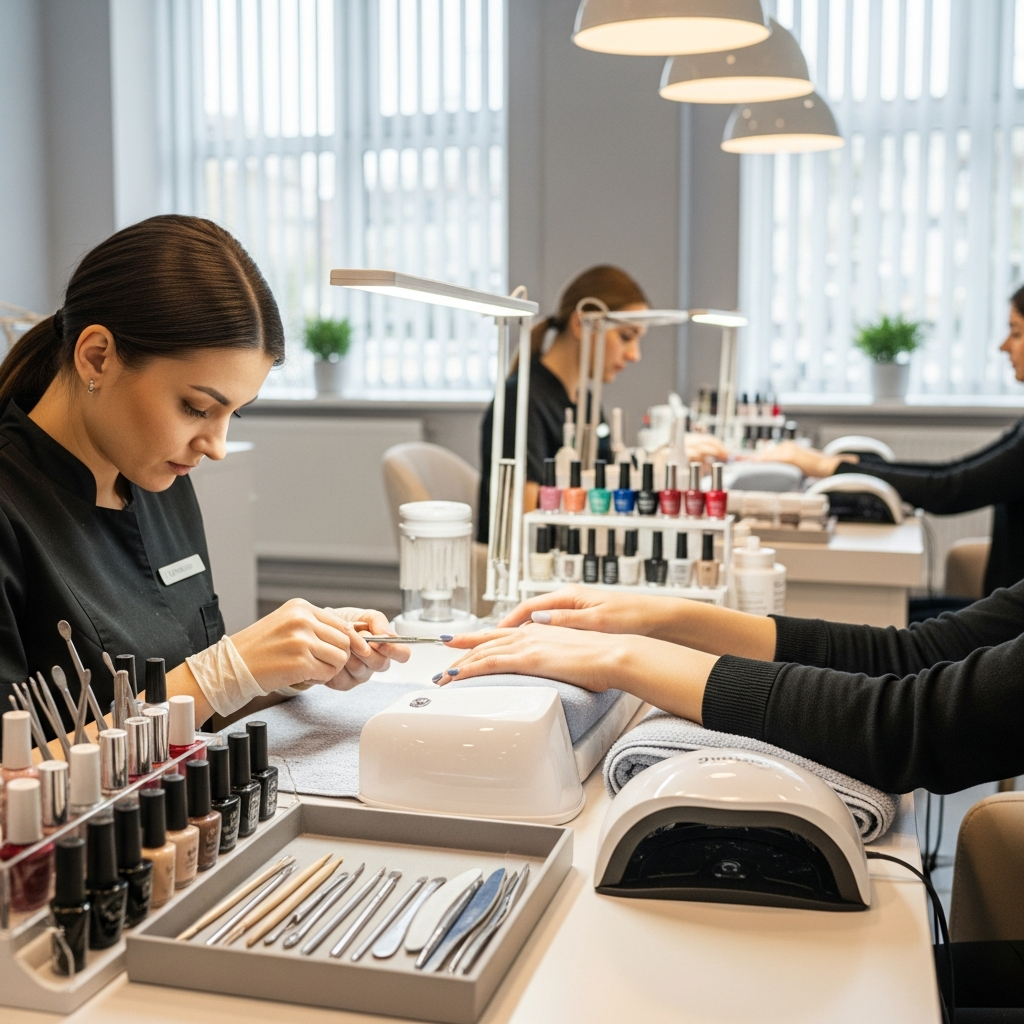
Starting a nail salon requires a significant investment in professional-grade liquids, powders, gels, and sanitation tools. Focus on high-quality basics that allow you to perform the most requested services, such as manicures and pedicures, without overstocking unnecessary colors.
Avoid the temptation to buy every available polish shade during the first month. Build your collection based on seasonal demand and client feedback to keep your initial capital focused on essential nail station furniture and ventilation systems.
Managing First-Year Operating Costs
Controlling Professional Product Waste
Product waste is a primary reason new nail salons fail to reach profitability. Technicians must be trained to use precise measurements of monomer, polymer, and gel products to ensure every bottle generates the expected revenue per service.
Implementing a strict inventory tracking system helps monitor usage patterns. By measuring how much professional nail product is consumed weekly, owners can identify waste and adjust service pricing to cover actual material costs.
Understanding the Break-Even Point
The break-even point is the specific number of nail services required each month to cover rent, utilities, and labor. New owners must calculate this number before opening to understand the daily client volume needed for survival.
During the first year, the focus should remain on reaching this target consistently. High-margin services, such as acrylic removals or specialized nail enhancements, can help accelerate the timeline toward a profitable business model.
Common Beginner Mistakes to Avoid
Many new owners fail by overspending on luxury decor while neglecting the quality of professional nail tools. High-end furniture does not compensate for poor service execution or unhygienic workstations.
-
To ensure long-term survival, avoid these errors:
- Underestimating the cost of high-quality ventilation and dust collection.
- Pricing services too low to compete with established local salons.
- Neglecting the mandatory sanitation protocols required by state boards.
- Failing to set aside a cash reserve for slow seasonal months.
Focusing on technical excellence and professional atmosphere will build a loyal client base faster than expensive marketing. Sustainable growth in the nail industry relies on word-of-mouth referrals and consistent service results.
