Mastering Advanced E-File Techniques in the Modern US Nail Salon
In the evolving landscape of the United States nail salon industry, the electric file has transitioned from a basic filing tool to a precision instrument for high-end cuticle prep and enhancement shaping.
Professional nail technicians must master torque and RPM control to ensure client safety while maintaining the high-speed efficiency required in a high-volume professional environment.
Correct technical execution reduces service time and improves the longevity of gel and acrylic applications by ensuring a perfectly prepped nail plate and seamless product transition.
Technical Bit Selection for Gel and Acrylic Enhancements
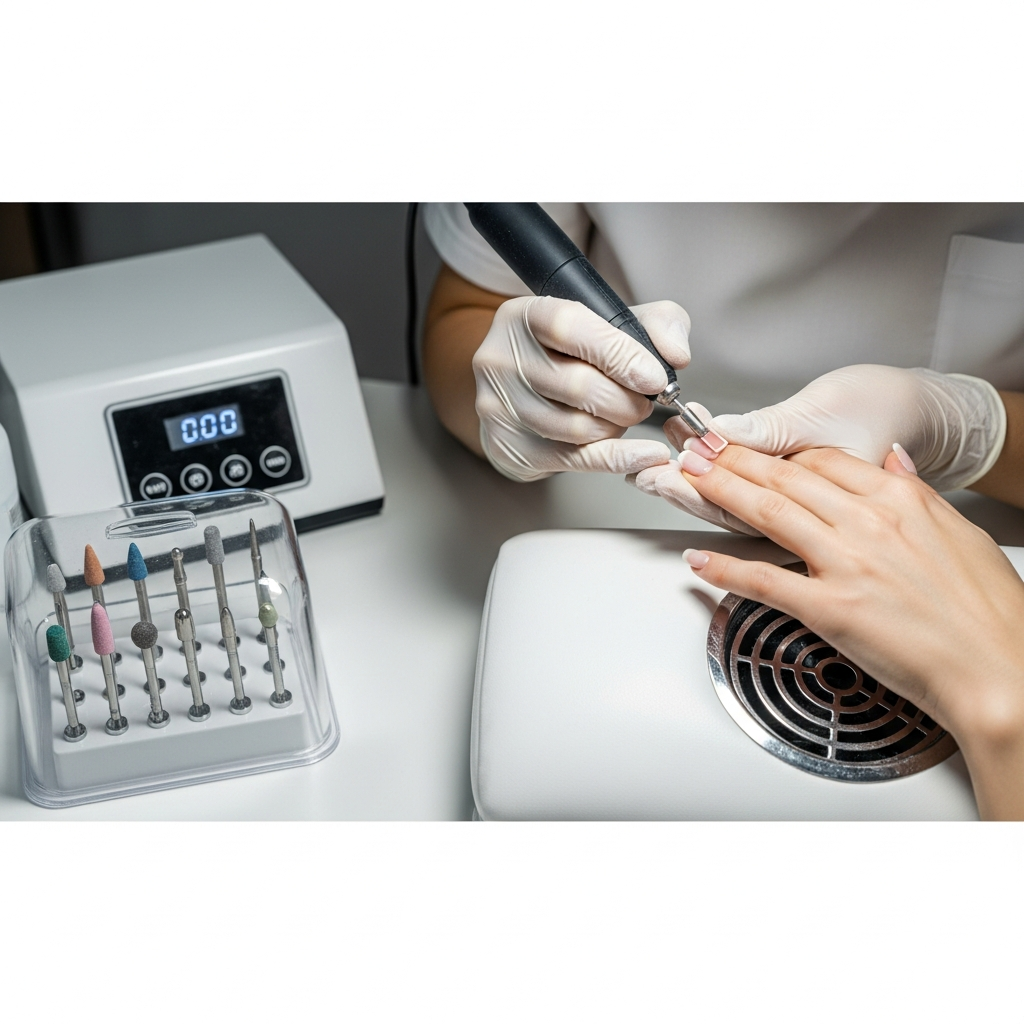
Choosing the correct grit and material is the first step in professional e-file execution. Carbide bits are preferred for bulk reduction of acrylics and hard gels due to their flute-like cutting edges.
For refining the surface or performing a backfill, a medium-grit ceramic bit minimizes heat transfer, protecting the natural nail plate from thermal damage during the removal process.
- Large Barrel Bits: Ideal for surface smoothing, evening the apex, and shortening the extension length.
- Safety Flame Bits: Essential for lifting the eponychium and clearing the lateral folds during a dry manicure.
- Mandrel with Sanding Bands: Used at low RPMs for prepping the natural nail and removing shine without thinning the dorsal layer.
Optimizing RPM and Pressure for Maximum Control
Efficiency in a professional workflow depends on the relationship between rotation speed and hand pressure. High RPMs allow the bit to do the work, reducing physical strain on the technician’s wrist.
When working near the proximal nail fold, technicians should drop the speed to 3,000-5,000 RPM. This prevents “rings of fire” and ensures delicate tissue remains intact during the cleaning phase.
For debulking structured gel or acrylic, increasing the speed to 15,000-20,000 RPM ensures a smooth finish. Always maintain a continuous motion to prevent localized friction and heat spikes.
Standardized Sanitation and Bit Maintenance
Maintaining professional standards in the United States requires strict adherence to state board regulations regarding tool disinfection. Every bit must undergo a multi-step cleaning process after every client.
Begin by using a wire brush to remove dust and debris from the flutes. Subsequently, bits must be scrubbed with soap and water before being fully submerged in an EPA-registered disinfectant.
Proper storage in a dry, sealed container prevents cross-contamination. This commitment to hygiene differentiates a senior technician and builds long-term client trust in the professional salon setting.
