
Essential Financial Planning for Opening a Nail Salon
Opening a nail salon requires a strategic investment in licensing, professional-grade equipment, and inventory while maintaining a three-to-six-month cash reserve for operational survival. Initial costs typically cover salon furniture, ventilation systems, sanitation tools, and high-quality nail products necessary to meet state board regulations and ensure a professional service standard from day one.
Calculating Your Initial Nail Salon Startup Costs
Commercial rent and security deposits represent your largest fixed expenses. Negotiating favorable lease terms is critical for surviving the first year of business.
Professional furniture including ergonomic manicure tables and pedicure thrones must meet local health codes. High-quality seating ensures both technician comfort and client satisfaction.
Mandatory Licensing and Permit Fees
State Board of Cosmetology fees vary by state and are non-negotiable. Every nail establishment must obtain a salon license before providing services to the public.
Building permits and fire department inspections are often required during the build-out phase. Ensure your ventilation system meets specific nail industry safety standards for air quality.
Inventory Management for New Nail Businesses
Focus your budget on a core range of gel polishes, acrylic systems, and monomer. Overstocking on niche colors can drain your initial working capital quickly.
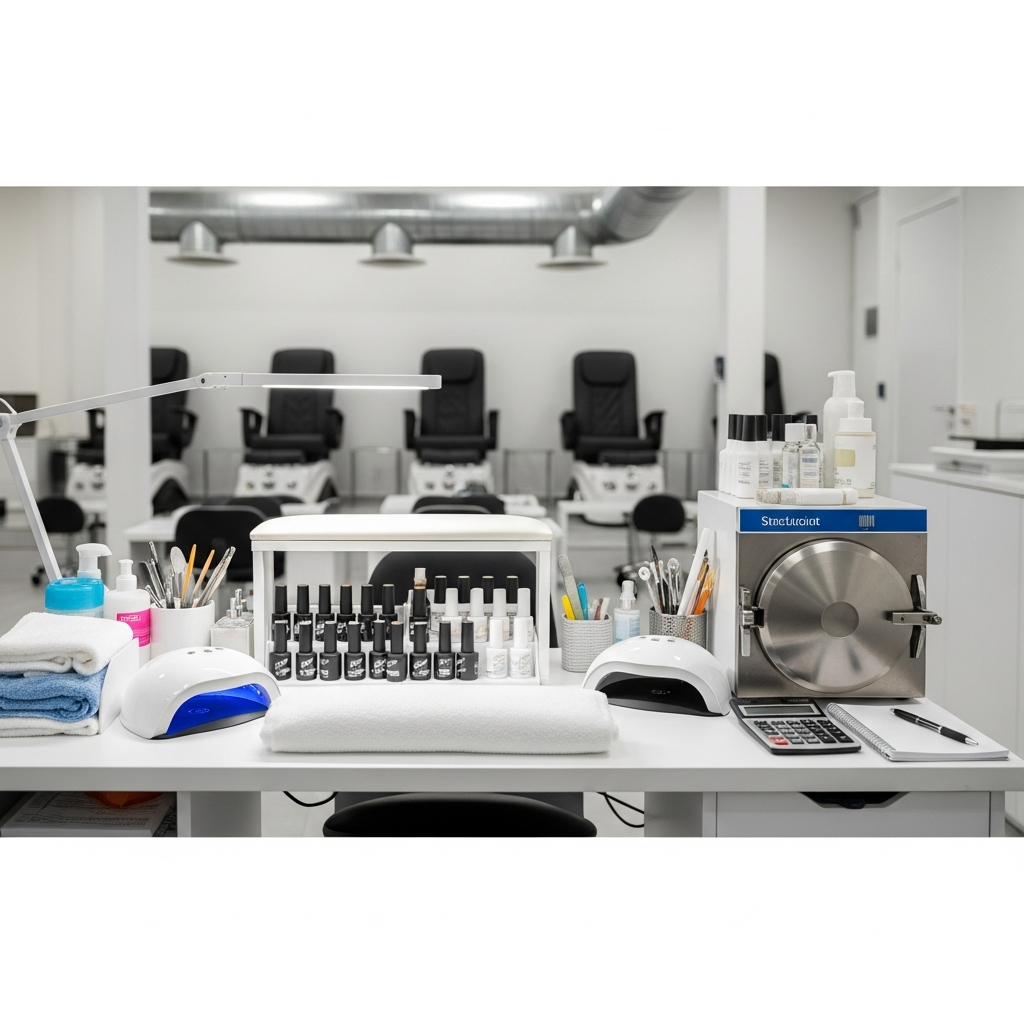
Invest in professional-grade sanitation tools and medical-grade autoclaves. Maintaining strict nail sanitation protocols protects your license and builds client trust from the start.
Consumables such as files, buffers, and towels should be bought in bulk. Tracking the cost per service helps you maintain healthy profit margins during the early stages.
First-Year Financial Survival Strategies
Maintaining a lean operational budget allows for flexibility during slow months. Monitor every chemical and supply used to prevent waste and inventory shrinkage.
- Track daily revenue against your fixed overhead costs.
- Minimize labor costs by adjusting schedules based on peak hours.
- Build a cash reserve to cover unexpected equipment repairs or fees.
Achieving the Break-Even Point
Calculate exactly how many manicures and pedicures are required daily to cover rent and utilities. Knowing your break-even number helps you set realistic daily goals.
Prioritize client retention over expensive advertising to build a stable revenue base. Repeat clients provide the consistent cash flow necessary for nail salon survival.
Avoid taking large draws from the business profit in the first year. Reinvesting earnings into higher-quality nail pigments or tools strengthens your market position.
