Preventing Nail Lifting Through Professional Prep Techniques
Nail lifting occurs when the enhancement separates from the natural nail plate due to improper preparation or application. To prevent lifting, professional nail technicians must focus on thorough cuticle removal, surface dehydration, and precise product application that avoids the surrounding skin and proximal nail fold.
The Critical Role of Dry Prep in Nail Longevity
Proper preparation is the foundation of any long-lasting nail service.
Technicians must ensure the nail plate is free of oils and debris.
Even microscopic particles of skin can cause significant adhesion failure.
Removing the True Cuticle
The true cuticle is the thin layer of dead tissue on the plate.
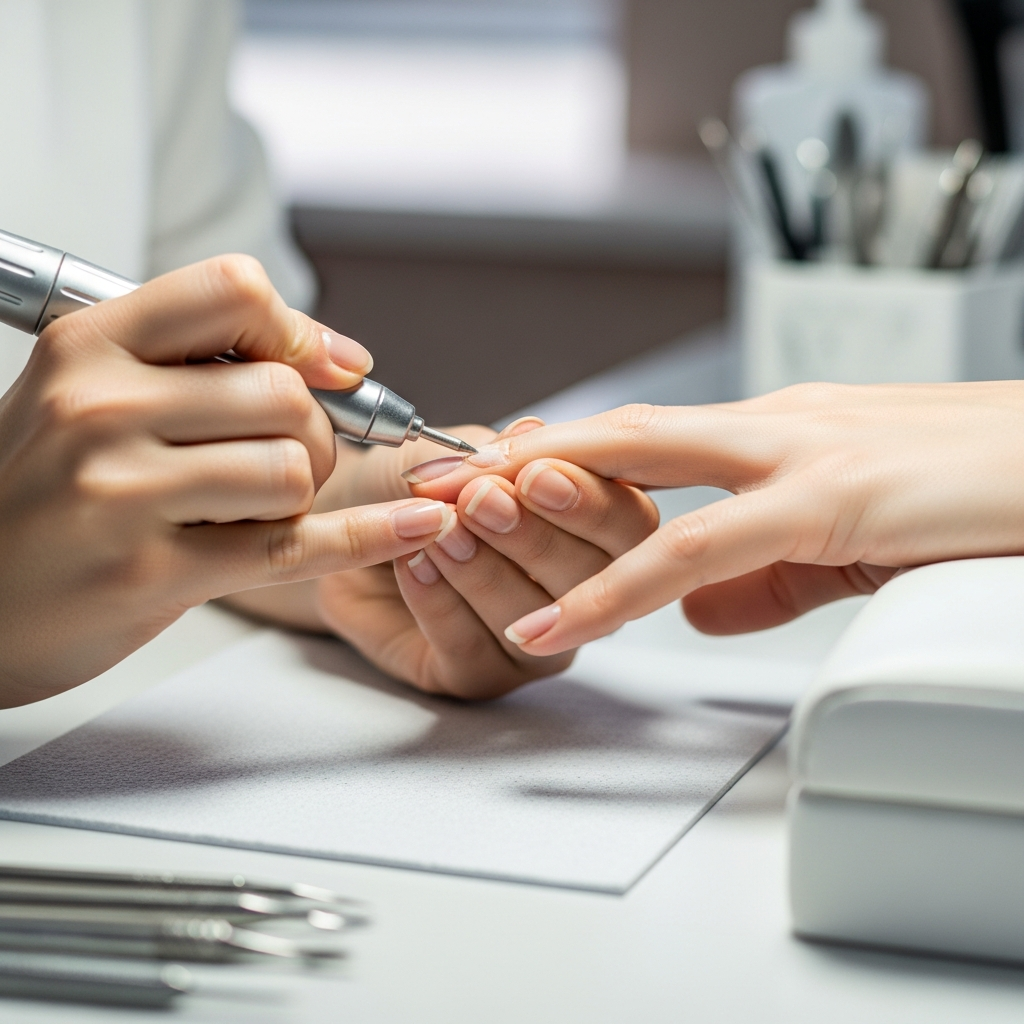
Using a professional e-file bit or a pusher, gently clear this tissue.
Product will not bond to skin, making this step vital for retention.
Surface Dehydration and pH Balancing
A professional dehydrator removes surface moisture and natural oils.
Follow this with a high-quality primer to create a chemical bond.
This step ensures the nail surface is chemically ready for the product.
Common Application Errors That Lead to Lifting
Inconsistent product application is a leading cause of service breakdown.
Technicians must maintain control over the viscosity of the nail product.
Flooding the sidewalls or cuticle area creates immediate weak points.
Maintaining Proper Apex and Structure
The apex provides the necessary strength to support the nail extension.
Incorrect placement of the apex leads to stress fractures and lifting.
Structure must be balanced based on the length of the enhancement.
Avoiding Skin Contact and Product Seepage
Always leave a tiny margin between the product and the skin.
Contact with the eponychium causes the product to pull away as it grows.
This “seal” is the most effective way to prevent moisture infiltration.
Refining Finishing Techniques for Durability
Final filing should never compromise the bond at the transition area.
Use a fine-grit file to taper the product flush with the natural nail.
A smooth transition prevents snagging and lifting during daily client activities.
Standardizing the Capping Process
Always cap the free edge with each layer of product.
This seals the natural nail and prevents water from entering the layers.
Capping is essential for both gel polish and hard gel systems.
