Professional Nail Prep to Prevent Lifting and Peeling
Professional nail preparation involves the systematic removal of non-living tissue from the nail plate, thorough dehydration, and the application of specific primers to ensure product adhesion. Proper nail prep eliminates natural oils and moisture, which are the primary causes of premature lifting and service failure in gel and acrylic applications.
Effective Cuticle and Pterygium Removal
The first step in professional nail preparation is the thorough removal of the true cuticle. This non-living tissue grows on the plate and will cause instant lifting if product is applied over it.
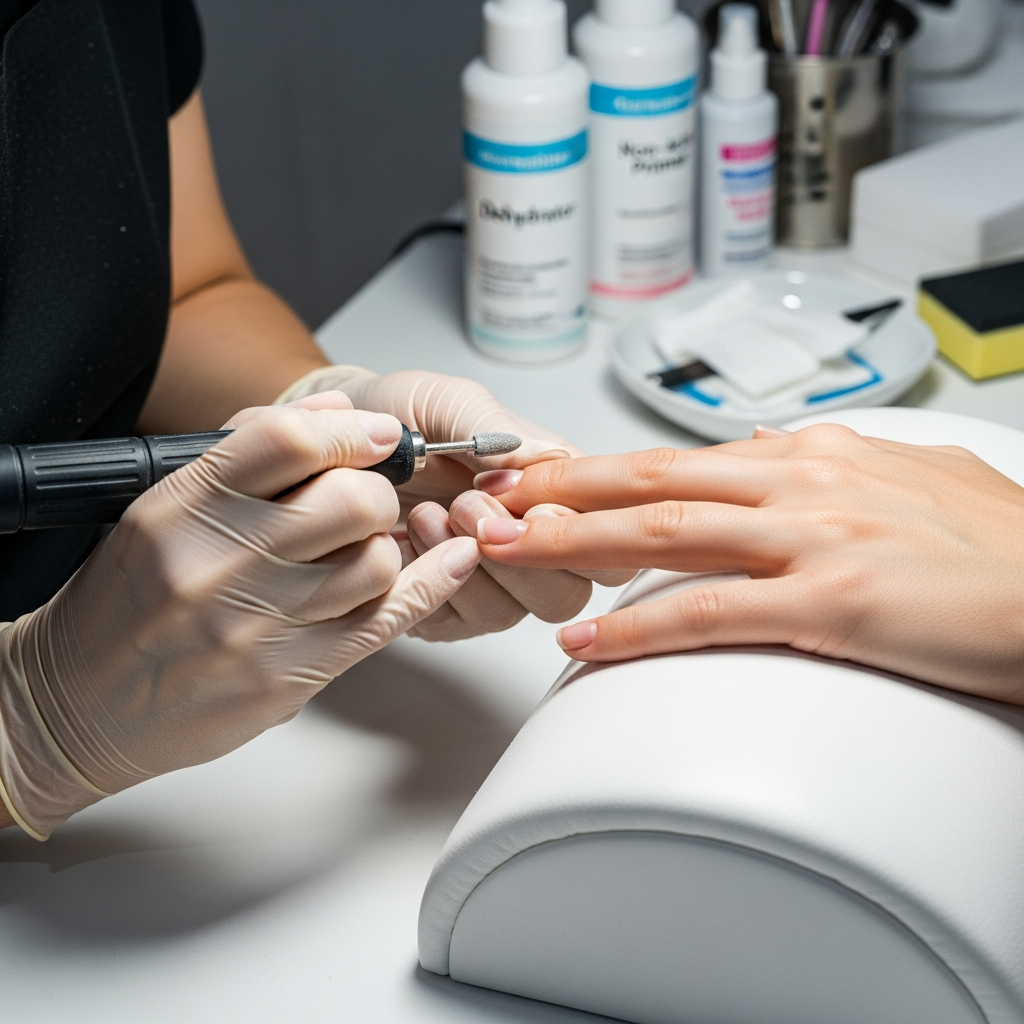
Use a professional pusher to gently retract the eponychium and expose the hidden pterygium. A curette or a fine-grit diamond e-file bit can then safely exfoliate this dead tissue from the nail surface.
Avoid soaking the hands in water before this process. Dry preparation prevents the nail plate from absorbing moisture, which expands the plate and leads to product cracking once it shrinks back.
Mechanical Surface Preparation
Mechanical prep requires removing the natural shine from the nail plate without causing damage. Use a high-quality 180-grit or 240-grit file to lightly disrupt the surface keratin.
Work in the direction of nail growth to minimize trauma. This step creates microscopic ridges that allow the base coat or primer to anchor securely to the natural nail structure.
Always focus on the sidewalls and the proximal nail fold area. These are the most common zones for lifting because technicians often miss these tight corners during the buffing stage.
Chemical Dehydration and pH Balancing
After mechanical filing, the nail must be cleared of all dust and debris. Use a lint-free wipe saturated with 99% isopropyl alcohol or a dedicated nail cleanser to scrub the plate clean.
Apply a professional-grade dehydrator to temporarily remove oils from the top layers of the nail. This ensures the surface is chemically receptive to the bonding agents used in gel or acrylic systems.
For clients with oily nail plates, a second application of dehydrator may be necessary. Ensure the product has completely evaporated before moving to the primer or base coat application.
Selecting the Right Bonding Agent
- Acid Primers: These use methacrylic acid to etch the nail and provide a strong mechanical bond, typically used for traditional acrylic systems.
- Non-Acid Primers: These act like double-sided tape, creating a chemical covalent bond between the nail keratin and the enhancement product.
- Protein Bonds: Specialized formulas designed for problematic nail types that struggle with standard retention.
Strategic Product Application
The final step in preventing lifting is maintaining a precise margin between the product and the skin. Never allow gel, acrylic, or dip to touch the nail folds or the eponychium.
Apply product thinner near the nail perimeter to create a seamless transition. A thick edge at the cuticle area creates a ledge that can snag and pull, leading to mechanical lifting.
Always cap the free edge of the nail with every layer of product. This seals the enhancement and protects the most vulnerable part of the service from moisture and daily wear.
