Mastering Professional Nail Prep for Maximum Retention
Professional nail preparation is the systematic process of cleaning, dehydrating, and etching the natural nail plate to ensure optimal adhesion of enhancement products. Effective nail prep prevents lifting, increases service longevity, and maintains natural nail health by removing surface oils, contaminants, and non-living tissue from the nail surface before application.
The Role of Cuticle Clearing in Retention
Professional nail preparation begins with the thorough removal of the eponychium and true cuticle.
This step ensures that the nail product bonds directly to the keratin of the plate rather than skin.
Failure to clear this tissue is the primary cause of early lifting at the proximal fold.
Use a high-quality pusher to gently lift the proximal nail fold and expose the cuticle.
A diamond flame bit or a manual curette can then safely remove non-living tissue from the plate.
A clean surface allows the nail product to seal flush against the natural structure.
Surface Dehydration and pH Balancing
Natural oils and moisture are the enemies of long-lasting nail enhancements.
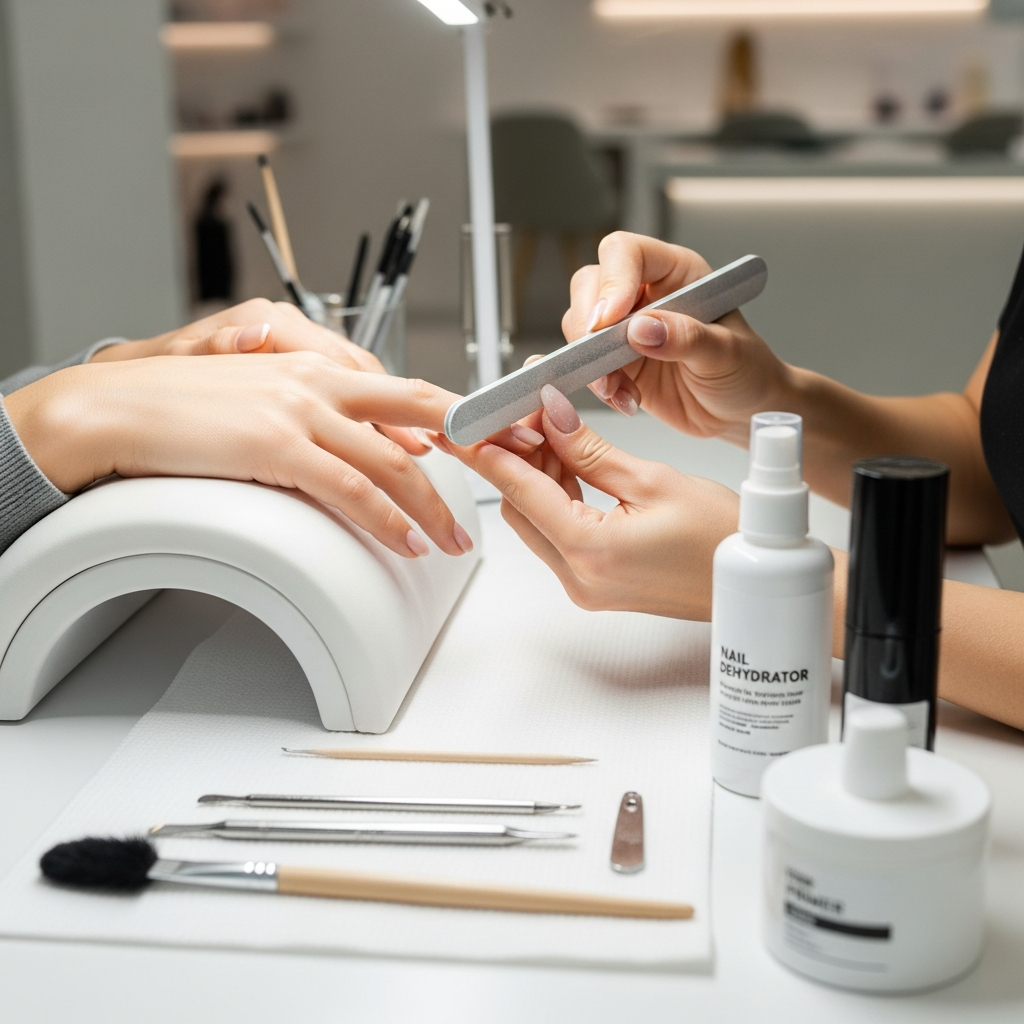
A professional nail technician must use a high-grade dehydrator to temporarily remove moisture.
This creates a dry surface that is chemically receptive to primers and base gels.
Following dehydration, applying a pH bonder or primer is essential for chemical adhesion.
Acid-based primers etch the nail plate for acrylics, while non-acid primers act as double-sided tape.
Proper application ensures the nail enhancement remains secure for three to four weeks.
Mechanical Adhesion and Buffing Techniques
- Grit Selection: Use a 180-grit or 240-grit file to gently remove the shine.
- Directional Filing: File in one direction to avoid over-thinning the nail plate.
- Dust Removal: Use a stiff nylon brush followed by a lint-free wipe with 99% alcohol.
Common Technical Mistakes to Avoid
Over-filing the nail plate is a frequent error that leads to thin, flexible nails.
When the nail plate is too thin, it cannot provide a stable foundation for hard gels or acrylics.
This lack of stability causes the enhancement to crack or peel prematurely.
Inconsistent dust removal also compromises the integrity of the nail service.
Microscopic dust particles trapped under the product create air pockets and pathways for moisture.
Always ensure the nail sidewalls and sulcus are completely clear before applying any chemicals.
Safety and Sanitation During Preparation
Maintaining a sterile environment is mandatory for professional nail services in the United States.
All metal implements must be scrubbed, rinsed, and processed in an EPA-registered disinfectant.
Single-use items like files and buffers must be discarded or given to the client after use.
Proper nail prep also involves inspecting the hands for any signs of infection or contraindications.
Technicians should never perform a service on a nail plate that shows signs of fungus or trauma.
Prioritizing nail health ensures a safe experience and builds long-term professional trust.
