Professional Nail Salon Operations and Workflow Management
Nail salon operations represent the comprehensive management of daily service workflows, staff scheduling, and professional safety protocols within a nail facility. These operations ensure consistent service delivery through standardized procedures, efficient inventory tracking of specialized chemicals, and strict adherence to state board sanitation requirements for every professional nail treatment performed.
Standardizing Professional Nail Service Workflows
Consistency is the foundation of a successful nail salon operation. Establishing a step-by-step protocol for every service ensures that clients receive the same high-quality result regardless of which technician they visit.
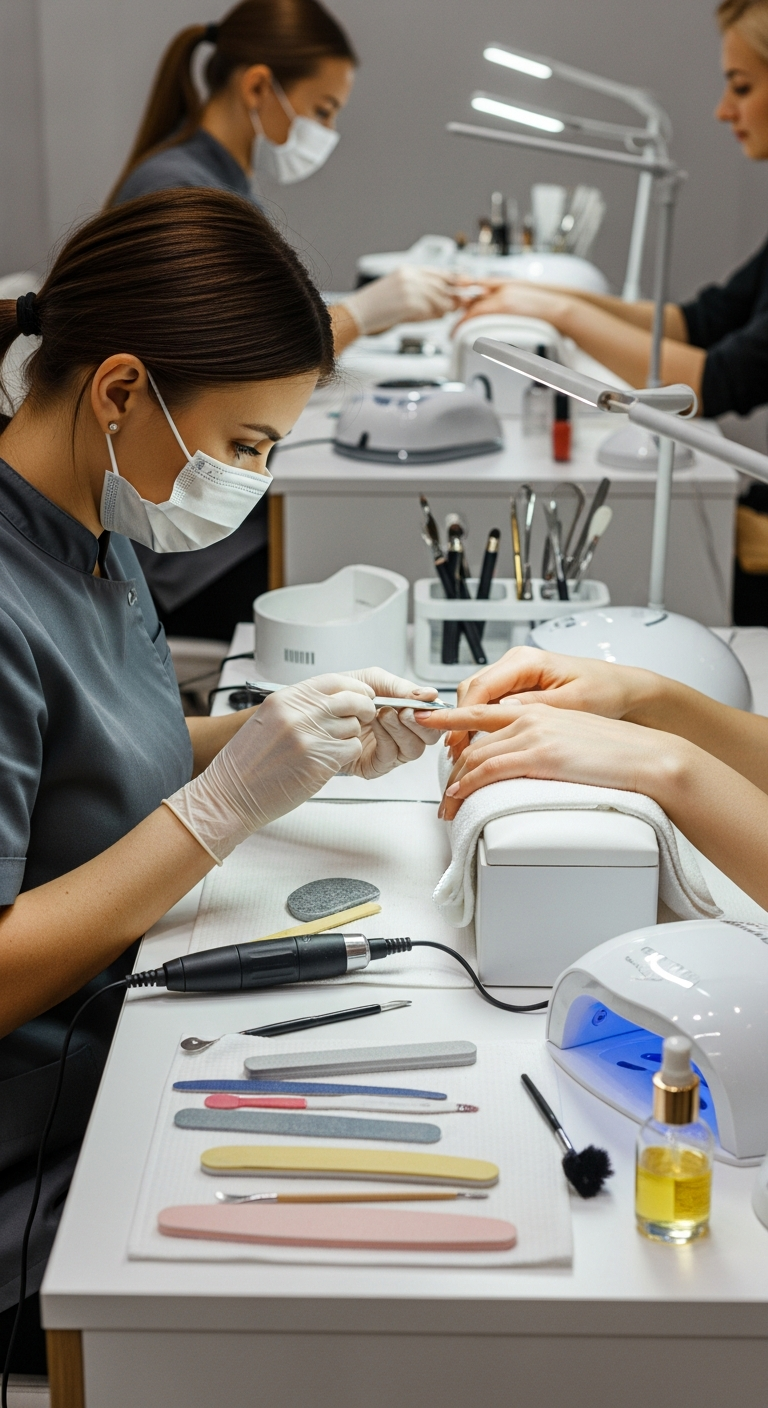
A professional workflow begins with a thorough client consultation and nail assessment. Technicians must evaluate the health of the natural nail plate and identify any contraindications before proceeding with chemical applications.
Standardized timing is critical for maintaining the daily schedule. Each phase of the service, from old product removal to the final application of cuticle oil, should have a designated timeframe to prevent backlog.
Prep and Technical Execution Standards
Uniformity in nail preparation reduces the risk of lifting and service failure. Every technician should follow the same dry manicure or e-file prep techniques to ensure long-lasting results for every client.
SOPs must also cover the precise mixing ratios for acrylic systems and the correct curing times for various gel products. This level of technical consistency protects the reputation of the nail salon.
Staff Scheduling and Productivity Management
Effective scheduling requires balancing nail technician availability with peak client demand. Managers must analyze historical booking data to ensure the floor is properly staffed during high-traffic windows.
Implementing a fair rotation system for walk-in clients prevents internal conflict among staff. A transparent system ensures every nail professional has an equal opportunity to build their book of business.
Performance monitoring should focus on both technical skill and efficiency. Tracking the duration of a standard gel manicure or full set helps managers identify where additional technical training may be required.
Cost Control and Nail Product Inventory
Managing the cost of professional nail supplies is essential for maintaining healthy profit margins. Internal systems should track the usage of high-cost items like monomers, polymers, and specialty gel bottles.
Waste reduction protocols can significantly impact the bottom line. Technicians should be trained on precise product dispensing to avoid excessive chemical waste during the application process.
Regular inventory audits prevent overstocking and ensure that essential items are always available. This includes maintaining a surplus of files, buffers, and sterilization pouches required for daily nail services.
Sanitation Standards and Operational Safety
Professional nail salon operations must prioritize sanitation to comply with U.S. state board regulations. Standardized cleaning blocks should be built into the daily schedule for every workstation.
Autoclave or high-level disinfectant cycles must be documented daily to ensure compliance and client safety. Each nail technician is responsible for maintaining a clean e-file and sterilized implements.
Proper ventilation and chemical storage are operational necessities. Ensuring that Safety Data Sheets (SDS) are accessible for every nail product used in the salon is a critical management responsibility.
