Optimizing Daily Nail Salon Operational Workflows
Nail salon operations involve the systematic management of technician schedules, service protocols, and inventory to maintain high standards of professional efficiency. Successful salon management ensures that every nail service follows specific standard operating procedures to guarantee consistency, safety, and optimal revenue generation throughout the business day.
Establishing Standard Operating Procedures for Nail Technicians
Standard operating procedures (SOPs) are the backbone of a professional nail salon environment. These protocols ensure that every client receives the same high-quality service regardless of which technician is assigned to their station.
Effective SOPs must cover the entire service lifecycle, from the initial client consultation to the final application of cuticle oil. Standardizing these steps prevents service creep and helps maintain the salon’s daily schedule.
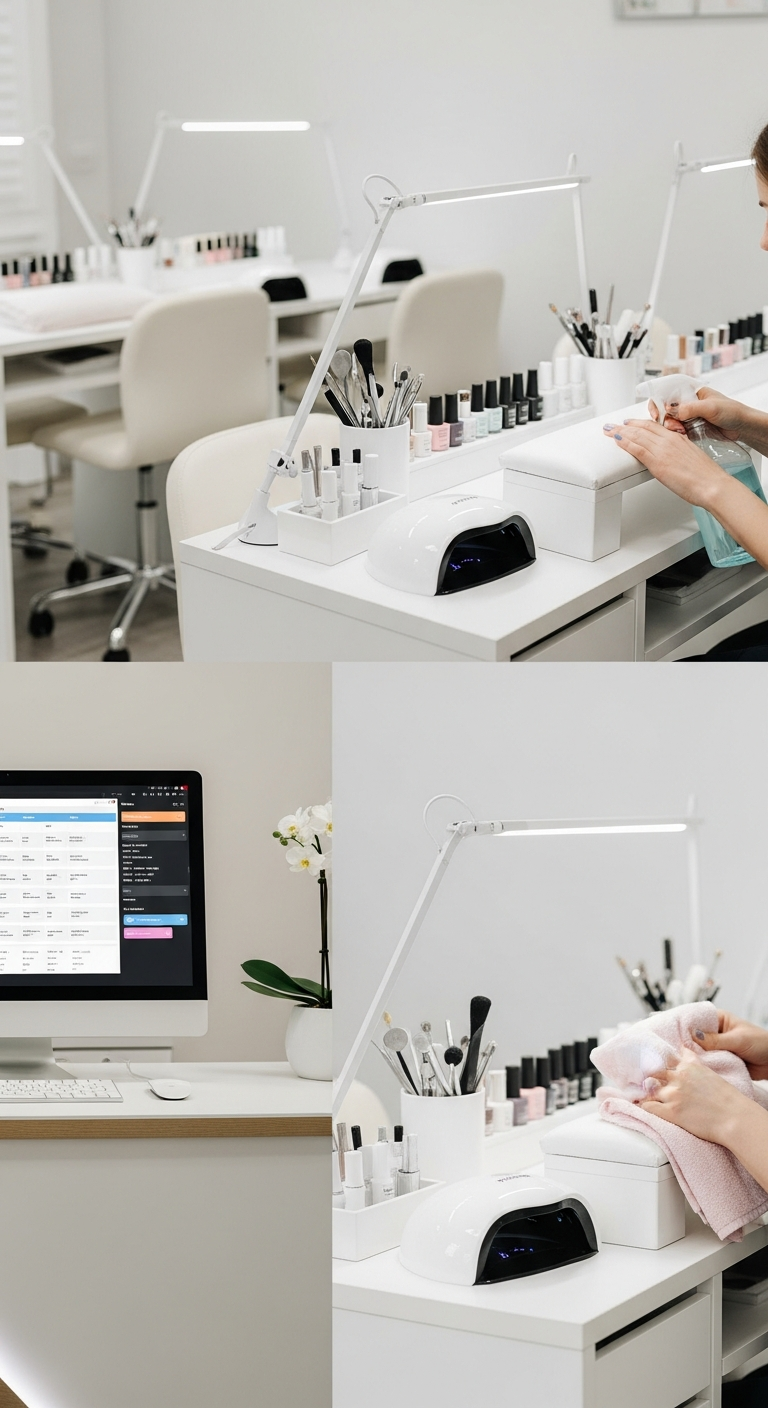
Workstations must be reset according to a strict checklist after every nail service. This includes the disposal of single-use items and the proper chemical disinfection of multi-use implements to meet state board requirements.
Managing Staff Scheduling and Service Pacing
Strategic scheduling requires a deep understanding of the time required for different nail services. A full set of acrylics or hard gel extensions requires a different time block than a standard gel polish change.
Managers must balance the appointment book to prevent technician burnout while maximizing booth occupancy. Overlapping schedules during peak hours ensures the salon can handle walk-in traffic without disrupting pre-booked appointments.
Monitoring service pacing is essential for maintaining the daily flow. If a technician consistently exceeds the allotted time for a nail service, management must identify if the delay is due to technical skill gaps or station organization issues.
Tracking Technical Performance and Service Times
- Manicure Services: 30–45 minutes depending on complexity.
- Gel Polish Application: 45–60 minutes including removal.
- Full Sets and Enhancements: 75–90 minutes for standard shapes.
Revenue Tracking and Supply Cost Management
Professional nail salon management requires precise tracking of daily revenue against labor and supply costs. Every bottle of monomer, polymer, and gel polish represents a specific cost per service that must be monitored.
Internal inventory controls prevent waste and ensure that technicians have the necessary professional products to complete their work. Management should conduct weekly audits of high-use nail supplies to maintain appropriate stock levels.
Revenue leakage often occurs through unrecorded add-on services or improper charging for nail art. Implementing a clear service menu with fixed pricing for every professional technician ensures financial transparency and consistency.
Resolving Common Operational Bottlenecks
Bottlenecks often occur at the drying stations or during the sanitation transition between clients. Streamlining these areas is vital for maintaining a high-volume nail salon workflow without sacrificing service quality.
Assigning specific sanitation duties to support staff can keep lead technicians at their stations, increasing the total number of nail services performed per shift. This division of labor improves overall salon productivity.
Regular staff meetings should focus on operational hurdles identified during the workweek. Addressing these issues promptly prevents minor logistical friction from turning into long-term management problems that affect the salon’s reputation.
