Perfecting Professional Nail Prep for Maximum Retention
Professional nail prep is the essential process of dehydrating the nail plate and removing non-living tissue to ensure maximum adhesion. Proper nail preparation prevents lifting and premature failure of enhancements like gel or acrylic by creating a clean surface for chemical bonding between the natural nail and the product.
The Critical Role of Cuticle Clearing
Removing the pterygium from the nail plate is the first step toward a durable service. Non-living tissue attached to the nail plate prevents product from bonding effectively.
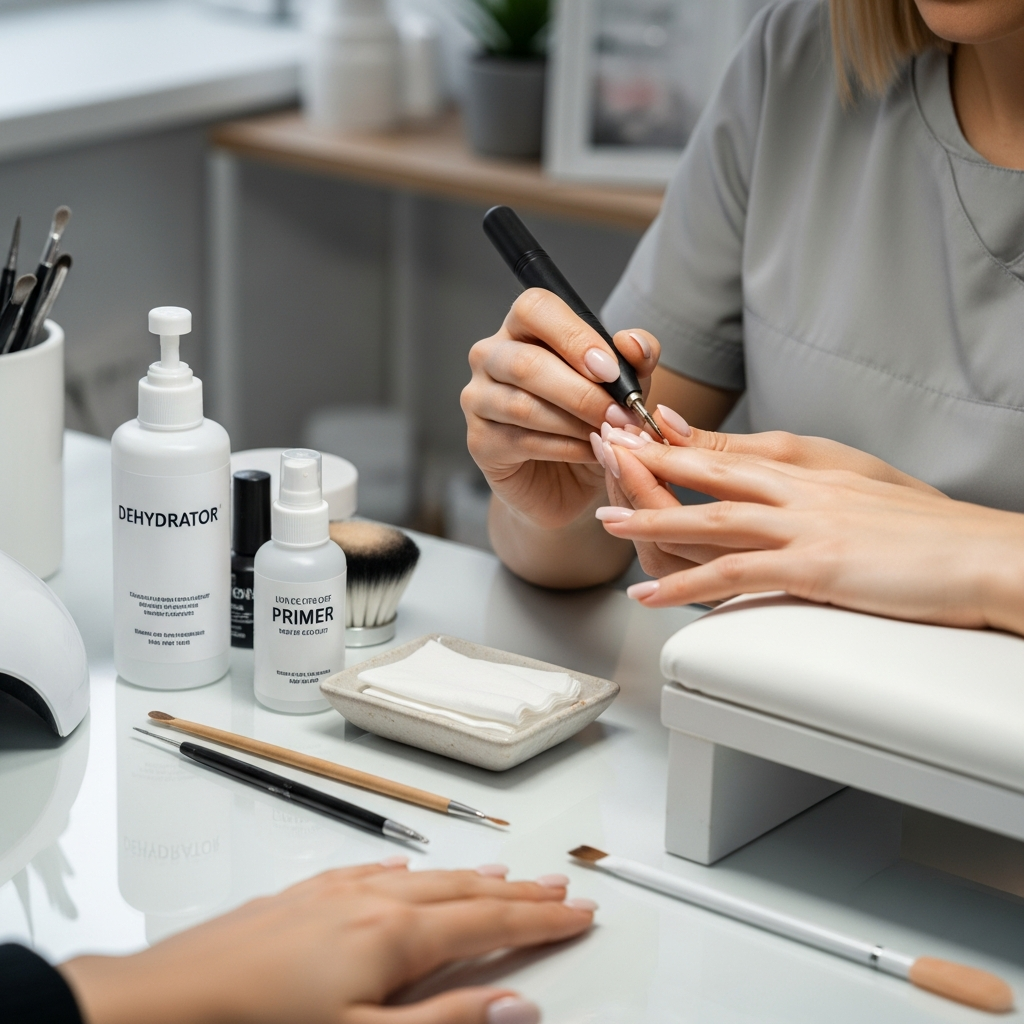
Using a professional e-file with a flame bit allows for precise clearing of the proximal nail fold. This creates a clean “pocket” for seamless product application near the nail cuticle.
Avoid over-filing the living tissue to maintain client safety. Focus only on the dry, white skin that sits directly on the nail surface.
Surface Dehydration and pH Balancing
Natural oils and moisture are the primary enemies of nail enhancement longevity. A thoroughly dehydrated nail plate ensures the primer can function as intended.
Scrub the nail plate with a lint-free wipe soaked in 90% isopropyl alcohol or pure acetone. This mechanical scrubbing removes dust and surface contaminants.
Apply a professional-grade dehydrator to temporarily remove moisture from the top layers of the nail. Follow immediately with a primer compatible with your specific nail system.
Refining the Nail Plate Texture
Chemical bonds require a slightly roughened surface to “grip” the natural nail. Use a high-grit buffer or a 180-grit file to remove the natural shine.
Always file in the direction of nail growth to minimize trauma. Removing too many layers of keratin will weaken the nail and cause premature lifting.
A matte appearance indicates that the nail is ready for product application. Ensure no shiny spots remain, especially near the sidewalls and the free edge.
Common Technical Prep Mistakes
- Incomplete Dust Removal: Residual dust trapped under gel or acrylic causes immediate lifting.
- Touching the Nail: Skin contact after prepping transfers oils back onto the cleaned nail plate.
- Over-Saturating the Brush: Excessive primer can flood the sidewalls and cause chemical irritation.
Ensuring Free Edge Durability
The free edge is the most vulnerable part of the nail enhancement. Ensure you file the edge to remove any frayed keratin fibers.
Capping the free edge with your base coat or builder gel is mandatory. This “seals” the natural nail between the product layers to prevent delamination.
Check the underside of the nail for any product seepage. A clean underside prevents moisture from being trapped against the natural nail.
