Advanced Nail Prep Techniques for Professional Retention
Professional nail prep is the critical sequence of cleaning, shaping, and dehydrating the natural nail plate to facilitate superior product adhesion. This technical process eliminates surface oils and non-living tissue, preventing lifting and ensuring the longevity of gel, acrylic, or dip enhancements during professional salon services.
Mechanical Preparation of the Nail Plate
Removing Non-Living Tissue
Technicians must accurately distinguish between the eponychium and the true cuticle tissue.
Removing the thin layer of skin attached to the nail plate is essential for a clean bond.
Use a professional pusher or a fine diamond bit to clear the proximal nail fold area.
Surface Refinement and Shine Removal
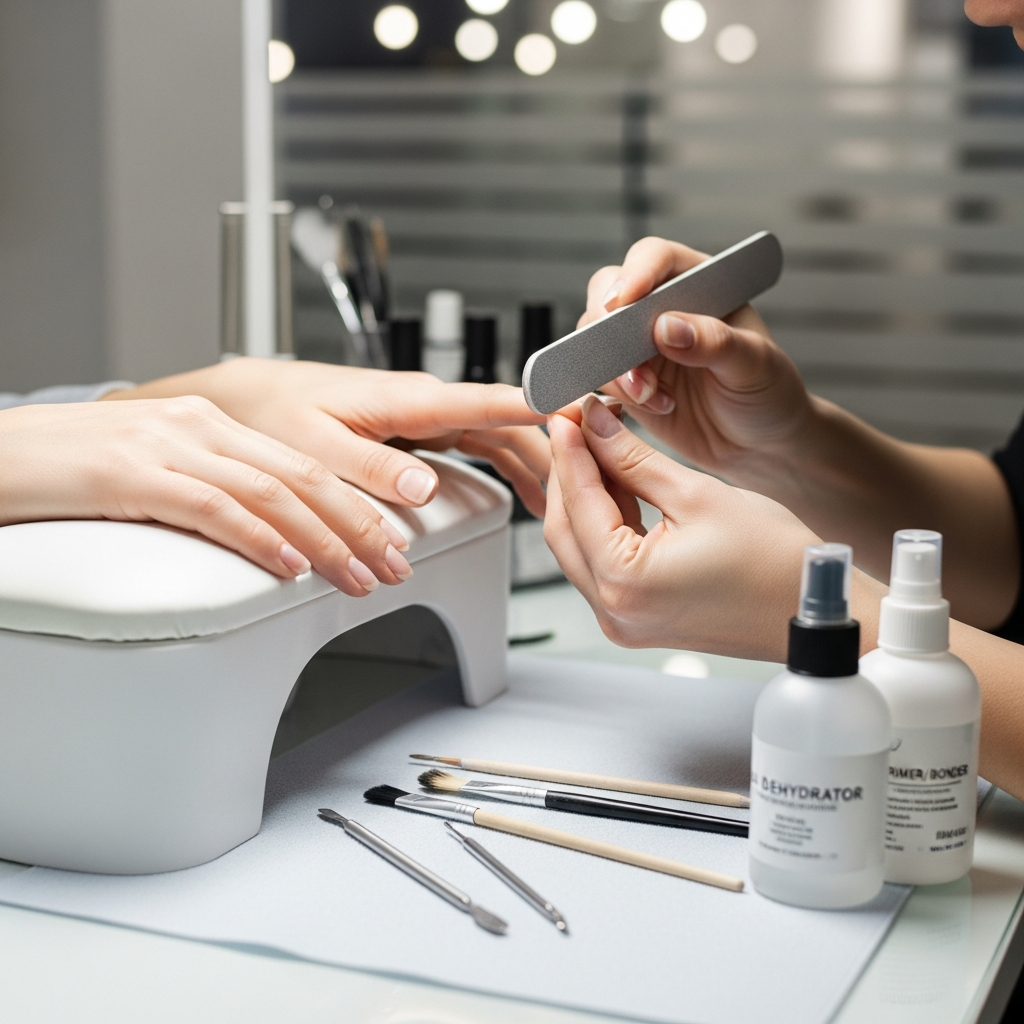
A 180-grit or 240-grit file should be used to gently remove the natural shine.
The goal is to create a matte surface without thinning the natural nail layers.
Always file in the direction of nail growth to minimize structural trauma to the plate.
Chemical Dehydration and pH Balancing
Removing Surface Contaminants
Dust and oils act as barriers between the nail and the enhancement product.
Use a lint-free wipe saturated with 99% isopropyl alcohol to scrub the surface.
Ensure the lateral sidewalls and the free edge are completely free of debris.
Applying Bonding Agents
A professional dehydrator temporarily removes moisture from the upper layers of the nail.
Follow this with a protein bonder or primer specifically designed for the chosen system.
Avoid skin contact with primers to prevent chemical sensitivities and ensure product integrity.
Common Technical Mistakes in Prep
Over-Filing the Nail Surface
Excessive filing weakens the nail plate and leads to poor product foundation.
Thin, flexible nails are more prone to lifting than thick, healthy ones.
Focus on texture creation rather than bulk removal during the prep phase.
Inadequate Dust Removal
Leftover dust particles create microscopic pockets under the gel or acrylic.
These pockets lead to immediate lifting and potential moisture entrapment.
Use a stiff nylon brush to clean the nail grooves before applying any chemicals.
Maintaining Client Safety and Health
Sanitation Standards for Preparation
All metal implements must undergo hospital-grade disinfection between every client.
Single-use files and buffers should be discarded to maintain professional hygiene standards.
Proper prep ensures the nail remains healthy under the enhancement for weeks.
Observing Nail Plate Integrity
Evaluate the condition of the natural nail before starting the preparation process.
If the nail is excessively damaged or thin, technical adjustments are required.
Professional execution prioritizes the long-term health of the natural plate over aesthetics.
