How to Survive Your First Year Opening a Nail Salon
Opening a nail salon requires a strategic focus on initial overhead costs, state licensing compliance, and client retention to survive the first twelve months. New owners must prioritize cost control and consistent service standards to reach their break-even point while navigating the competitive landscape of the professional nail industry.
Calculating Realistic Startup and Monthly Overhead
Financial survival in the nail industry begins with an accurate assessment of fixed and variable costs. Rent, utilities, and commercial insurance represent fixed monthly burdens that must be met regardless of client volume.
Variable costs include professional nail products like monomer, polymer, gel polishes, and sanitation supplies. Monitoring the cost-per-service for every manicure and pedicure is vital for maintaining healthy margins during the first year.
Owners should maintain a cash reserve equivalent to at least six months of operating expenses. This cushion accounts for slow seasons and the time required to build a stable local clientele.
Securing Necessary Permits and Professional Licenses
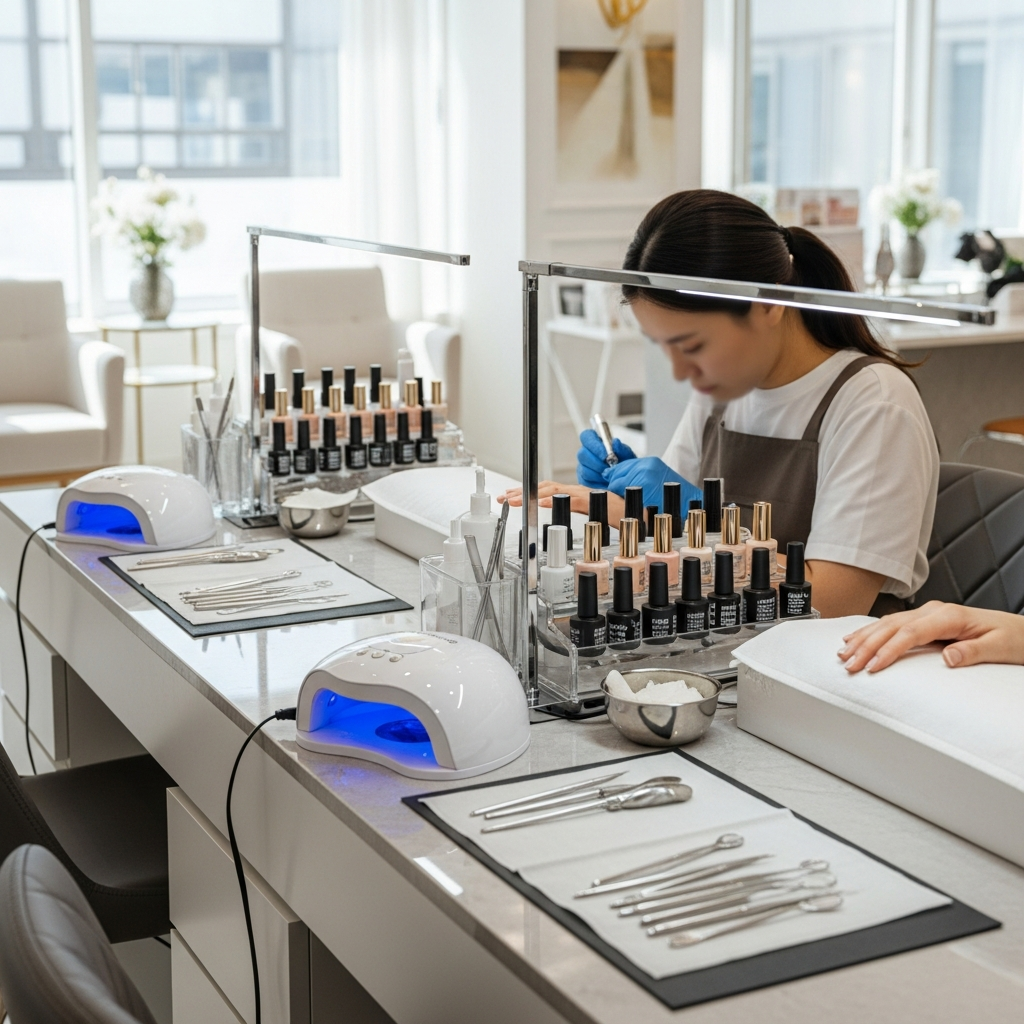
Operating a nail salon in the United States requires strict adherence to State Board of Cosmetology regulations. Each workstation must meet specific safety and ventilation standards to pass initial and recurring inspections.
Ensure every nail technician holds a valid, active license displayed according to state law. Failure to comply with professional licensing requirements can lead to heavy fines that threaten early-stage business survival.
Obtaining a general business license, an Employer Identification Number (EIN), and specialized salon insurance are foundational steps. These legal protections shield the owner from personal liability and professional malpractice claims.
Inventory Control for New Nail Salon Owners
Over-purchasing inventory is a common mistake that drains startup capital. Focus on essential professional nail systems including a curated range of gel colors, high-quality acrylics, and standard lacquers.
Establish relationships with reputable nail industry distributors to ensure product consistency and bulk pricing. Avoid purchasing retail-grade products, as professional-grade formulas provide the durability clients expect for repeat bookings.
Track product usage to identify which colors or services are most popular in your specific market. This data allows for leaner ordering and reduces the amount of capital tied up in sitting stock.
Building a Service Menu for Profitability
Price your nail services based on local market research and your specific overhead costs. Avoid the temptation to underprice competitors, as this often leads to a race to the bottom that sacrifices quality.
Focus on high-margin services such as gel extensions, structured manicures, and specialized pedicure treatments. These services offer a better return on labor time than basic lacquer applications.
Clearly define your service protocols to ensure every nail technician delivers consistent results. Consistency builds the trust necessary to convert one-time walk-ins into loyal, long-term clients.
Critical Mistakes to Avoid in Year One
- Neglecting strict sanitation protocols which can lead to health department violations.
- Failing to track daily revenue and expense cycles.
- Ignoring the importance of local foot traffic and professional signage.
- Inconsistent staffing or poor communication regarding technical standards.
Establishing Professional Standards and Workflow
Efficient workflow management ensures that nail technicians can maximize their daily appointment slots without rushing. Standardizing the setup and teardown process for each nail station improves overall salon productivity.
Prioritize sanitation and disinfection between every client to meet professional industry standards. A clean environment is a primary factor in client retention and positive word-of-mouth for a new nail business.
