Nail Salon Startup: Guide to First-Year Survival
Starting a nail salon involves securing a commercial lease, obtaining state board licensure, and managing initial equipment costs ranging from $40,000 to $150,000. Successful first-year survival requires strict cost control, a clear break-even analysis, and meeting all local health and safety regulations to ensure long-term business viability in the professional beauty industry.
Essential Legal and Licensing Requirements
Before performing any services, you must secure a facility license from your state board of cosmetology. This process ensures the workspace meets specific square footage and plumbing requirements.
State Board Compliance
Each state has unique mandates regarding the distance between nail stations and the presence of separate sinks for handwashing and tool sanitation. Failure to meet these standards results in delayed openings.
Insurance and Local Permits
General liability insurance is mandatory to protect your business from potential slip-and-fall accidents or chemical reactions. You also need a local business permit and a tax identification number.
Calculating Initial Nail Salon Startup Costs
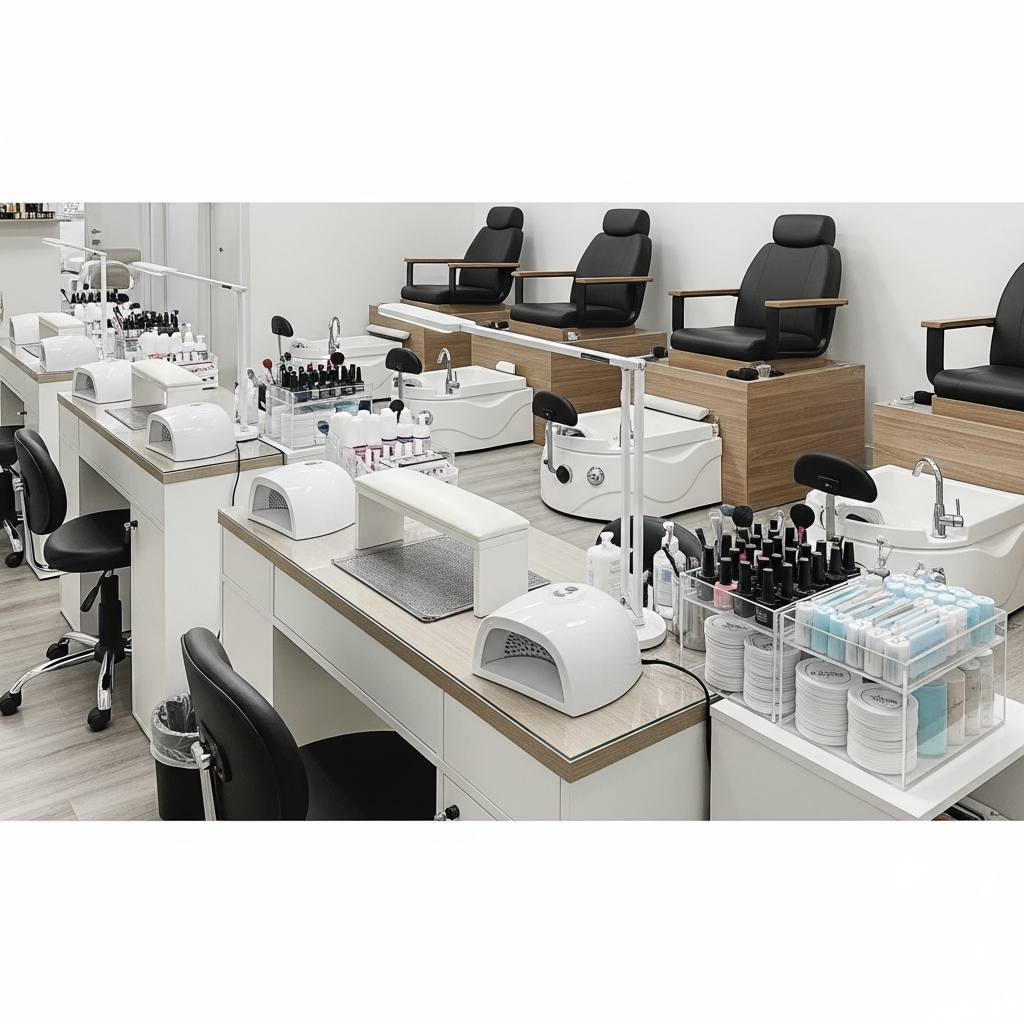
Startup capital is primarily consumed by leasehold improvements and professional equipment. Budgeting for high-quality ventilation systems is critical to meet modern air quality standards for nail services.
Equipment and Ventilation
Professional nail tables must include integrated dust collection systems to protect technician health. Comfortable pedicure thrones require proper plumbing and drainage to prevent stagnant water issues.
Professional Product Inventory
Stocking a full range of gel polishes, acrylic polymers, and monomer requires a significant upfront investment. Focus on one or two reputable professional brands to maintain consistency and reduce waste.
Financial Survival Strategies for Year One
The first twelve months are the most volatile for a new nail business. Most salons fail due to undercapitalization and an inability to cover overhead during slow months.
Managing Daily Cash Flow
Track every dollar spent on disposable supplies like files, buffers, and towels. These small costs accumulate quickly and can significantly erode your profit margins if not monitored.
Identifying the Break-Even Point
Calculate exactly how many nail sets or manicures must be performed each day to cover rent and utilities. Knowing this number helps you adjust your working hours and service pricing effectively.
Avoiding Common Beginner Mistakes
Many new owners overspend on aesthetic decor while neglecting functional workflow. A beautiful salon cannot survive if the layout hinders the speed and efficiency of the nail technicians.
Avoid hiring too many staff members before the client base exists. Start with a core team of reliable professionals and grow only when the demand consistently exceeds your current capacity.
Maintain a strict sanitation log from day one to ensure compliance with health inspections. Consistently clean tools and a tidy environment are the best ways to build trust with new clients.
