Opening a Nail Salon: A First-Year Survival Guide
Opening a nail salon involves securing a commercial lease, obtaining state board licensing, and managing initial overhead costs to reach break-even. Success in the first year requires strict inventory control and building a loyal client base through consistent technical service while navigating local health and safety regulations.
Initial Financial Realities of a New Nail Business
The first year of operating a nail salon is often the most challenging due to high startup costs and slow initial foot traffic. New owners must have enough working capital to cover at least six months of expenses.
Fixed costs such as commercial rent, electricity, and water are non-negotiable. Monitoring the cost-per-service for every set of acrylics or gel manicures ensures that your pricing covers both labor and supplies.
Calculating Startup Costs and Break-Even Points
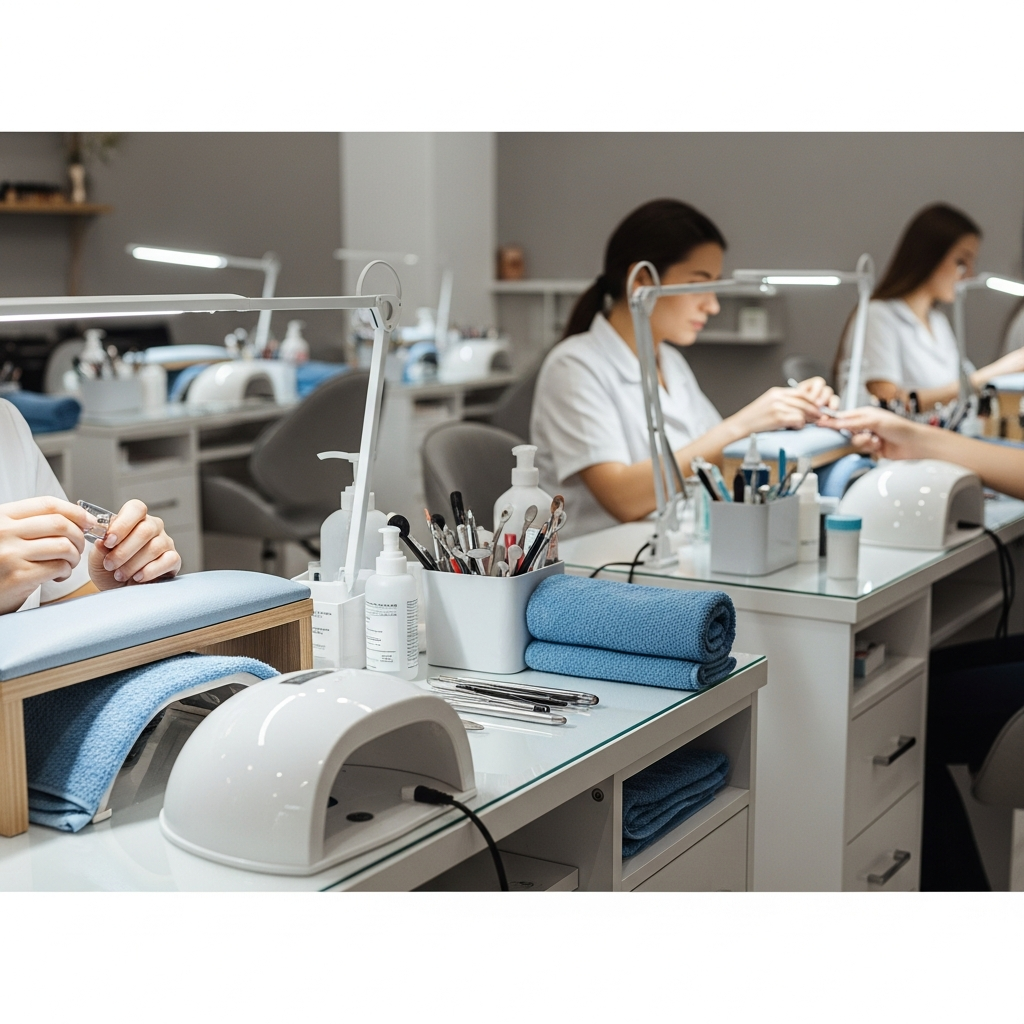
A professional nail station requires specific equipment, including ergonomic chairs, high-quality LED lamps, and proper ventilation systems. These one-time purchases represent a significant portion of your initial investment.
- Lease Security Deposits: Usually two to three months of rent upfront.
- State Board Compliance: Fees for salon licenses and individual technician registrations.
- Initial Inventory: A full range of professional powders, gels, and sanitation chemicals.
Essential Legal and Licensing Requirements
Operating a nail business in the United States requires strict adherence to state and local laws. Failure to display the correct licenses can lead to immediate fines or closure during a surprise inspection.
Every technician must hold a valid license from the state board of cosmetology. The facility itself must pass health department inspections, specifically regarding chemical storage and tool sterilization protocols.
State Board Compliance and Safety Permits
Maintaining a clean nail environment is not just about aesthetics; it is a legal requirement. You must have an autoclave or hospital-grade disinfectant for all multi-use implements.
Safety Data Sheets (SDS) for every chemical used in the salon must be easily accessible. This includes monomers, polymers, and various solvents used during the nail enhancement process.
Managing Nail Supply Inventory and Overhead
Waste is the biggest enemy of a new nail salon owner. Over-pouring liquid monomer or using too much gel can quickly erode your profit margins during the first few months.
Establish a relationship with a reliable professional nail distributor. Buying in bulk for frequently used items like files, buffers, and acetone can reduce your overall supply costs significantly.
Avoiding Common First-Year Mistakes
Many new owners focus too much on decor and not enough on the technical workflow. A beautiful nail salon will not survive if the technician’s workspace is unorganized or inefficient.
Underpricing services to attract customers is a common trap. Your prices must reflect your expertise and the high cost of professional-grade nail products to ensure long-term business survival.
Focus on client retention from day one. It is far more expensive to acquire a new nail client than it is to keep a recurring one through excellent service and professional behavior.
