How to Start a Nail Salon
Starting a nail salon involves securing a commercial lease, obtaining state board licensure, and managing initial overhead costs before reaching a break-even point. Success in the first year requires disciplined cash flow management, strict adherence to sanitation regulations, and a focus on building a local client base through consistent service quality and professional execution.
Essential Startup Requirements for Nail Salons
Every new nail business must comply with local and state regulations. This includes obtaining a salon facility license and ensuring every technician holds a valid practitioner license from the state board.
U.S. building codes often require specific ventilation systems for nail salons to manage chemical vapors and dust. Failure to install proper source capture exhaust systems can lead to failed inspections and delayed openings.
Initial inventory should focus on core professional products. Stocking high-quality monomer, polymer, gel systems, and a curated range of lacquer colors ensures you can provide standard services without over-extending your budget.
First-Year Financial Survival and Cost Control
The first year of operating a nail salon is often a period of high expenditure and fluctuating revenue. Owners must track every dollar spent on back-bar supplies and retail inventory.
Calculating Your Break-Even Point
To survive the first year, you must determine how many manicures, pedicures, and nail enhancement services are required daily to cover fixed costs. Fixed costs include rent, utilities, and insurance premiums.
Variable costs, such as files, buffers, and professional chemicals, must be factored into the price of every service. Precise portion control of liquids and powders prevents unnecessary waste and protects profit margins.
Managing Nail Salon Labor Costs
Labor is typically the largest expense in any nail salon. In the early stages, owners often work as lead technicians to minimize payroll while the client base is growing.
Establishing a clear commission or hourly structure is vital. Ensure your compensation model follows U.S. Department of Labor guidelines regarding independent contractors versus employees to avoid costly legal penalties.
Common Mistakes to Avoid in a New Nail Business
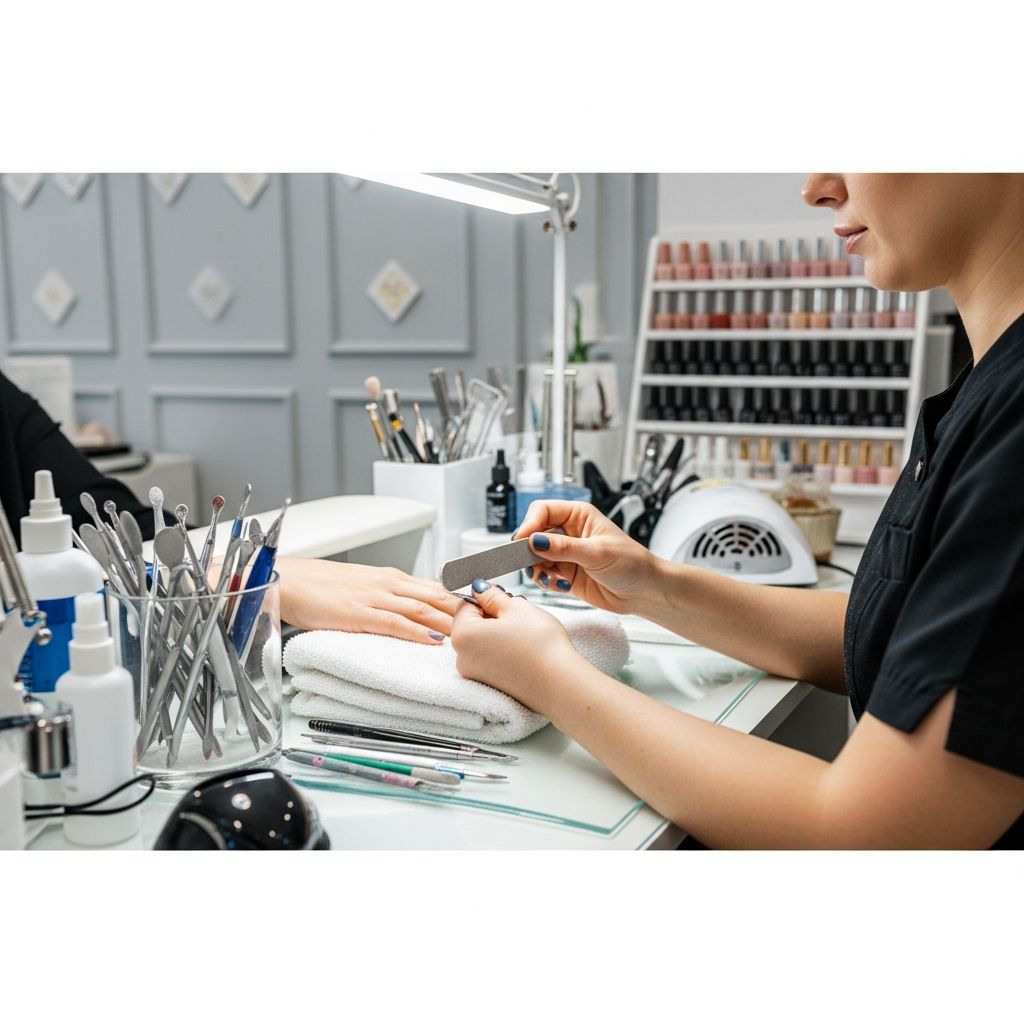
Many new owners overspend on aesthetic decor while neglecting the quality of their professional tools. Investing in ergonomic chairs and high-torque electric files is more important than luxury wall treatments.
- Over-stocking seasonal colors: Avoid buying entire collections; stick to proven popular shades to keep capital liquid.
- Inconsistent pricing: Do not offer heavy discounts early on, as this devalues your professional skill and makes future price increases difficult.
- Poor sanitation records: Neglecting daily cleaning logs can result in fines during unannounced state board inspections.
Building a Sustainable Client Base
Survival depends on repeat business. A high retention rate for basic services like gel manicures provides the steady cash flow needed to cover monthly operational expenses.
Focus on professional execution and safety standards to build trust. Word-of-mouth remains the most effective growth strategy for a new nail salon in a local U.S. market.
