Standardizing Nail Salon Workflows for Peak Efficiency
Operational excellence in a nail salon depends on the consistency of every service performed.
Standard Operating Procedures (SOPs) ensure that every client receives the same quality.
Without these standards, nail technicians may vary in speed, product usage, and results.
The Importance of Service Consistency in Nail Salons
Consistency is the foundation of client retention and predictable revenue in the nail industry.
When every nail technician follows the same protocol, the salon can guarantee specific results.
This reliability builds a professional brand identity that clients trust for their recurring appointments.
Establishing Uniform Preparation Protocols
The longevity of any nail service starts with proper dry manicuring and surface preparation.
Salons must define the exact steps for cuticle work, nail plate cleansing, and dehydration.
Standardizing this phase prevents lifting issues and reduces the need for unpaid repair work.
Implementing Standard Application Times
Time management is critical for maintaining a profitable nail salon schedule.
Set clear time blocks for specific services, such as a full set of acrylics or a gel polish change.
Monitoring these durations helps managers identify where technicians may need additional technical training.
Managing Nail Salon Inventory and Cost Control
Cost management is directly tied to how products are handled at the nail station.
Inconsistent product usage can lead to significant waste and inflated overhead costs.
Standardizing the amount of monomer, gel, or lacquer used per service stabilizes your profit margins.
Tracking Product Usage per Service
Establish a system for monitoring how quickly nail supplies are depleted relative to the number of services.
Technicians should be trained to use specific measurements for bulk products like acrylic powder.
Reducing over-application not only saves money but also improves the aesthetic quality of the nail enhancement.
Daily Operational Workflows for Staff Management
A well-managed nail salon requires a clear daily schedule that accounts for more than just appointments.
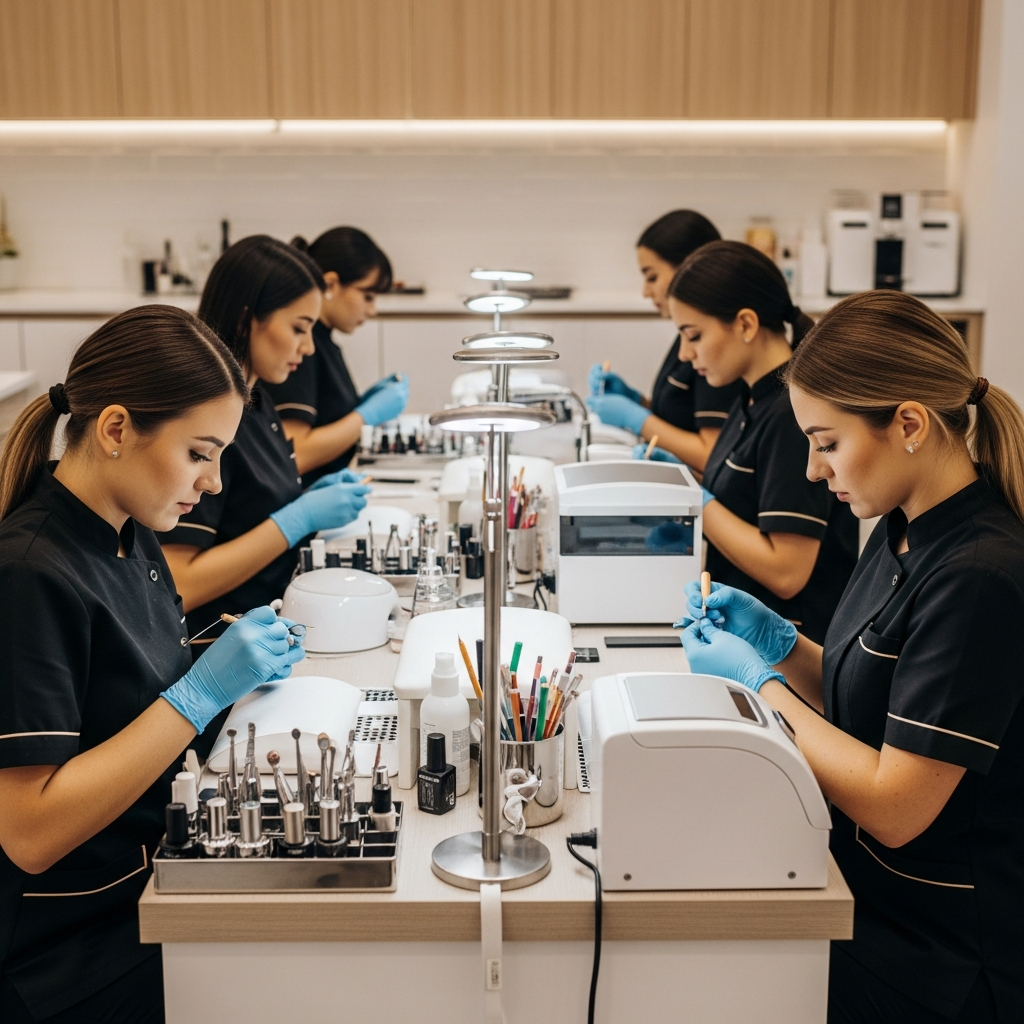
Workflows must include time for station sanitation, tool sterilization, and inventory restocking.
Effective managers use these workflows to maintain a clean and compliant environment throughout the day.
Shift Transitions and Station Maintenance
The transition between shifts is a common point of operational failure in busy nail salons.
Create a checklist for technicians to follow when opening, closing, or switching stations.
This ensures that every nail station is fully stocked and sanitized for the next professional.
U.S. Labor and Operational Compliance
Operating a nail salon in the United States requires strict adherence to state board regulations.
Operational SOPs must integrate sanitation requirements into the daily workflow to avoid fines.
Properly documented procedures also help manage labor costs by optimizing the technician’s active working hours.
- Service Timing: Set benchmarks for every nail service offered.
- Sanitation Protocols: Follow state-specific guidelines for tool disinfection.
- Waste Reduction: Train staff on precise product measurement techniques.
- Workflow Documentation: Keep a physical manual of all salon standards.
