How to Start a Nail Salon and Survive the First Year
Starting a nail salon requires securing a professional commercial space, obtaining state board licenses, and managing initial inventory costs for nail enhancements and sanitation. To survive the first year, owners must prioritize cash flow management and maintain strict service standards to build a loyal client base within the competitive U.S. nail market.
Essential Legal and Regulatory Requirements
Before performing a single nail service, you must comply with state and local regulations. This includes obtaining a salon business license and ensuring all staff hold active nail technician or cosmetology licenses from the State Board.
In the United States, your facility must pass a sanitation inspection. This involves meeting specific ventilation standards to manage chemical fumes and dust, as well as providing dedicated sinks for tool disinfection and handwashing.
Secure comprehensive general liability and professional liability insurance immediately. This protects your business from claims related to chemical reactions, accidental cuts, or infections that can occur during nail enhancements or pedicure services.
Managing Initial Nail Salon Startup Costs
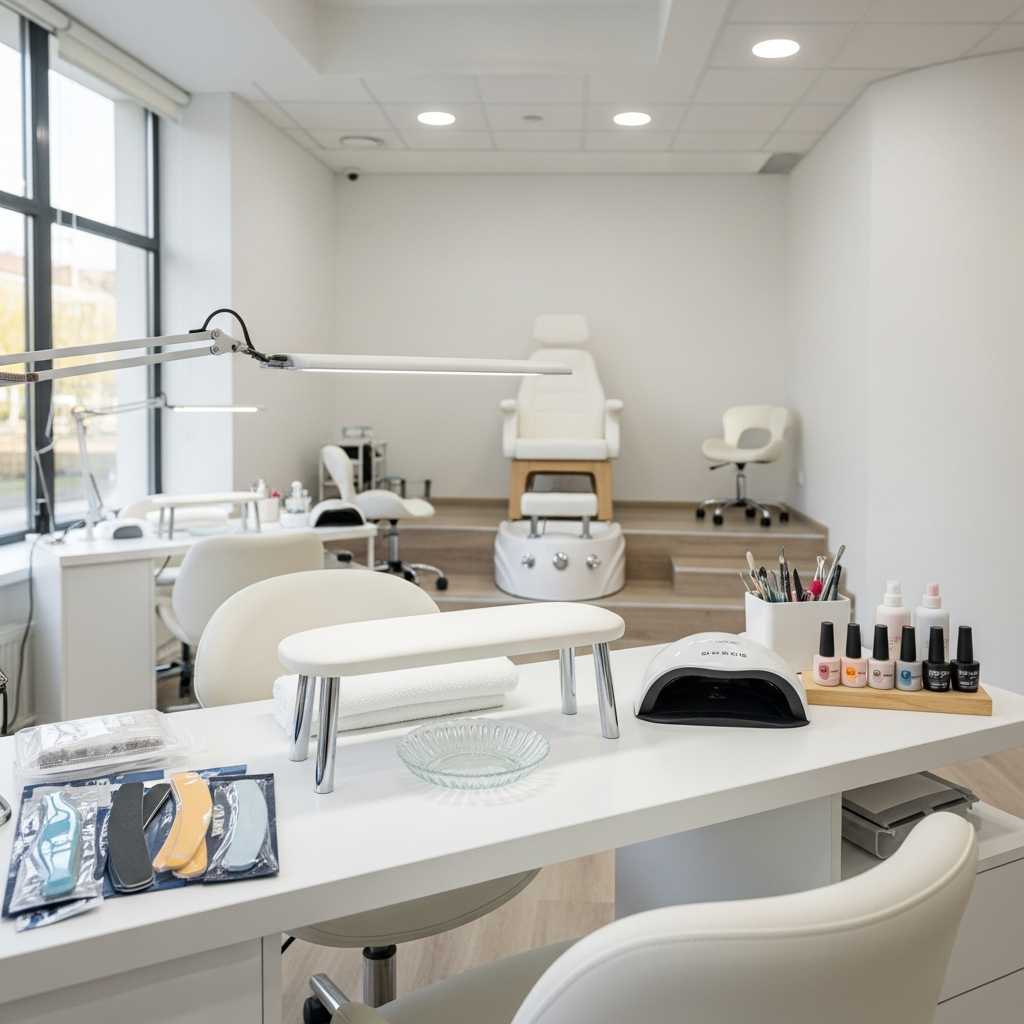
Your largest initial investments include professional nail furniture such as ergonomic technician chairs, vented manicure tables, and pipe-less pedicure thrones. High-quality furniture ensures client comfort and long-term durability in a high-traffic environment.
Stocking the backbar requires a significant upfront cost for professional products. You must purchase monomers, polymers, soak-off gel polishes, and professional-grade LED lamps to provide high-quality nail enhancements that last until the next fill.
Allocate funds for essential sanitation supplies including EPA-registered disinfectants, autoclaves, and disposable items like files and buffers. Maintaining high hygiene standards is non-negotiable for the survival and reputation of a new nail business.
Financial Survival Strategies for New Owners
Calculate the break-even point by totaling your monthly fixed costs, such as rent and utilities, against your service margins. Knowing how many full sets or gel manicures you need to perform daily is vital for early survival.
Perform a strict cost-per-service analysis for every nail treatment offered. Factor in the cost of professional products, disposables, and technician labor to ensure your pricing reflects the value and covers all operational expenses.
Control supply waste by training staff on proper product measurements. Overusing acrylic liquid or dispensing too much gel polish can significantly erode your profit margins over the course of a month.
Avoiding Common Beginner Business Mistakes
One common error is underpricing nail services to attract clients. While low prices may fill chairs, they often attract bargain hunters rather than loyal clients and can prevent the business from reaching its financial break-even point.
Inconsistent service quality can destroy a new nail salon quickly. Ensure every nail technician follows standardized protocols for prep, application, and finishing to guarantee that every client receives a durable, professional result.
Neglecting local marketing during the first six months is a critical mistake. Focus on building a local reputation through community engagement and maintaining a professional appearance to attract walk-in traffic and repeat nail appointments.
Prioritizing Professional Education
Stay updated on current nail industry trends and safety protocols through continuing education. Understanding the chemistry of nail products and new application techniques helps you offer modern services that keep your salon competitive.
Investing in staff training ensures that all technicians are proficient in the specific nail systems your salon uses. Consistent skill levels across your team lead to higher client retention rates and fewer service complaints.
