Essential Survival Guide for Opening a New Nail Salon
Opening a nail salon involves securing a professional space, obtaining state board licensing, and managing initial equipment costs. Success in the first year requires strict budget control, meeting sanitation standards, and building a consistent client base. Focusing on these foundational elements ensures the nail business reaches its break-even point and survives the critical first year.
Initial Startup Costs for Nail Business Owners
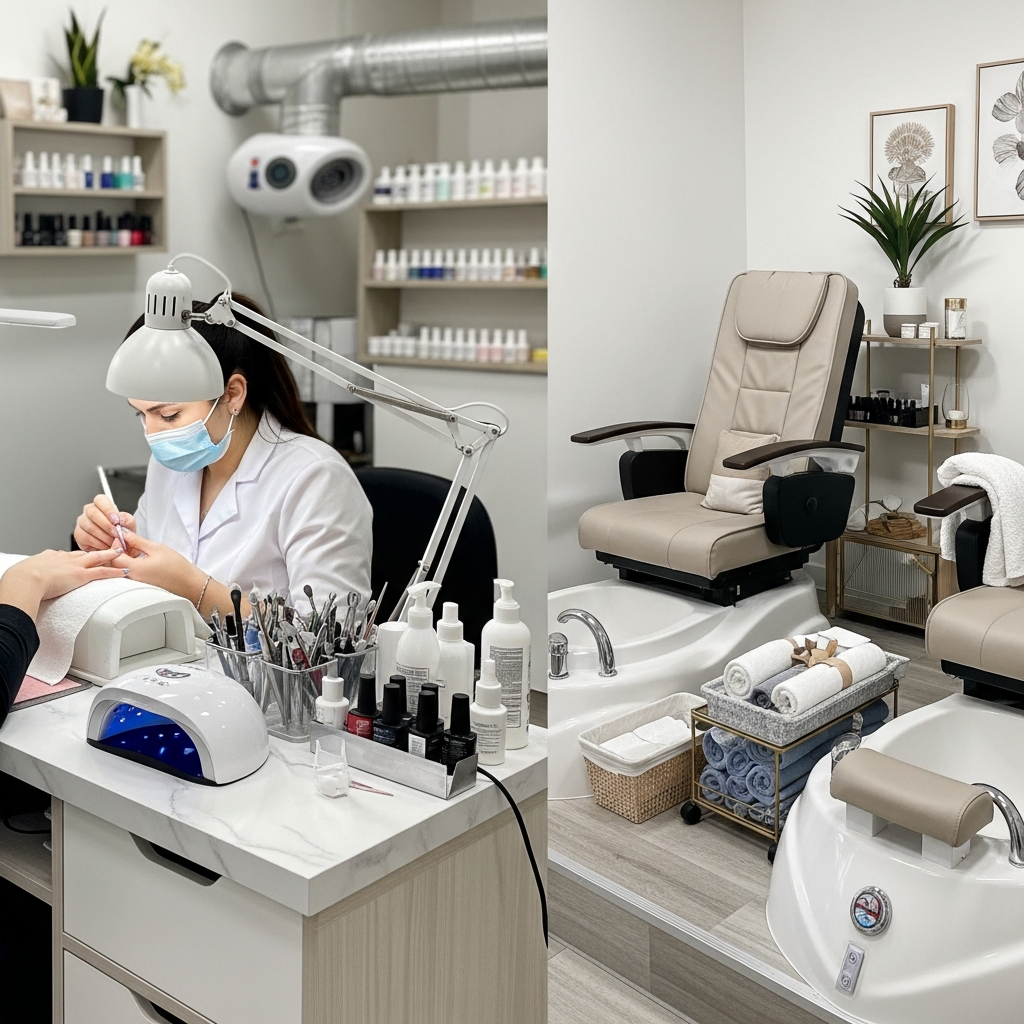
The first step in opening a nail salon is calculating the total investment required for a physical location. You must budget for lease deposits, specialized ventilation systems, and professional-grade nail stations.
Expect to spend a significant portion of your budget on high-quality pedicure chairs and manicure tables. These tools are the foundation of your nail service delivery and must meet ergonomic standards.
Inventory costs including professional polishes, acrylic systems, and gel products must be managed carefully. Avoid overstocking seasonal colors during your first six months to maintain liquid cash flow.
Legal Setup and State Board Compliance
Every U.S. nail salon must comply with specific State Board of Cosmetology regulations regarding floor space and sanitation. Failure to meet these requirements can lead to heavy fines or closure.
You must obtain a salon license, a business operation permit, and ensure all nail technicians hold valid individual licenses. Registering your nail business as an LLC is also a common step for protection.
Insurance is a non-negotiable expense for any professional nail environment. General liability and professional liability insurance protect the business against accidents or chemical-related claims.
Common First-Year Nail Salon Mistakes
Many new nail salon owners fail because they prioritize expensive interior decor over functional equipment. High-end furniture does not generate revenue, but efficient nail workstations do.
Another common error is failing to track the exact cost of nail supplies used per service. Without knowing your product cost, you cannot set profitable service prices.
- Underpricing services: Setting prices too low to attract customers often leads to a deficit.
- Neglecting sanitation: Poor cleaning habits result in failed inspections and lost client trust.
- Poor scheduling: Inefficient booking leads to gaps that waste expensive booth rental or hourly labor.
Calculating the Nail Salon Break-Even Point
To survive the first year, you must identify your break-even point. This is the number of nail sets or pedicures required to cover all monthly fixed and variable expenses.
Fixed costs include rent, utilities, and insurance for the nail facility. Variable costs include the back-bar supplies like monomer, files, and towels used for each client.
Monitoring these numbers weekly allows you to adjust your nail salon operations before a financial crisis occurs. Consistent tracking is the only way to ensure the business remains viable.
Cost Control and Inventory Management
Control nail supply waste by training staff on proper product measurements. Even small amounts of wasted gel or acrylic can add up to thousands of dollars in lost annual profit.
Standardizing the nail tools used in the salon ensures consistent results and predictable replacement costs. Buying essential disposables in bulk helps reduce the cost per service significantly.
