Managing Nail Salon Service Consistency and SOPs
Nail salon service consistency is the standardized process of delivering uniform technical results and customer experiences across every station. Implementing specific nail protocols ensures that every technician follows established sanitation, application, and finishing steps, which stabilizes revenue and maintains professional standards within a high-volume U.S. nail salon environment.
Implementing Standardized Nail Service Workflows
Standard operating procedures (SOPs) are essential for maintaining the reputation of a professional nail business. Without written protocols, technicians may use varying amounts of product or skip critical preparation steps.
Every nail service should follow a rigid sequence to prevent lifting and premature chipping. Standardizing the nail plate preparation ensures that every client receives a durable set regardless of the assigned technician.
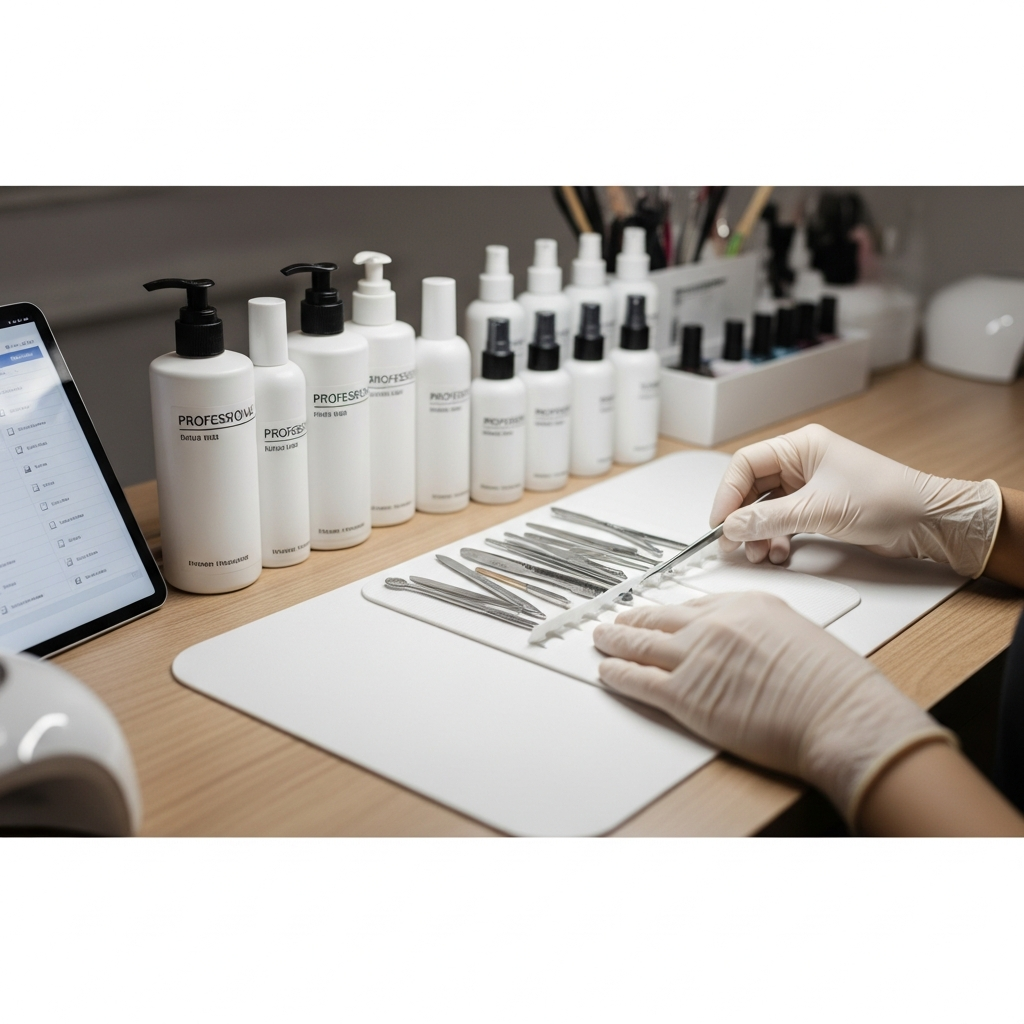
Workflows must also include specific station turnover rituals. This includes the immediate disinfection of nail tools and the organization of the manicure table to prepare for the next client efficiently.
Station Setup and Preparation Protocols
A professional nail station must be organized to minimize movement and maximize service speed. Standardized placement for liquid and powder systems, gels, and files helps maintain a clean environment.
Management should enforce a daily checklist for opening and closing nail stations. This ensures that all e-files are maintained and that monomer or acetone containers are properly refilled for the next shift.
Technical Execution and Timing Standards
Consistency requires every nail technician to adhere to specific timing benchmarks for each service type. A standard gel manicure should ideally be completed within a specific timeframe to protect the salon’s schedule.
Timing standards prevent bottlenecks in the nail salon workflow and ensure that clients are not left waiting. Monitoring these benchmarks allows owners to identify which staff members require additional technical training.
Monitoring Nail Technician Performance and Metrics
Revenue tracking in a nail salon is directly linked to service speed and material control. Management must evaluate how efficiently each technician utilizes professional nail products and salon time.
Regular performance reviews should focus on technical precision and the ability to follow established nail protocols. High-performing technicians maintain low redo rates and high client retention through consistent execution.
Service Duration Tracking
Tracking the duration of each nail service helps management optimize the daily schedule. Overly long service times reduce the number of clients a nail salon can accommodate, impacting the bottom line.
Consistent timing ensures that the front desk can accurately manage walk-ins and appointments. It creates a predictable flow that reduces stress for both the nail technicians and the management team.
Material Usage and Waste Management
Controlling the cost of professional nail supplies requires strict adherence to portioning standards. Excessive use of acrylic liquid or nail primer can significantly increase overhead costs over time.
Standardized training on product application helps minimize waste and ensures that the nail salon operates at maximum profitability. Technicians must be trained to use the precise amount of product required for a secure set.
-
Benefits of Nail Salon SOPs:
- Uniform service quality across all technicians.
- Reduced material waste and lower supply costs.
- Predictable service timing for better scheduling.
- Easier onboarding for new nail technicians.
- Enhanced salon reputation and client loyalty.
