
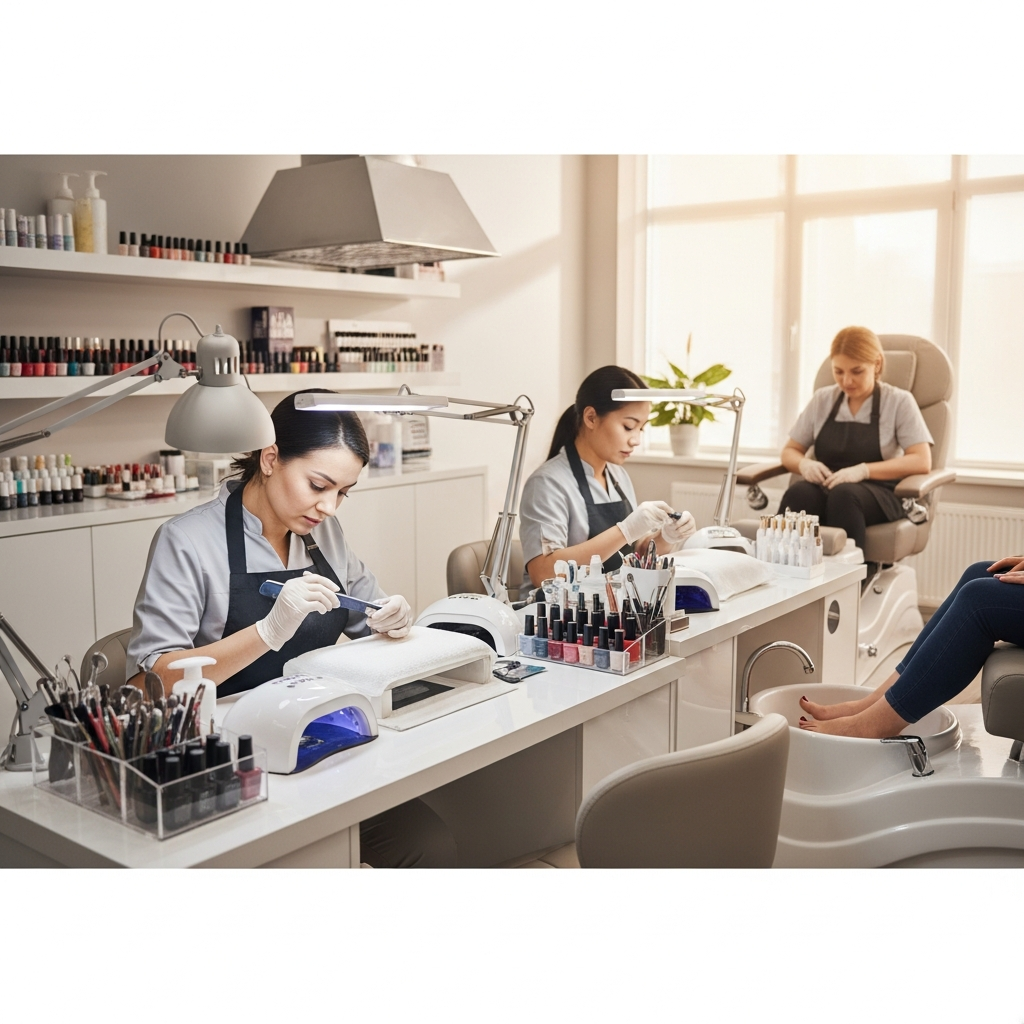
How to Open a Nail Salon and Survive the First Year
Opening a nail salon involves securing a commercial lease, obtaining state board licensing, and investing in specialized ventilation systems. Success in the first year requires managing high initial overhead while building a recurring client base through consistent service quality and strict adherence to local sanitation regulations and business compliance.
Estimating Initial Nail Salon Startup Costs
A primary challenge for new owners is underestimating the capital needed for specialized equipment. Professional manicure tables, pedicure thrones, and high-quality LED lamps represent significant upfront investments.
Beyond furniture, you must budget for an extensive opening inventory of professional-grade monomers, polymers, and gel systems. These consumables are essential for daily operations and require consistent replenishment.
Infrastructure costs often include plumbing for pedicure stations and high-end ventilation systems. These systems are mandatory in many U.S. states to ensure technician and client safety from chemical fumes.
Essential Legal and Regulatory Compliance
Every nail salon must adhere to strict state board of cosmetology regulations. This includes maintaining specific square footage requirements and professional workstation spacing for all licensed nail technicians.
You must obtain a general business license and a salon-specific facility license. Ensure your space passes a pre-opening inspection regarding sanitation protocols and biohazard disposal procedures.
Liability insurance is critical for protecting your business against claims related to chemical reactions or accidental injury. Professional coverage should be secured before the first client enters the premises.
Avoiding Common First-Year Financial Pitfalls
Many new owners overspend on aesthetic decor while neglecting the quality of their professional tools. Investing in high-quality nippers, bits, and brushes reduces long-term replacement costs.
High rent in premium locations can drain your cash reserves before the business reaches its break-even point. Focus on a functional space with high visibility that fits within your projected revenue margins.
Poor inventory management leads to expired products and wasted capital. Track every ounce of acrylic liquid and every bottle of polish to maintain a lean, profitable operation.
Building a Sustainable Client Base
Survival in the first year depends on service consistency and retention. Word-of-mouth remains the most powerful growth driver for a new local nail business.
Focus on foundational services like hard gel overlays and structured manicures. These high-retention services encourage clients to return every three to four weeks for maintenance.
Establish a clear pricing structure that reflects your material costs and labor time. Avoiding deep discounts helps maintain the perceived value of your professional nail services.
