Optimizing Nail Salon Service Consistency
Nail salon service consistency is the process of implementing standardized protocols to ensure every client receives the same quality of care regardless of the technician. This operational framework relies on detailed standard operating procedures (SOPs) that govern technical execution, sanitation steps, and client interaction protocols to maintain professional salon standards and brand reputation.
The Role of Standard Operating Procedures in Nail Salons
Standard operating procedures provide the backbone for daily nail salon management and staff performance.
Without clear SOPs, technicians often develop individual habits that lead to inconsistent results and timing.
Establishing a uniform approach ensures that every gel application or acrylic set meets the salon brand standard.
Operational manuals should detail every phase of the client visit from check-in to final payment.
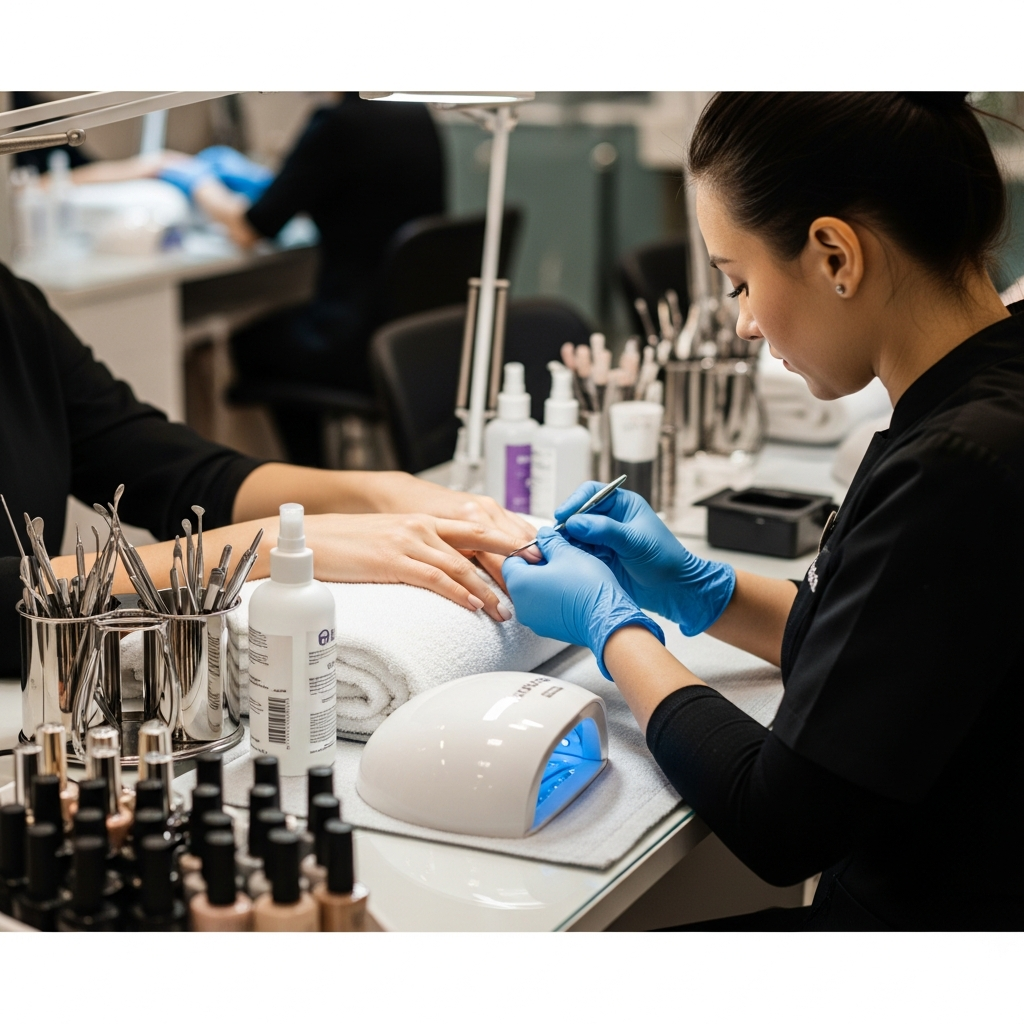
This includes specific instructions for workstation setup, tool disinfection, and the sequence of chemical application.
Consistent workflows reduce wasted product and minimize the risk of service failures or redo requests.
Essential Components of a Nail Service Workflow
Pre-Service Preparation and Setup
Every nail technician must follow a strict preparation checklist before the client sits at the station.
This involves verifying that all metal implements are sterilized and high-level disinfectants are fresh.
The setup should include organized lint-free wipes, required files, and the necessary professional chemicals.
Technical Service Execution Standards
The technical portion of the nail service requires a step-by-step sequence for cuticle work and shaping.
Standardizing the grit of files used for natural nails versus enhancements prevents unnecessary damage.
Uniformity in lamp curing times and layer thickness ensures long-lasting results across the entire staff.
Managing Technician Adherence to Salon SOPs
Consistency in a nail salon environment requires regular performance monitoring and staff evaluations.
Owners must conduct periodic “shadowing” sessions to ensure technicians are not skipping essential steps.
Providing a visual checklist at each station helps maintain the established workflow during busy shifts.
Clear communication regarding expectations for service timing is vital for maintaining the daily schedule.
If a standard gel manicure is set for forty-five minutes, every technician should be trained to meet that window.
This prevents scheduling bottlenecks and ensures the salon maximizes its daily revenue potential.
Revenue Impact of Operational Consistency
A consistent nail salon operation directly influences the bottom line through better inventory control.
When technicians follow standard product usage guidelines, owners can accurately predict backbar costs.
Standardization also reduces the frequency of complimentary repairs, which drain both time and resources.
Reliable service quality builds client trust and increases the likelihood of long-term retention.
Clients are more likely to book with any available technician when they trust the salon’s uniform standards.
This flexibility improves the overall efficiency of the staff rotation and boosts total salon commissions.
