Opening a Nail Salon: A First-Year Survival Guide
To open a nail salon successfully, you must secure professional licensing, choose a high-traffic location, and manage startup costs ranging from $40,000 to $150,000. Survival depends on maintaining strict inventory control, meeting local health department sanitation standards, and ensuring consistent service quality to build a recurring client base during the first twelve months.
Calculating Your Initial Nail Salon Investment
The first step toward survival is an accurate budget that covers both fixed and variable expenses. New owners must account for lease deposits, utility setup, and professional nail equipment.
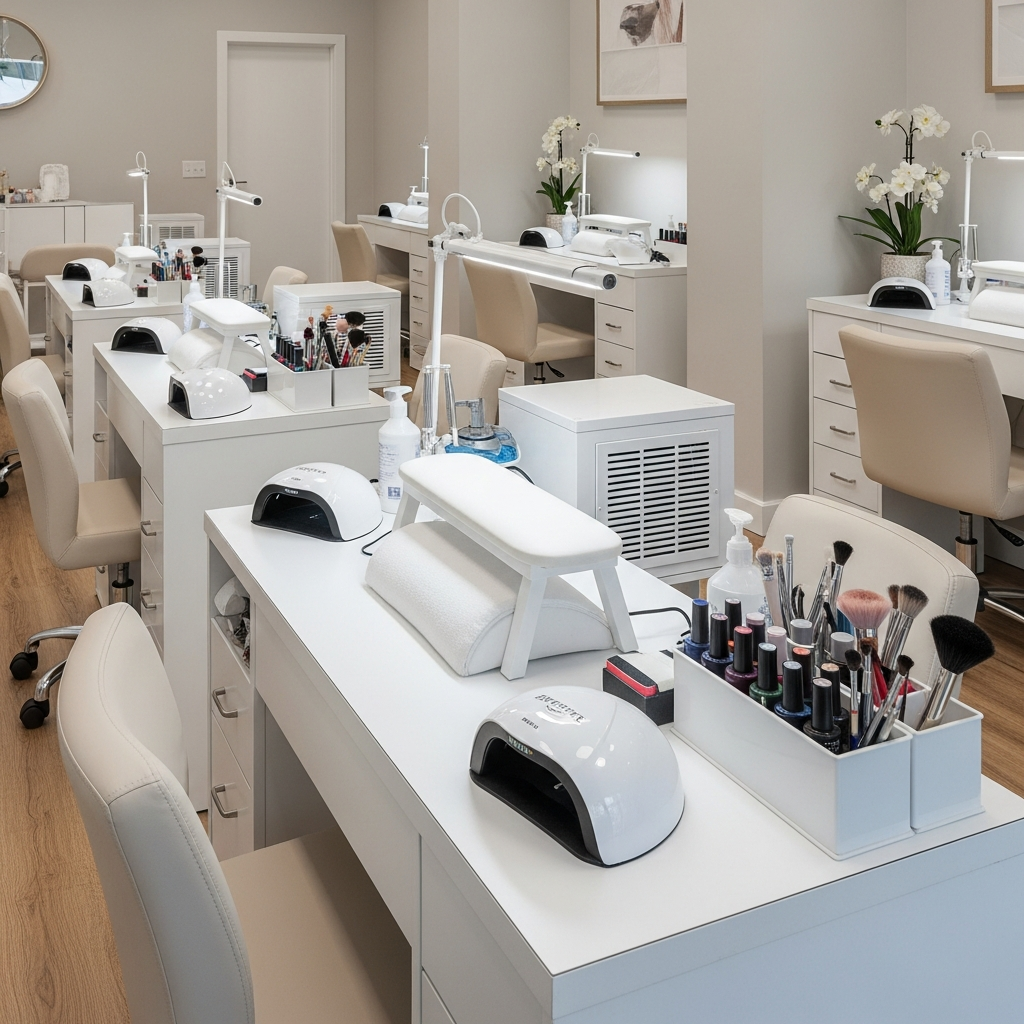
High-quality manicure stations and pedicure thrones represent a significant portion of your capital. Investing in durable, ergonomic furniture reduces the need for costly replacements during the critical first two years.
Professional Nail Equipment and Ventilation
U.S. building codes often require specific mechanical ventilation systems to manage chemical vapors and nail dust. Installing a source-capture system is essential for technician health and legal compliance.
In addition to furniture, you must stock professional-grade implements, including high-torque electric files, LED curing lamps, and autoclaves for tool sterilization. Quality tools directly impact service speed and results.
Essential Legal Basics for Nail Professionals
Navigating the legal landscape is mandatory for any new nail business. Every state has a Board of Cosmetology that dictates specific requirements for facility layout and sanitation practices.
You must obtain a salon facility license, a business operating permit, and ensure every technician holds an active individual license. Failure to display these documents can lead to immediate fines or closure.
Insurance and Liability Coverage
General liability and professional liability insurance protect your nail salon from claims related to accidental injury or infection. Standard policies should cover property damage and worker compensation for employees.
Consult with an agent familiar with the nail industry to ensure your coverage includes chemical-related incidents. Proper insurance is a fundamental component of business risk management and long-term stability.
Strategies for First-Year Financial Survival
Many nail salons fail in the first year due to poor cash flow management. Maintaining a cash reserve that covers six months of operating expenses is the safest way to handle slow periods.
Focus on high-margin services such as gel manicures and structured overlays to increase revenue. Controlling backbar waste of monomer, polymers, and lotions will significantly reduce your monthly overhead.
- Monitor inventory levels weekly to prevent overstocking expensive products.
- Implement strict sanitation protocols to avoid costly health department violations.
- Prioritize client retention over expensive advertising to build a stable income.
- Track the break-even point for every technician on your staff.
Avoiding Common Startup Mistakes
Beginner owners often overspend on interior decor while neglecting the quality of their nail supplies. Aesthetic appeal is secondary to the technical performance of your products and the safety of your environment.
Another common error is failing to account for merchant processing fees and software costs. These small expenses add up quickly and can erode the profit margins of your nail services if not budgeted correctly.
Maintain clear boundaries between personal and business finances from day one. Using a dedicated business bank account simplifies tax preparation and provides a clear picture of your nail salon’s actual growth.
