Standardizing Nail Salon Workflows for Consistency
Standardizing nail salon workflows involves establishing specific protocols for every service, from sanitation to final top coat application. These operational standards ensure that every nail technician delivers consistent quality, reduces chemical waste, and maintains the professional safety requirements necessary for high-volume U.S. salon environments.
The Importance of Service Consistency in Nail Operations
In a professional nail salon, consistency is the foundation of client retention and brand reputation. When every technician follows the same operational steps, the salon ensures a predictable result for every client.
Without standardized workflows, nail service times vary significantly, which disrupts the daily appointment schedule. This inconsistency often leads to lost revenue and increased labor costs due to over-extended service blocks.
Operational standards also protect the salon from liability by ensuring that every nail technician adheres to strict sanitation and chemical handling protocols required by state boards.
Developing Standard Operating Procedures for Nail Services
Step-by-Step Technical Protocols
Every nail service, from a basic fill to a complex structured gel application, must have a documented workflow. This includes the exact grit of files used and the specific order of liquid application.
- Preparation: Standardized cuticle work and plate dehydration to prevent lifting.
- Application: Specific bead ratios for acrylics or layer thickness for gel systems.
- Finishing: Uniform filing shapes and buffing sequences for a professional look.
Time Management and Benchmarking
Establishing maximum time limits for each nail service helps management track technician performance. Setting a 45-minute benchmark for a gel manicure ensures the schedule remains fluid and profitable.
Monitoring these timeframes allows owners to identify which technicians require additional technical training. Efficiency in the nail industry directly correlates to the number of turns a station can complete daily.
Inventory Control and Chemical Cost Management
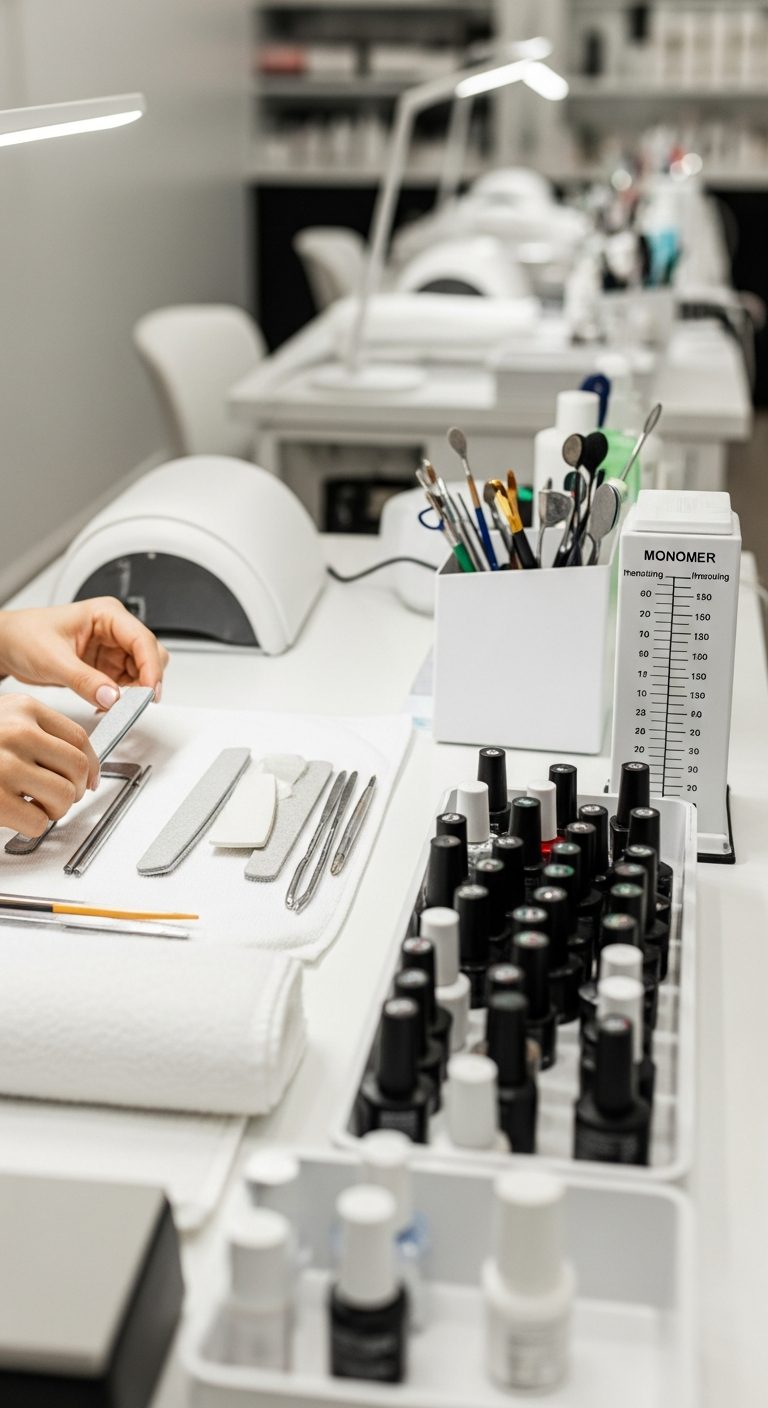
Nail salon profitability is often eroded by the improper use of professional products. Standardized workflows dictate the exact amount of monomer, polymer, or gel polish required per service.
Strict measurement protocols prevent technicians from wasting expensive chemicals or over-using disposable supplies like files and buffers. This control is vital for maintaining healthy profit margins in high-rent U.S. markets.
Implementing a weekly inventory audit against the number of nail services performed reveals discrepancies in product usage. This data allows for more accurate ordering and reduces overhead expenses.
Staff Performance and Accountability Systems
Management must use a clear performance tracking system to evaluate nail technicians. This includes monitoring re-do rates, service speed, and adherence to the daily cleaning roster.
Regular performance reviews based on these operational metrics encourage staff to maintain high standards. It also provides a transparent framework for commissions and bonuses based on efficiency and quality.
Effective scheduling must balance the skill levels of the nail team to ensure the salon can handle diverse service requests. Strategic booking prevents bottlenecks during peak hours and optimizes station utilization.
