Optimizing Nail Salon Daily Operations and Workflows
Professional nail salon operations management involves streamlining technician workflows, standardizing service protocols, and maintaining strict sanitation schedules to ensure business profitability. Professional salon owners focus on optimizing the daily appointment calendar and supply inventory to maximize revenue while delivering consistent high-quality results for every client.
Standardizing Daily Nail Salon Workflows
Efficient nail salon management starts with a structured daily routine that technicians follow before the first client arrives.
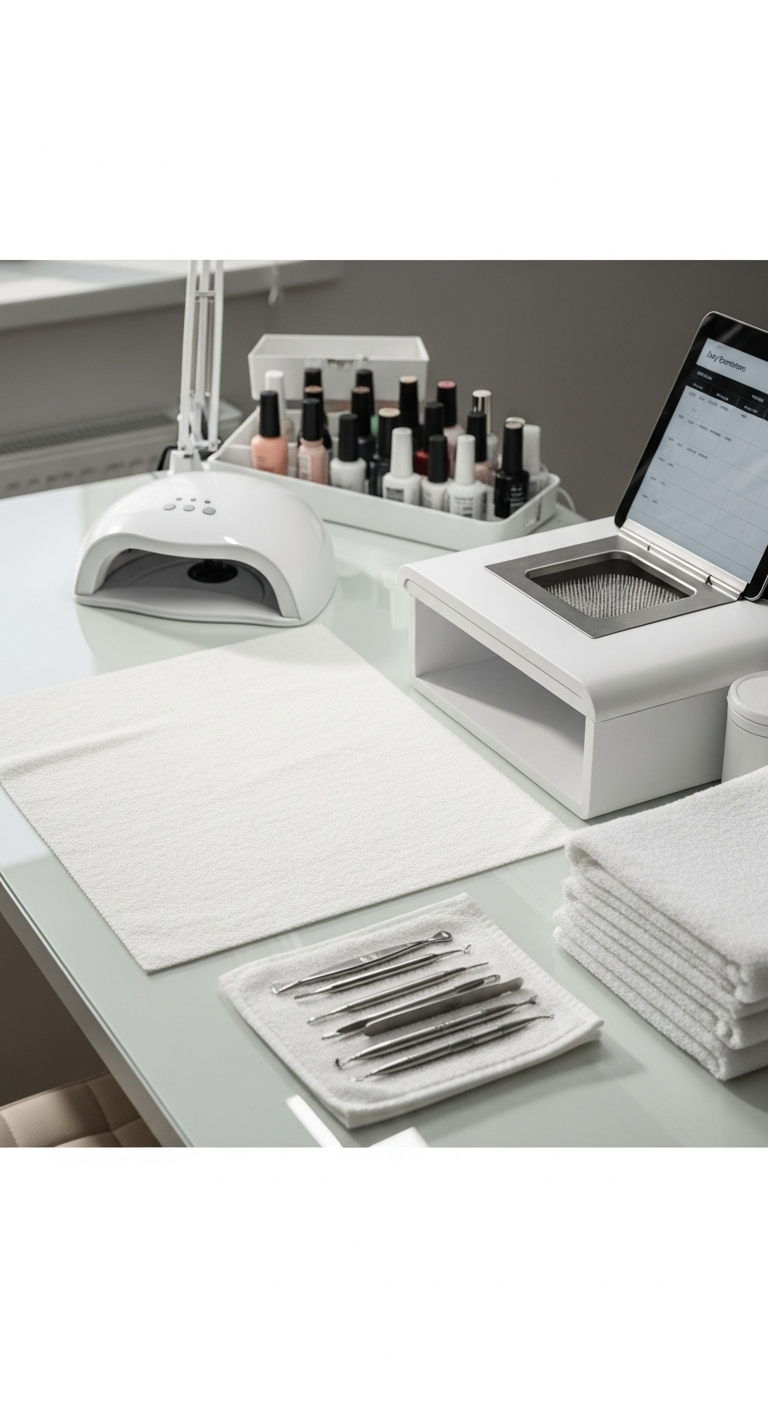
Station preparation must include the replenishment of clean towels, sterilized implements, and essential chemical solutions.
A clear workflow prevents delays between services and ensures the salon floor remains organized during peak hours.
Implementing a morning checklist helps technicians verify that all ventilation systems are functioning and lighting is adequate for precision work.
Pre-sorting files and buffers into individual service packs reduces transition time between appointments.
Maintaining a clean station throughout the day is a core operational requirement for safety and professionalism.
Establishing Service Consistency through SOPs
Consistency is the foundation of a successful nail business and requires standard operating procedures for every service offered.
Every technician must follow the same preparation, application, and finishing steps for enhancements and natural treatments.
This uniformity ensures that a client receives the same high-quality result regardless of which staff member performs the service.
Technical Benchmarks for Staff Performance
- Standardized timing for acrylic application and gel removal services.
- Uniform shaping and filing techniques across the entire technical team.
- Consistent product application thickness to prevent lifting or breakage.
- Specific protocols for client consultations and aftercare recommendations.
Effective Staff Scheduling and Performance
Managing a nail salon requires a strategic approach to staff scheduling based on historical booking data and service types.
Owners must balance the number of technicians available for specialized services like pink and white sets or detailed nail art.
Monitoring technician productivity helps identify who needs additional technical training to meet salon speed standards.
Performance control should focus on the quality of the finished work and the technician’s ability to maintain a clean environment.
Regular check-ins regarding service times help keep the daily schedule on track and minimize client wait times.
Properly managed breaks are essential to prevent technician fatigue and ensure precision during complex technical tasks.
Inventory Tracking and Supply Cost Management
Controlling costs in a nail salon requires strict oversight of back-bar inventory and professional product usage.
Technicians should be trained to use specific amounts of monomer, polymer, and gel products to minimize chemical waste.
Overusing supplies directly impacts the profit margin of each individual service performed at the station.
Reducing Operational Overhead
Regular inventory audits help prevent overstocking of seasonal colors while ensuring core products are always available.
Focusing on supply storage temperatures protects the integrity of chemical products and prevents premature curing or separation.
Effective waste management protocols ensure that disposables and chemicals are handled according to U.S. safety regulations.
Revenue Tracking and Internal Problem Solving
Daily revenue tracking allows owners to identify which nail services are most profitable and which require adjustments.
Monitoring the ratio of service revenue to supply costs provides insight into the overall financial health of the salon.
Operational problems, such as frequent scheduling gaps, should be addressed by adjusting technician start times or service durations.
Solving internal workflow issues requires open communication with the technical staff regarding station ergonomics and supply accessibility.
Small adjustments to the physical layout of the nail salon can significantly improve the speed of service delivery.
Prioritizing operational efficiency creates a professional environment that supports both technician growth and business longevity.
