Improving Nail Salon Operational Efficiency and Service Consistency
A nail salon operational workflow is a standardized system of procedures that ensures consistent service quality, sanitation compliance, and time management across all technician stations. These protocols define technical execution steps for every nail service, allowing owners to maintain professional standards, optimize staff scheduling, and stabilize revenue through predictable service delivery.
Standardizing Technical Service Workflows
Consistency is the foundation of a successful nail business. Every technician must follow the same technical steps for nail preparation, product application, and finishing to ensure the same result for every client.
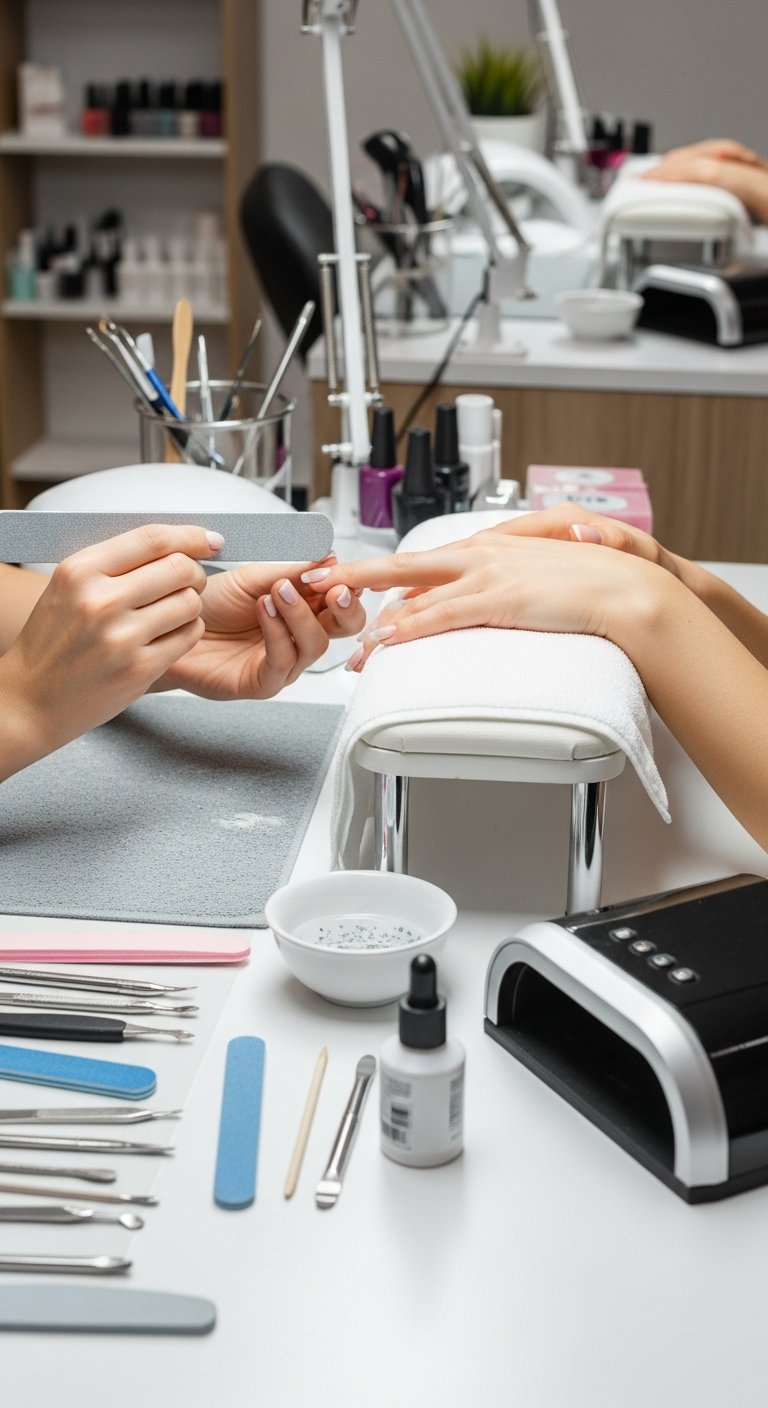
Create a detailed manual that outlines the exact steps for each service. This includes the specific grit of nail files used for natural nails versus enhancements and the required curing times for gel products.
Standardization reduces service errors and product waste. When every nail technician uses the same amount of acrylic liquid or gel polish, owners can accurately predict inventory needs and manage costs effectively.
Managing Staff Performance and Daily Workflows
Effective nail salon management requires clear expectations for daily tasks. Technicians should have a structured checklist for opening, mid-shift, and closing duties to maintain an organized environment.
Staff scheduling must align with peak demand periods while accounting for individual technician speed. Track the average time each professional takes to complete a full set of nail enhancements or a refill.
Use these metrics to adjust the booking system. This prevents overbooking and ensures that technicians have enough time to perform thorough sanitation between clients without rushing the technical application.
Sanitation and Safety Compliance Protocols
In the U.S. nail industry, state board compliance is a critical operational requirement. Establish a rigorous protocol for disinfecting metal implements and disposing of single-use items like nail buffers and files.
Stations must be reset and sanitized after every client. Documenting these processes ensures that every staff member maintains the high safety standards expected by both regulators and professional clients.
Internal Communication and Service Consistency
Hold regular staff meetings to review technical standards and address operational bottlenecks. Consistent training sessions ensure that all nail technicians are updated on any changes to salon protocols or product lines.
Reviewing client feedback regarding service durability or shape consistency helps identify areas where staff may need additional coaching. This proactive approach maintains the salon’s reputation for high-quality nail work.
Revenue Tracking and Cost Control Systems
Monitoring the cost of goods sold for every nail service is essential for profitability. Calculate the price per service by measuring the consumption of monomers, polymers, and professional lacquers.
Track revenue by service type to identify which nail treatments are the most profitable. This data allows management to focus marketing efforts on high-margin services that maximize the hourly rate per station.
Labor is often the highest expense in a nail salon. Aligning commission structures or hourly wages with performance metrics ensures that the business remains sustainable while fairly compensating skilled nail professionals.
