Managing Professional Nail Salon Operations and Workflows
Nail salon operations are the structured processes governing daily service delivery, technician management, and hygiene compliance within a professional facility. Effective management requires standardized workflows that synchronize front-desk intake with technician performance to ensure every nail service meets established quality benchmarks, minimizes product waste, and maximizes daily chair turnover.
Optimizing Daily Nail Salon Workflows
Morning Preparation and Station Readiness
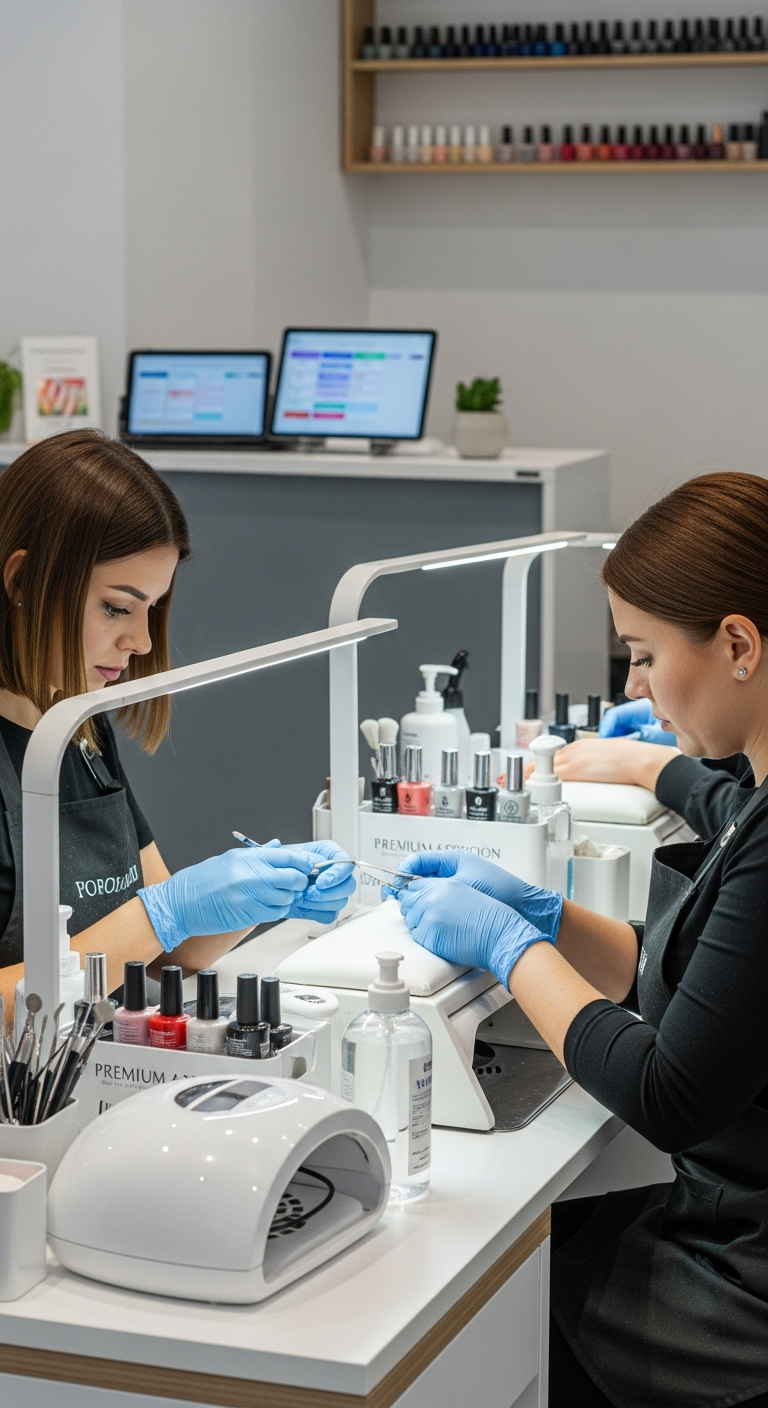
Success begins with a standardized opening checklist to ensure every nail station is fully stocked. Each technician must verify their inventory of files, buffers, and liquids before the first client arrives.
Workstations must be sanitized according to state board regulations to maintain a safe professional environment. Proper setup prevents mid-service interruptions that can disrupt the entire salon schedule.
Client Handover and Technician Rotation
The transition from the waiting area to the nail station must be seamless to maintain a professional atmosphere. Management should implement a rotation system that balances workload among technicians based on skill level.
Clear communication between the front desk and the floor prevents overbooking and reduces client wait times. Effective transitions ensure that the salon maintains a high volume without compromising technical quality.
Implementing Service Consistency Through SOPs
Standardizing Technical Execution
Service consistency relies on Standard Operating Procedures (SOPs) for every nail enhancement and natural service offered. Technicians must follow specific steps for nail plate preparation to prevent lifting and ensure longevity.
Standardizing the application process ensures that a client receives the same high-quality result regardless of which technician performs the service. This consistency builds brand trust and encourages repeat visits.
Enforcing Universal Sanitation Standards
Sanitation is a non-negotiable operational pillar in the professional nail industry. Management must document and enforce strict protocols for disinfecting foot tubs, metal implements, and work surfaces.
Using hospital-grade disinfectants and maintaining detailed sanitation logs protects the business from liability. Regular audits of technician stations ensure these standards are met throughout the business day.
Financial Oversight and Cost Management
Monitoring Supply Usage and Waste
Operational profitability depends on strict control over professional nail products and disposables. Overusing monomer, gel, or specialized treatments can significantly erode profit margins over time.
Management should track product consumption against the number of services performed to identify waste. Training technicians on precise product beads and application amounts reduces overhead costs.
Labor Cost Control and Commissions
In the United States, managing nail technician labor costs requires a balance between fair compensation and salon profitability. Owners must analyze service times against commission rates to ensure sustainable revenue.
Efficient scheduling reduces “dead time” where technicians are clocked in but not generating revenue. Adjusting staff levels based on historical peak hours optimizes labor spending.
Performance Management and Scheduling
Evaluating Technician Productivity
Professional nail salon management involves tracking key performance indicators for every staff member. Metrics should include service speed, request rates, and the ability to upsell relevant nail treatments.
Regular performance reviews help identify technicians who may need additional technical training or speed improvement. Focused management leads to a more proficient and profitable team.
Strategic Shift Coverage
Effective scheduling must account for high-demand periods without overstaffing during slow hours. Managers should use historical data to predict busy weekends and holiday rushes in the nail industry.
Clear policies regarding time-off requests and shift swaps prevent operational gaps that lead to lost revenue. A well-managed schedule ensures the salon can accommodate both walk-ins and appointments.
