Optimizing Daily Nail Salon Workflows for Efficiency
A nail salon daily workflow is a structured operational sequence designed to ensure service consistency, hygiene standards, and efficient client turnover. Effective management of these workflows reduces technician downtime and controls material costs while maintaining the high professional standards required for a profitable and sustainable nail business.
Establishing Standard Operating Procedures (SOPs)
Professional nail salon management relies on clear SOPs for every stage of the client visit. This includes the greeting, station preparation, service execution, and the final checkout process.
When every technician follows the same operational steps, the salon maintains a unified brand identity. It also simplifies the training process for new hires entering the nail industry.
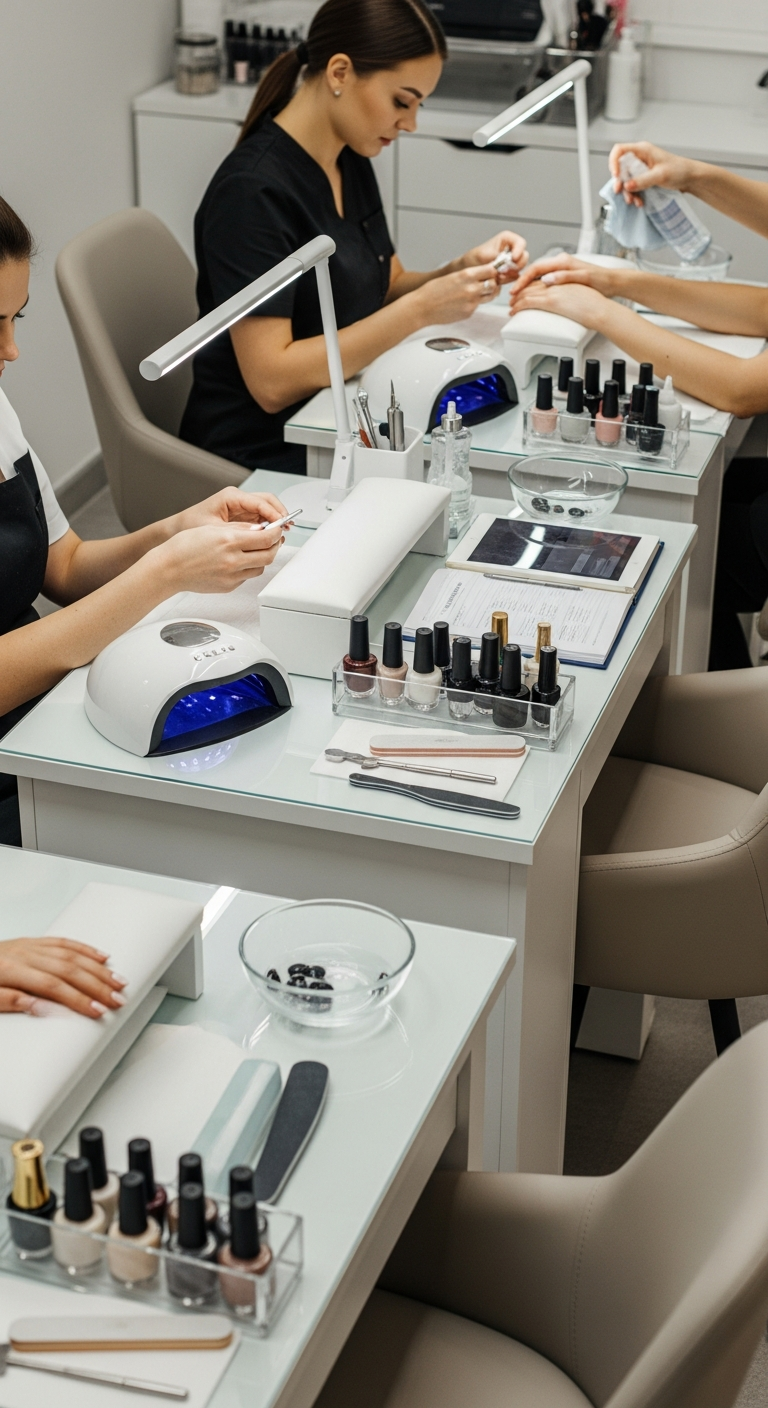
Written protocols for station disinfection and tool sterilization are mandatory for safety. These procedures must be performed consistently between every client to meet state board requirements.
Strategic Staff Scheduling and Performance
Effective scheduling must balance technician availability with peak demand hours in the nail salon. Proper coverage ensures that the business can accommodate walk-ins without disrupting pre-booked appointments.
Monitoring individual technician performance helps identify operational bottlenecks. Track metrics such as average service time and the ratio of base services to higher-margin enhancements.
Management should assign specific side-work duties during low-traffic periods. These tasks include restocking stations, organizing the nail lacquer inventory, and ensuring the facility remains pristine.
Optimizing Service Turnaround Times
Standardizing service durations prevents scheduling overlaps and reduces client wait times. Each nail service, from a basic manicure to complex extensions, requires a designated time block.
Technicians must be trained to work efficiently without compromising the quality of the application. This balance is critical for maintaining high throughput during busy weekend shifts.
Maintaining Service Consistency Across Technicians
Consistency is the primary driver of client retention in the nail business. A client should receive the same high-quality result regardless of which technician performs the service.
Implement regular technique audits to ensure all staff members use the same application methods. This includes standardizing the number of gel coats and the specific finishing techniques used.
Uniformity in service delivery minimizes the risk of product lifting or premature chipping. This reduces the frequency of unpaid repair appointments, protecting the salon’s bottom line.
Operational Cost Control and Inventory Management
Managing the cost of professional nail products is essential for maintaining healthy profit margins. Internal waste is a common cause of lost revenue in many salons.
Establish strict dispensing protocols for monomer, polymer, and gel products. Technicians should use standardized measurements to avoid excessive product usage during each service.
Conduct weekly inventory counts to monitor the consumption of essential supplies like files, buffers, and towels. Accurate tracking prevents overstocking and ensures the salon never runs out of critical items.
