Standardizing Nail Salon Service Operations for Consistency
Nail salon service consistency is achieved through the implementation of standardized operating procedures (SOPs) that dictate every step of a client’s visit. These operational protocols ensure that every nail technician delivers uniform technical results, follows sanitation mandates, and adheres to the salon’s specific workflow to maintain predictable revenue and professional brand standards.
Establishing Professional Nail Service SOPs
Standard operating procedures are the backbone of a functional nail salon. Without clear guidelines, technicians often develop individual habits that lead to inconsistent results and varying service times.
Every nail service, from a basic manicure to a complex acrylic full set, requires a written step-by-step protocol. This ensures that clients receive the same level of care regardless of which technician is performing the service.
A professional manual should define the exact products used for each step. Standardizing brand usage prevents chemical reactions between incompatible systems and stabilizes the cost per service for the business owner.
Optimizing Daily Salon Workflows
Efficient workflow management begins the moment a client enters the nail salon. A structured intake process reduces bottlenecks at the front desk and keeps technicians on schedule.
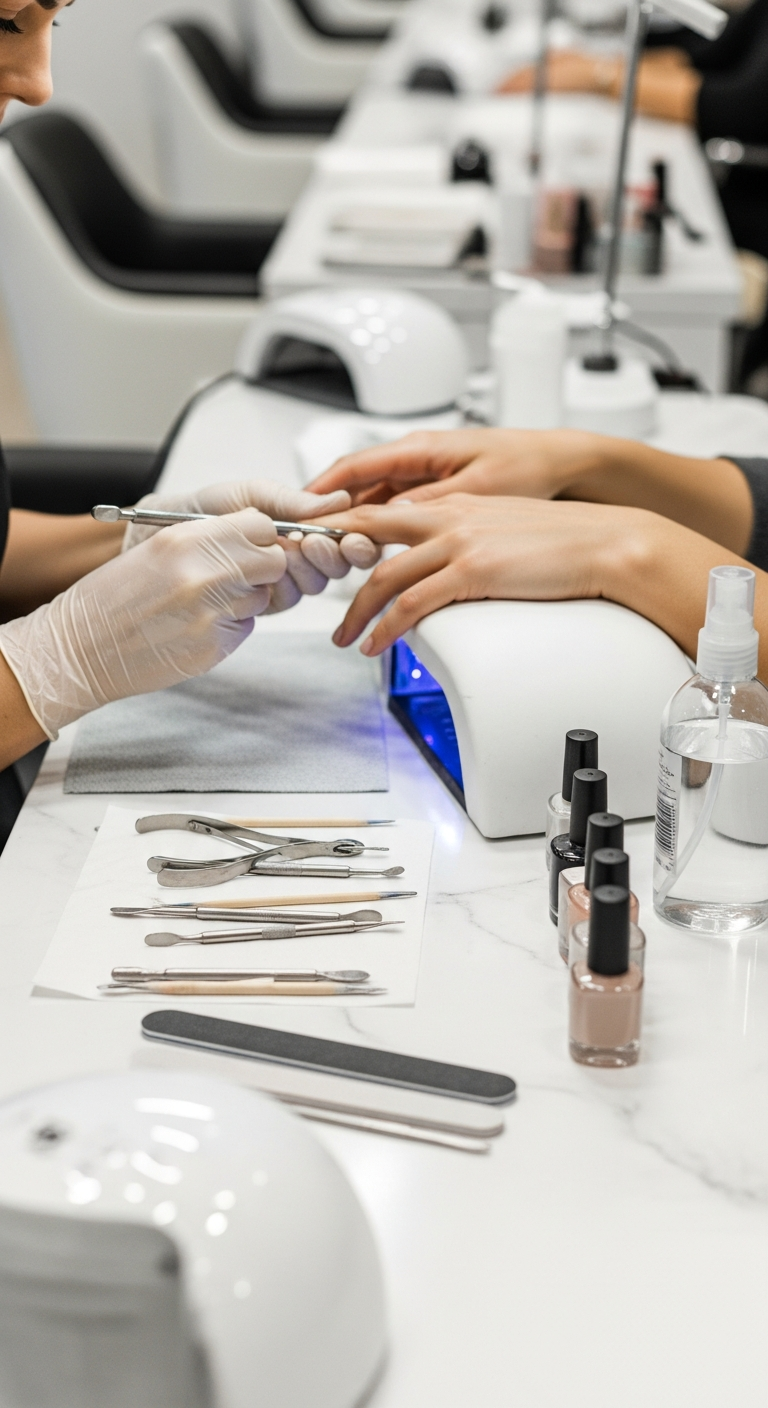
Workstation preparation is a critical part of the daily workflow. Technicians must follow a checklist to ensure all implements are sanitized and consumables are restocked before the first appointment starts.
Managing the transition between clients is vital for maintaining high volume. Standardized cleanup and disinfection protocols allow for quick chair turnover without compromising safety or state board regulations.
Monitoring Technician Performance and Timing
Revenue in a nail salon is directly tied to the efficient use of time. Managers must establish standard time frames for each service type to prevent scheduling overlaps and lost revenue.
Tracking the duration of a gel fill or a new set of extensions helps identify technicians who may need additional technical training. Consistent timing allows the front desk to book appointments with precision.
Regular quality checks ensure that technicians are not cutting corners to meet time requirements. Inspecting the structural integrity of the nail enhancements and the cleanliness of the cuticle work maintains the salon’s reputation.
Internal Revenue and Supply Cost Management
Professional nail salons must track product consumption to protect profit margins. Excessive use of monomer, gel polish, or disposable files can significantly increase operational overhead.
Implementing a dispensing system for high-cost chemicals helps control waste. Technicians should be trained on the correct product-to-bead ratio to ensure durability while minimizing material usage.
Daily revenue tracking should be compared against technician labor hours. This data allows management to adjust staffing levels based on peak demand periods and optimize the salon’s earning potential.
Standardizing Sanitation and Safety Protocols
Safety is a non-negotiable aspect of nail salon operations. Operational standards must include strict adherence to EPA-registered disinfectant use and the proper disposal of single-use items.
Pedicure bowl cleaning logs and autoclave sterilization records should be part of the daily operational requirements. These documents protect the business during inspections and build client trust in the salon’s professionalism.
Technicians must be trained on the specific safety data sheets for all chemicals used in the salon. Understanding flashpoints and ventilation requirements is essential for a safe working environment for all staff.
