Starting a Nail Salon: First Year Survival Guide
Starting a nail salon involves securing a commercial location, obtaining state board licenses, and managing initial overhead to ensure first-year survival. Successful owners focus on precise cost control for nail supplies and consistent service quality to build the client retention necessary for reaching the monthly break-even point.
Understanding Nail Salon Startup Costs
Opening a professional nail space requires significant upfront capital for ventilation systems, pedicure thrones, and manicure stations. Owners must budget for at least three to six months of operating expenses to cover slow periods.
Professional nail products and backbar inventory represent a recurring cost that requires strict monitoring to prevent waste. High-quality acrylics, gels, and sanitation liquids are non-negotiable expenses for a new business.
Navigating State Board and Legal Basics
Each U.S. state has specific nail technician and establishment licensing requirements that must be met before opening. Compliance with local sanitation protocols is critical for passing initial inspections and maintaining a permit.
Secure professional liability insurance specifically tailored for nail services to protect the business from claims. Proper commercial zoning permits and tax identification numbers are also required for legal operations.
Initial Inventory and Supply Management
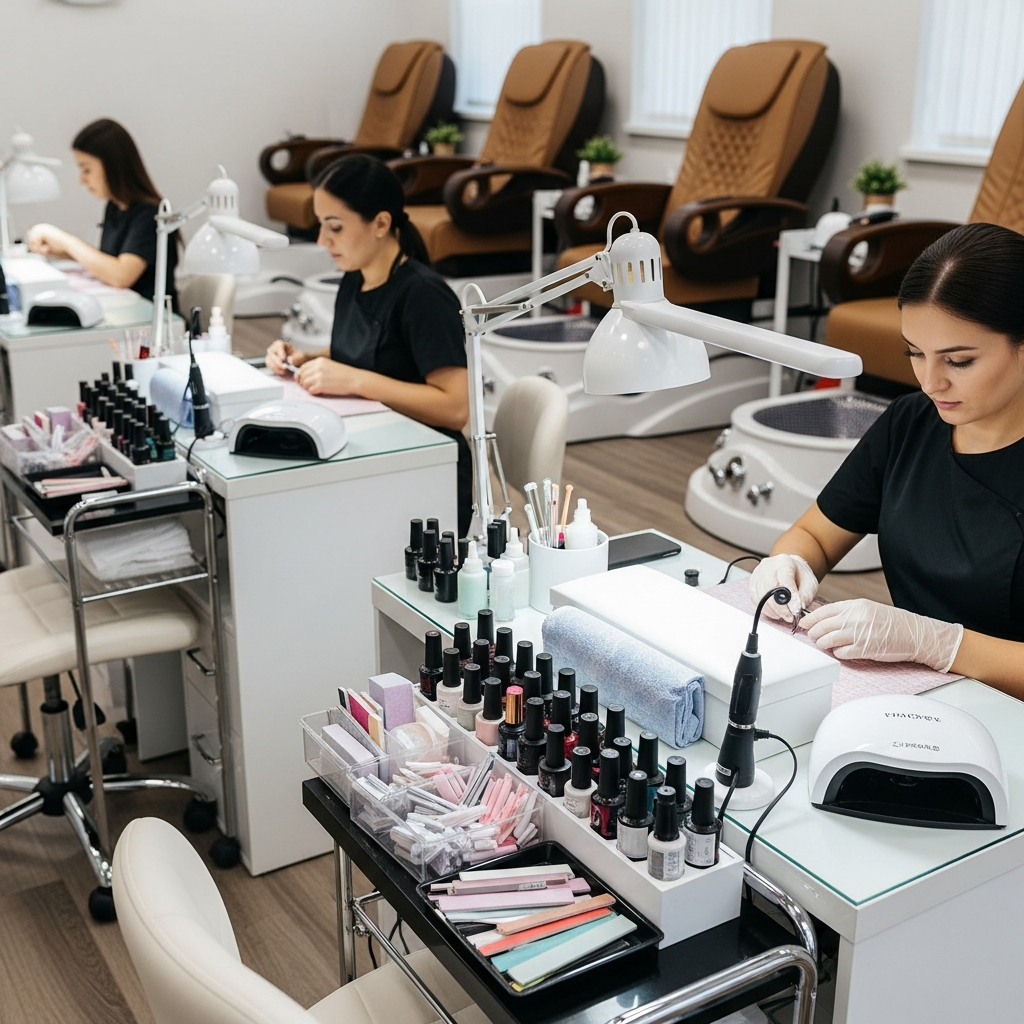
- Professional Equipment: High-performance LED lamps, e-files, and ergonomic technician chairs.
- Sanitation Tools: Hospital-grade disinfectants, ultrasonic cleaners, and sterilization trays for implements.
- Service Essentials: A diverse palette of professional gels, lacquers, and acrylic systems for various techniques.
- Disposable Supplies: Single-use files, buffers, and towels to maintain hygiene standards.
Achieving Financial Break-Even
Tracking the cost per service is the most effective way to ensure nail salon profitability. This calculation must include the price of professional products used during a single manicure or pedicure service.
Avoiding the common mistake of underpricing services to attract customers is vital for long-term health. Prices must reflect the local U.S. market rates and cover all fixed overhead expenses.
Controlling Labor and Operational Overhead
Staffing levels should match actual client demand to prevent high labor costs during slow morning hours. Many successful owners start by working behind the nail desk themselves to minimize early payroll.
Rent, utilities, and insurance are fixed costs that require consistent daily revenue. Reducing utility waste and negotiating favorable lease terms can significantly impact the thin margins of a new salon.
Building a Client Base from Zero
Focusing on walk-in traffic is a common strategy for new nail salons in high-traffic retail areas. Providing a clean, professional environment encourages these first-time visitors to become repeat clients.
Consistency in nail shaping and application quality is the most effective way to grow a new business. Word-of-mouth remains the most powerful growth tool for nail technicians during their first year of operation.
