Opening a Nail Salon: Survival and Startup Costs
Opening a nail salon involves securing a commercial lease, obtaining professional licensing, and purchasing essential technician equipment. To survive the first year, owners must calculate their break-even point by balancing fixed rent costs against service revenue from manicures and nail enhancements while maintaining strict inventory control over professional supplies.
Essential Legal and Licensing Requirements
Before performing any services, you must obtain a business license and a salon facility license from your state board. Every technician working in the salon must also hold a valid, current license to provide nail services in your specific state.
Zoning permits are required to ensure the location is approved for professional beauty services. You must also pass a health department inspection focused on sanitation, ventilation, and proper chemical storage for professional nail products.
Estimating Your Initial Nail Salon Startup Costs
Startup costs vary significantly based on location and size, but initial investments typically include a security deposit, build-out expenses, and professional furniture. Expect to pay for plumbing installations specifically designed for pedicure stations and ventilation systems for dust control.
Professional Equipment and Furniture
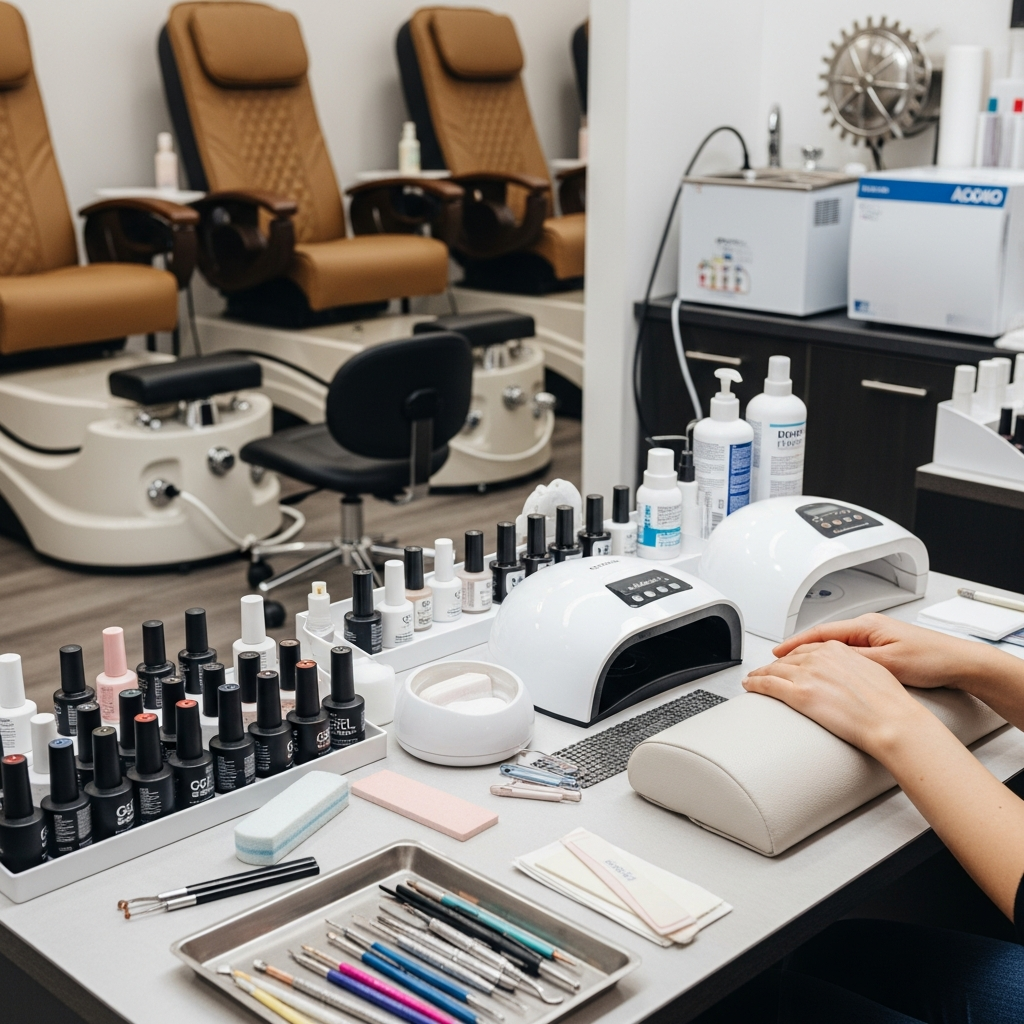
- Manicure Tables: Sturdy desks with built-in dust collectors and ergonomic seating for the technician and client.
- Pedicure Chairs: Professional units with integrated plumbing or portable basins that meet state sanitation requirements.
- Curing Lamps: High-quality LED or UV lamps compatible with the specific professional gel systems you choose to stock.
- Sanitation Stations: Hospital-grade disinfectants, ultrasonic cleaners, and autoclaves for tool sterilization.
Inventory and Supplies
Initial inventory should include a range of lacquer colors, gel polishes, acrylic powders, and monomers. You must also stock disposable items like files, buffers, and orange wood sticks that are discarded after every nail service.
Calculating the Break-Even Point
The break-even point is the moment your total service revenue equals your total operating expenses. To find this, add your fixed costs like rent and insurance to your variable costs like nail product usage and utilities.
Divide this total by your average service price to determine how many clients you need per month. Most new nail salons focus on reaching this milestone within the first six to nine months of operation.
Common First-Year Financial Mistakes to Avoid
Many new owners overspend on decorative interior design while neglecting the budget for high-quality professional tools. Focus your capital on equipment that directly impacts service quality and technician efficiency during the first year.
Avoid overstocking inventory with too many niche colors that do not sell frequently. Stick to a core collection of popular nail shades and essential treatment products to maintain healthy cash flow while your client base grows.
Failure to track “backbar” costs is another common error that eats into profit margins. Measure exactly how much product is used per service to ensure your pricing covers both labor and material expenses.
